
Your Header Image

pottery-and-clay-crafts

Best Glue For Polymer Clay Earrings And How To Use It

Best Glue For Polymer Clay Earrings And How To Use It

Sculpting vibrant polymer clay earrings lets your creativity shine, but reliable attachment of jewelry findings is the secret behind long-lasting, professionallooking results. Polymer clay adhesive choice matters: for the strongest clay-to-metal bond when attaching earring posts or jump rings to cured clay, two-part epoxy and super glue gel (cyanoacrylate) stand out for their durability and messfree application.

E6000 offers flexibility but can create crafting mistakes like bond failures if not fully cured, while liquid polymer clay excels at clay-to-clay bonds when rebaking is possible.

For best results, always sand and clean contact areas with alcohol before gluing and avoid unsuitable adhesives like white or hot glue, which do not provide secure attachment on nonporous surfaces.

Move seamlessly to choosing the right glue formulation for your next masterpiece.

Choosing the Right Polymer Clay Glue

Material compatibility is key; not every polymer clay adhesive forms a reliable bond on nonporous, baked surfaces, so selecting a compatible glue prevents premature attachment failures. Two-part epoxy delivers professional durability and peak performance for earring post glue, especially where sturdiness and longevity are priorities.

Super glue gel excels for quick, clean finishes and is easier to control during application. Liquid polymer clay stands out for embedding findings if you can rebake, while E6000 demands caution due to its odor and occasional brittleness.

For optimal, strong bonds, always test on scrap clay, assess flexibility, and avoid adhesives that are too rigid, as flexibility preserves your durable polymer clay earrings even with everyday wear.

Adhesive Properties and Performance

The properties of your chosen polymer, clay, and glue significantly affect performance and longevity when creating earring components.

Selecting the correct polymer clay adhesive ensures a lasting bond on metal.

Two-part epoxy and super glue gel are top choices for a strong clay-to-metal bond, offering excellent durability and professional results for your earring projects.

E6000 provides a flexible bond but can lead to crafting mistakes if not properly handled; its fumes require good ventilation. Liquid polymer clay is formulated for clay-to-clay bonds, ideal when you can rebake your creations for an integrated attachment.

Surface Preparation Techniques

Proper surface prep is paramount to avoid bond failures and ensure the security of your jewelry findings.

Avoid using adhesives not formulated for nonporous surfaces, as these will lead to immediate attachment issues.

  • Lightly sand the attachment spot on the baked clay and the metal post for better grip.
  • Clean both surfaces with alcohol to remove any oils or residue that could prevent a strong bond.
  • Scoring the area on the clay offers the glue more purchase.

Follow these actionable steps for strong, lasting creations.

Application and Curing Tips

Achieving a seamless, professionallooking finish requires careful application and allowing adequate cure time. Applying too much glue can lead to a mess and potentially weaken the bond.

  • Use small dots of glue and align components before pressing to prevent overflow.
  • Let the pieces cure undisturbed; disturbing them too soon compromises the bond.
  • For added security, optionally cover the base of the post with a thin layer of matching polymer and rebake if your adhesive instructions permit.
  • Always follow the adhesive instructions for full curing times to maintain durability.

By adhering to these preparation and application tips, your creations can remain strong and beautiful.

Best Glue For Polymer Clay Earrings And How To Use It

Adhesive Essentials for Polymer Clay Creations

Polymer clay adhesive options extend beyond common glues, as baked polymer‘s nonporous nature necessitates careful glue selection for a truly durable polymer clay earrings bond. Adhesive categories range from rigid types like super glue gel, a fast-setting cyanoacrylate for a firm, immovable hold, to flexible ones like E6000 that accommodate slight movement.

Bakeable choices, such as liquid polymer clay, are ideal for clay-to-clay connections during a rebake process.

Considering how chemicals or pH levels might react with polymer clay is important, as some adhesives may not be fully compatible, potentially leading to bond failures or diminished attachment integrity over time.

For best longevity, store your adhesives in a cool, dry location, sealing caps tightly to prevent premature drying or contamination, ensuring your creations remain secure and professionallooking, paving the way for specific comparisons.

Comparing Popular Polymer Clay Adhesives

Moving from general to specific insights, we explore popular choices for ensuring a strong clay-to-metal bond for your polymer clay earrings.

Super Glue Gel (Cyanoacrylate)

Super glue gel, a type of cyanoacrylate, offers a rapid cure, often within seconds, providing a strong, rigid hold perfect for earring post glue when speed and a messfree application are priorities.

Its fast-acting nature makes it excellent for quick assembly of jewelry findings, though its rigidity might not suit components requiring flexibility. Always use this type of adhesive in well-ventilated areas due to its powerful fumes; ensuring proper surface preparation, like light sanding and cleaning with alcohol to remove any oils or residue, is key to achieving a secure bond.

E6000: Flexibility and Strength

E6000 is a widely used adhesive, offering a good balance of strength and flexibility.

This adhesive cures fully over a longer period, typically 24–72 hours, allowing it to tolerate minor movement, which can be beneficial for durable polymer clay earrings that might experience slight flexing.

While versatile, its effectiveness on polymer clay can sometimes lead to a rubbery or brittle finish over time, and users should be mindful of its strong odor, necessitating good ventilation.

Proper surface prep, including applying to clean, dry surfaces, is essential for optimal performance and longevity.

Two-Part Epoxy: The High-Strength Option

Two-part epoxy is renowned for its exceptional strength and heat resistance, making it a top contender for attaching jewelry findings to baked polymer clay. This adhesive typically involves mixing two components, which then cure to form a very robust bond.

When attaching earring posts, the precision in mixing and application is important to avoid weak spots. Ensure both the clay surface and the metal component are clean and slightly roughened for maximum adhesion.

Proper curing without disturbance is paramount for achieving the strongest possible attachment.

Liquid Polymer Clay: For Clay-to-Clay Bonds

Liquid polymer clay, such as Kato Poly Paste or Sculpey Bake & Bond, proves excellent for clay-to-clay bonds or when embedding jewelry findings can be incorporated into a subsequent baking process.

This method allows for a seamless bond that becomes part of the polymer structure itself.

For best results, ensure the surfaces are clean and ready for rebaking. This technique is particularly useful for reinforcing connections or achieving a professional finish where the adhesive can be baked alongside the clay piece, solidifying the attachment.

Essential Preparation and Application Techniques

Achieving a lasting bond requires attention to detail, from surface preparation to final curing, avoiding common crafting mistakes.

Surface Preparation for Optimal Adhesion

For a strong, reliable bond, proper surface prep is non-negotiable when working with polymer. Begin by ensuring your baked clay pieces are completely cool.

Lightly sanding the area where the attachment will be made on both the clay and the component, such as an earring post, creates a slightly rougher surface for better grip.

Following this, wiping both areas with rubbing alcohol effectively removes any surface oils, dust, or manufacturing residue, preparing the surfaces for optimal adhesion.

For even greater grip, consider light scoring on the clay surface with a sharp tool.

Application Tips for Clean Finishes

When applying your chosen polymer clay adhesive, less is often more; use small dots of glue. This prevents unsightly overflow and ensures a clean finish.

Carefully align your components before gently pressing them together. If any excess glue squeezes out, use a toothpick or cotton swab for precise removal before the adhesive begins to set.

Allow the pieces to cure completely undisturbed, as premature handling can significantly weaken the bond.

Always follow the specific instructions provided with your adhesive for the best security and durability.

Reinforcing and Finishing Touches

For added security, especially with heavier jewelry findings or those under stress, consider reinforcing the base of the attached component.

You can cover the joined area with a thin layer of matching polymer clay. If your adhesive is bakeable, such as liquid polymer clay, you can then rebake the piece to integrate this extra layer seamlessly.

This technique not only adds strength but.

  • Polymer clay’s nonporous nature requires careful adhesive selection for durable bonds.
  • Adhesives like super glue gel offer fast, rigid holds, while E6000 provides flexibility.
  • Liquid polymer clay is ideal for clay-to-clay bonds during a rebake process.
  • Proper surface preparation, including cleaning with alcohol and light sanding, is crucial for optimal adhesion.

How to Bond Metal Post

Securing a metal earring post to baked clay requires careful consideration to achieve a strong clay-to-metal bond. For attaching earring posts, two-part epoxy and super glue gels are favored options for their high strength.

Preparation is key to avoiding crafting mistakes that can lead to bond failures.

Begin by lightly sanding the base of both the intended metal attachment point on the polymer and the metal post itself.

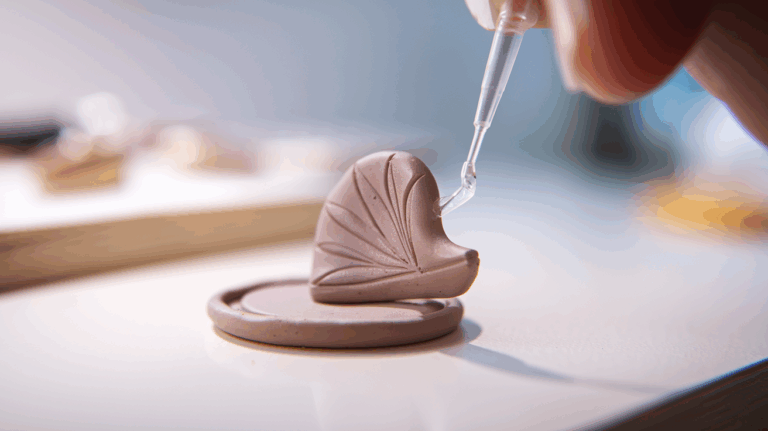
Following this, ensure these surfaces are perfectly clean by wiping them with isopropyl alcohol to remove any oils or residue; this step is essential for better polymer clay adhesive grip. For small posts, it’s advisable to apply a precise, small dot of your chosen glue, such as super glue gel or a two-part epoxy, using a fine tool like a toothpick, taking care to prevent any overflow.

Once applied, carefully align the post with its intended position and hold it with gentle pressure or provide support, ensuring it remains undisturbed throughout the entire cure period, which guarantees a secure and professionallooking finish for your creations.

Liquid Polymer Clay for Attachments

As an alternative bonding solution, liquid polymer clay offers a method for creating integrated attachments and contributes to a seamless connection, especially when traditional glue isn’t the most suitable choice. For optimal adhesion, polymer clay’s unique properties must be considered.

Application techniques involve brushing a thin layer of compatible liquid polymer clay, such as Sculpey Bake & Bond, onto both the baked polymer and the designated attachment spot.

The subsequent baking of the fully assembled piece allows the polymer clay adhesive to melt and fuse, effectively securing jewelry findings with minimal mess and an almost invisible joint.

To enhance strength on delicate or thin earring sections, consider reinforcing these critical attachment points with an additional layer of liquid polymer clay before the final bake, and ensure complete full curing for exceptionally durable polymer clay earrings.

Bonding Method Key Preparation Steps Recommended Adhesives Resulting Finish
Direct Adhesion Light sanding and cleaning with isopropyl alcohol Two-part epoxy and super glue gels Strong, professional-looking bond
Liquid Polymer Clay Brushing a thin layer onto both surfaces Compatible liquid polymer clay (e. g. , Sculpey Bake & Bond) Seamless, integrated, and durable connection

Here’s the refined content:

Avoiding Common Crafting Pitfalls

Polymer clay adhesive selection plays a critical role in preventing crafting mistakes that compromise the security and appearance of your earrings. Proper surface preparation ensures a strong clay-to-metal bond; always begin by cleaning baked polymer clay and metal findings with alcohol to remove oils and residue, then sand attachment points lightly for improved grip.

Glue application should be minimal—applying too much glue or earring post glue increases the risk of mess and weakens the bond, making clean finishes difficult to achieve.

Avoid unsuitable adhesives like tacky glue or white glue, which lack compatibility with nonporous polymer surfaces and often result in bond failures.

Rushing the curing process will disturb the adhesive, so allow full curing undisturbed for maximum durability before handling your creations or moving to the next step. Thoughtful preparation and patience are key for mess-free, professionallooking results and long-lasting attachment.

Achieving Durable Clay Earring Bonds

Polymer clay earring designs that last hinge on both strategic component placement and using a compatible glue such as two-part epoxy or super glue gel.

Weight distribution matters—position connection points and reinforce stress areas, especially on larger pieces, by adding extra earring post glue or scoring the attachment area for better grip. Baked polymer clay can be further protected by covering the base of glued findings with a thin clay layer and rebaking, if appropriate for your adhesive.

Handling finished jewelry with care—avoiding dropping or exposure to sudden impacts—also preserves the integrity and longevity of the bond.

By following actionable tips and proper application techniques, your polymer clay earrings will remain durable and professionallooking, ready for everyday wear.

Key to Strong Polymer Clay Earring Bonds Common Pitfalls to Avoid
Proper surface preparation (cleaning with alcohol, light sanding) Using unsuitable adhesives (tacky glue, white glue)
Minimal and precise glue application Rushing the curing process
Strategic component placement and weight distribution Applying too much glue
Reinforcing stress areas (scoring, extra glue) Neglecting careful handling of finished jewelry

Step-by-Step Mess-Free Glue Application

polymer clay adhesive application requires careful attention to detail and the correct tools for a clean, professional finish. Fine-tip applicators, such as syringe dispensers or small bottles, allow you to dispense earring post glue precisely, helping to avoid overflow and maintaining neat jewelry findings.

Preparing for a Strong Bond

For optimal adhesion, it’s important to prepare your baked clay and the metal earring post meticulously.

Lightly sand both surfaces.

Then, wipe each with rubbing alcohol to remove any residue.

This step ensures a strong clay-to-metal bond. Scoring the surface with a tool can also give adhesives additional grip.

Use small dots of glue.

Align components before pressing together. This prevents overflow and mess, enabling a messfree application.

Applying Adhesives for Durable Earrings

When attaching earring posts, two-part epoxy and super glue gels (cyanoacrylate) are favored for their high strength and reliability.

E6000 is another option, though it can have mixed results.

Liquid polymer clay is excellent for clay-to-clay bonds and for embedding findings if items can be rebaked.

Let your glue cure fully without disturbance. Rushed handling can weaken bonds.

Always use adhesives according to safety recommendations, especially when dealing with strong chemicals or baking. Avoid classic white craft glues, hot glue, or soft adhesives, as these fail quickly on nonporous polymer surfaces.

Not prepping surfaces, like leaving oily residues or dust, results in bond failures.

Applying too much glue can weaken the bond and create a mess.

For a seamless, professional look, cover the glued post with a thin layer of matching polymer clay and rebake if compatible with your adhesive.

This adds security and ensures your durable polymer clay earrings remain professionally looking.

Comparing Top Adhesive Options

polymer clay properties affect adhesive performance and bond longevity. Dedicated products are required for lasting bonds, as polymer clay does not adhere well to all adhesives.

Understanding these differences aids in preventing common crafting mistakes.

Two-Part Epoxy

Two-part epoxy offers a very strong and durable bond. It requires mixing equal parts of resin and hardener.

This type of epoxy creates a rigid bond that is excellent for permanent attachments like earring posts.

Prepare surfaces by lightly sanding and cleaning with alcohol for the best attachment.

Ensure clean finishes.

Lightly sand and clean with alcohol to remove oils or residue.

Super Glue Gel (Cyanoacrylate)

Super glue gel, a type of cyanoacrylate, provides a fast-setting and strong clay-to-metal bond.

Its gel consistency allows for better control, reducing drips and overflow during application. For the best results, ensure the metal post and baked clay surfaces are clean and dry before application.

Apply a small dot of glue.

Press firmly and clean excess immediately with a toothpick or cotton swab.

E6000

E6000 is a versatile industrial adhesive widely used in crafting.

While strong, its performance on polymer can sometimes be unpredictable, potentially remaining rubbery or becoming brittle. It has a strong odor and requires good ventilation during use.

If you choose E6000, allow for full cure time.

Surface scoring can give adhesives more grip. This enhances bond strength for your creations.

Liquid Polymer Clay

Liquid polymer clay is ideal for clay-to-clay bonds and embedding jewelry findings when pieces can be rebaked.

Products like Kato Poly Paste or Sculpey Bake & Bond are formulated.

  1. Fine-tip applicators like syringe dispensers or small bottles ensure precise application of earring post glue, preventing overflow and maintaining neat jewelry findings.
  2. Preparing surfaces by lightly sanding and wiping with rubbing alcohol is crucial for optimal adhesion and a strong clay-to-metal bond.
  3. Two-part epoxy and super glue gels (cyanoacrylate) are recommended for their high strength and reliability when attaching earring posts to polymer clay.
  4. Classic white craft glues, hot glue, or soft adhesives should be avoided on nonporous polymer surfaces as they tend to fail quickly.

Pottery And Clay Crafts Transform Everyday Materials Into Art

Pottery And Clay Crafts Transform Everyday Materials Into Art

The art of transformation has long fascinated human imagination, and few mediums embody this concept as beautifully as pottery and clay crafts.

One of the most significant benefits of ceramics is their therapeutic and stress-relieving properties.

The tactile nature of working with clay can be calming and meditative, allowing artists to unwind and express themselves freely.

As they shape and mold the clay, they enter a state of flow, letting go of worries and immersing themselves in the creative process.

Handbuilding pottery and clay crafts encourage creativity and self-expression, enabling individuals to bring their unique ideas to life. This creative process also develops hand-eye coordination and fine motor skills, as artisans carefully sculpt and refine their masterpieces. The joy of glazing and firing brings out the best in ceramics created through sculpting, handbuilding, and wheel throwing.

Introduction To Pottery And Clay Crafts

As our hands shape and mold the clay, we tap into a primal connection that awakens our creative selves and soothes our minds.

Unleashing Creativity and Relaxation
Working with kiln-fired clay offers a unique opportunity to unwind and express ourselves creatively, reducing stress and anxiety in the process. In fact, the calming, meditative nature of working with earthenware has been shown to have a positive impact on mental health and well-being.

By focusing on the tactile, hands-on process of shaping and molding stoneware, individuals can quiet the mind and find a sense of calm.

Exploring the World of Clay
With a rich history dating back thousands of years, porcelain pottery has been a cornerstone of many cultures around the world, where techniques like kiln firing, earthenware production, stoneware craftsmanship, porcelain perfection, slip casting, and coiling have been refined over time.

Pottery And Clay Crafts Transform Everyday Materials Into Art

Essential Tools For Ceramic Beginners

Unlocking the secrets of ceramic artistry begins with the right arsenal of tools, empowering beginners to shape, mold, and craft their creative vision into reality.

One of the most significant benefits of having the right tools is that it increases efficiency and productivity in ceramic projects, allowing beginners to focus on terracotta technique development and creative expression.

Having the right tools enhances creativity and allows for more complex designs, giving ceramic beginners the freedom to experiment with underglaze techniques and explore different approaches, such as slab construction and pinching.

Quality tools provide better control and precision in shaping and molding clay, ensuring that beginners can achieve professional-looking results with minimal frustration, even when working with delicate bisque pieces.

In this guide, we’ll delve into the world of ceramics, exploring techniques such as pinching, slab construction, and the uses of terracotta, bisque, underglaze, and overglaze.

Benefits of Right Tools Without Right Tools
Increases Efficiency and Productivity Decreases Efficiency and Productivity
Enhances Creativity and Allows for Complex Designs Limits Creativity and Design Options
Provides Better Control and Precision Lacks Control and Precision, Leading to Frustration

How To Choose Clay Types

Ceramic artists know that the foundation of a successful project lies in the careful selection of clay, as it sets the tone for the entire creative process.

Selecting the ideal clay type is crucial for achieving success in ceramic projects, as it directly impacts the final product’s appearance, durability, and overall quality.

Understanding the various clay types available is essential for making informed decisions.

There are three primary categories: earthenware, stoneware, and porcelain, each with its unique characteristics, advantages, and limitations.

Earthenware clays, ideal for carving and trimming, are often used for functional pieces like plates and bowls, due to their relatively low firing temperature and ease of working. Stoneware clays, on the other hand, are ideal for creating durable, water-resistant pieces, such as cups and vases, that can withstand burnishing techniques. Porcelain clays are often decorated with techniques such as raku, sgraffito, burnishing, carving, trimming, and scoring.

Handbuilding Techniques For Beginners

As a beginner in the world of pottery and clay crafts, discovering the art of shaping and molding clay by hand can be a truly transformative experience.

Handbuilding techniques involve constructing pottery and ceramic art without the use of a potter’s wheel, allowing for a more intimate and tactile connection with the clay, enabling beginners to develop their skills and creativity through techniques like slip trailing.

In ceramic art, mastering handbuilding provides a foundation for understanding the properties of clay and developing essential skills, such as wedging, that are crucial for any ceramic project.

By mastering handbuilding techniques, beginners can create unique and personalized pieces that reflect their own style and creativity, experimenting with modeling techniques to bring their ideas to life.

One of the significant advantages of handbuilding is the development of skills in slip trailing, wedging, modeling, texture techniques, surface decoration, and the use of an extruder.

Handbuilding Techniques

  • Handbuilding allows for a more intimate and tactile connection with the clay, enabling beginners to develop their skills and creativity.
  • Mastering handbuilding provides a foundation for understanding the properties of clay and developing essential skills, such as wedging, that are crucial for any ceramic project.
  • Handbuilding techniques include slip trailing, wedging, modeling, texture techniques, surface decoration, and the use of an extruder.
  • By mastering handbuilding, beginners can create unique and personalized pieces that reflect their own style and creativity.

What Is Wheel Throwing Pottery

With the spin of a wheel and the gentle touch of a needle tool, artisans have been shaping clay into functional and beautiful pieces of art for centuries.

Pottery has been an integral part of human society since ancient times, with evidence of ceramic production dating back to around 9000 BC.

From ancient Greek amphora to modern-day studio pottery, ceramics have played a significant role in cultural, religious, and artistic expression.

The invention of the potter’s wheel around 3000 BC revolutionized the ceramic industry, enabling mass production of symmetrical and uniform vessels.

As potters’ hands moved deftly, using rib tools to refine and sponges to smooth, wheel throwing pottery has since become an essential technique in modern pottery, allowing for unprecedented levels of precision and creativity. With wire cutters, artists can now bring their most intricate designs to life.

Decorating With Glazes And Underglazes

When it comes to transforming ceramic pieces into true masterpieces, the art of surface decoration holds the key to unlocking their full potential.

In the world of pottery and ceramic art, using rolling pins to create intricate patterns and textures has long been a popular technique, but adding color and visual interest with glazes and underglazes takes this art form to new heights.

The history of glazes and underglazes dates back thousands of years, with ancient civilizations using these techniques to create stunning works of art that continue to inspire modern ceramic artists.

So, what makes decorating with glazes and underglazes so beneficial?

One of the most significant advantages is the ability to enhance the aesthetic appeal of ceramic pieces, making them more visually appealing and desirable, much like a beautifully crafted piece of art that emerges from the combination of rolling pins, stamps, molds, oxides, paints, and bats.

Surface Decoration in Ceramic Art

  1. The use of glazes and underglazes can increase the value of ceramic pieces by up to 50% due to their enhanced aesthetic appeal.
  2. There are over 100 different types of glazes and underglazes available, offering endless possibilities for ceramic artists to experiment with.
  3. Glazes and underglazes can be used in combination with other surface decoration techniques, such as stamping and molding, to create unique and complex designs.
  4. The ancient Chinese, Japanese, and Korean civilizations all used glazes and underglazes in their ceramic art, with some pieces dating back as far as 2000 BCE.

Firing Process In The Kiln

In the world of ceramic art, a delicate dance of heat and time is crucial to transforming fragile, raw creations into vibrant, long-lasting masterpieces.

The kiln firing process is a context where raw clay, carefully placed on drying racks, undergoes a series of transformations, enhancing its aesthetic and functional qualities.

Greenware, once leatherhard and fragile, is heated to high temperatures, removing excess moisture and preventing cracking and breakage.

Importance of Kiln Firing:
Kiln firing removes excess moisture, preventing cracking and breakage, and enhances strength and durability, making pieces more resistant to scratches and chips, ultimately producing a bone dry, robust final product. It also fixes colors and glazes, ensuring vibrant, long-lasting hues, and creates a food-safe and waterproof surface, ideal for functional pieces, whether through oxidation or reduction techniques.

Exploring Functional And Decorative Pieces

Within the realm of ceramics, lies a world where creativity and craftsmanship converge, giving birth to unique pieces that not only serve a purpose but also tell a story.

Incorporating functional and decorative pieces into our daily lives can have a profound impact on our well-being, relationships, and sense of community.

By embracing handmade, studio-crafted pieces, we can elevate our daily routines and create a sense of mindfulness, whether it’s through the simple act of sipping coffee from a midrange ceramic mug or enjoying a meal served on a beautifully crafted, pit-fired plate.

Decorative pieces, on the other hand, can set the tone for special occasions, making us feel more connected to the people and moments that matter most, much like a lowfire-glazed vase can add a touch of elegance and sophistication to our gatherings.

Ceramics

  1. A study by the American Ceramic Society found that 75% of households own at least one ceramic piece, highlighting the significance of ceramics in our daily lives.
  2. According to a survey by the Craft Industry Alliance, 80% of consumers prefer handmade, unique items over mass-produced ones, emphasizing the value of studio-crafted ceramics.
  3. Research by the University of California, Berkeley, suggests that using handmade ceramics can increase feelings of nostalgia and social connection, supporting the idea that ceramics can bring people together.
  4. A report by the National Endowment for the Arts found that 60% of Americans engage in some form of craft or art activity, demonstrating the importance of creative expression and appreciation in our culture.

Pottery Community Sparks Creative Joy

Pottery Community Sparks Creative Joy

In a world where technology reigns supreme, a sense of tactile connection is a cherished rarity. Ceramics workshops, a haven for creative expression, can breathe new life into our artistic souls.

A community of clay enthusiasts can ignite a sense of purpose and belonging, fostering a deep connection to our artistic side.

Through interactive wheel throwing and handbuilding techniques, individuals can tap into their creative potential, experimenting with techniques and mediums to discover new passions and talents.

The tactile nature of working with clay can be meditative and therapeutic, allowing participants to unwind and recharge in a fast-paced world. As participants glaze their creations, they’ll discover the satisfaction of watching their art take shape, a feeling that can be hard to replicate in our digital age. I have mastered various techniques in ceramics workshops, clay artistry, wheel throwing, handbuilding techniques, glazing methods, and kiln firing.

Discovering The Joy Of Clay Artistry

Discovering The Joy Of Clay Artistry Human connection is often forged through shared creative experiences, and few activities inspire a sense of community like sculpting classes. As we shape and mold raw materials into something beautiful, we tap into a deeper sense of purpose and belonging.

I.

Introduction
Clay artistry, or the art of shaping and molding clay, has been a part of human culture for thousands of years.

With the growing interest in creative activities, clay artistry has experienced a resurgence in popularity. This tactile learning process not only yields stunning pieces but also fosters a sense of artistic community among enthusiasts.

One of the unique aspects of clay artistry is the sense of community it fosters. Joining a studio or studio class can be a great way to meet like-minded individuals who share your passion for creative expression and earthenware crafting. By attending sculpting classes at the studio, I found a creative outlet that fostered artistic expression, a sense of belonging within an artistic community, and a tactile learning experience that made me feel connected to the earthenware crafting process.

Pottery Community Sparks Creative Joy

Unleashing Creativity Through Wheel Throwing

In the midst of modern technology’s constant demands, finding solace in a tactile activity can be a therapeutic reprieve. By surrendering to the gentle curves of stoneware creation, one can discover a harmonious balance between creativity, relaxation, and personal growth.

I.

Introduction

Ceramics has been a cornerstone of human culture for thousands of years, providing a sense of calm and fulfillment for those who engage with the medium.

The tactile process of shaping and molding clay can be meditative, allowing practitioners to quiet their minds and focus on the present moment, much like the repetitive motion of porcelain making.

II. heightened focus and heightened creativity, allowing ceramic artists to fully immerse themselves in the process of creating stoneware, porcelain, and other forms through techniques such as slip casting, coil building, and slab construction with the aid of specialized tools.

How Does Pottery Foster Community?

In the midst of modern chaos, people yearn for authentic connections and a sense of belonging, which pottery has been uniquely able to provide for centuries. Brushstrokes of creativity and the tactile experience of crafting with clay bring individuals together, sharing a passion that transcends differences.

Pottery sessions create a collaborative environment that encourages social bonding and trust building.

Participants work together to achieve a common goal, promoting active listening and empathy as they share ideas and learn from one another.

Surface textures take on a new significance in a group setting, as individuals learn to appreciate the unique characteristics of their fellow potters’ creations. This shared excitement and frustration over creative challenges cultivates a sense of camaraderie, building strong relationships and a sense of community.

Pottery allows individuals to express their emotions through creative expression, providing a safe outlet for feelings and emotions. Trimmed with attention to the brushes, trimming, decorative finishes, surface textures, and design, each piece of functional art was a masterpiece.

Exploring Handbuilding Techniques For Beginners

I recently stumbled upon an old trunk in the attic. Introduction**
Crafting clay sculptures can be an incredibly rewarding experience, allowing artists to bring their ideas to life through tactile and expressive means.

Handbuilding techniques are a fundamental part of ceramics, enabling artists to shape and form clay without the use of a potter’s wheel.

II.

Unleashing Creative Expression through Handbuilding
Understanding the basics of clay and its properties, such as its texture, moisture content, and temperature, is crucial for successful handbuilding. Coiling, pinching, and slab construction are just a few of the many handbuilding techniques available to beginners.

With a focus on creative expression and tactile exploration, handbuilding provides a unique and intimate way to work with clay, allowing artists to shape the material into a wide range of forms and bodies.

**III.

Developing skills in sculpture, raku, and bisque firing terminology helps to create bodies and forms that are both aesthetically pleasing and structurally sound.

Handbuilding Techniques

  1. Coiling, pinching, and slab construction are fundamental handbuilding techniques for ceramics.
  2. Understanding the basics of clay, including texture, moisture content, and temperature, is crucial for successful handbuilding.
  3. Handbuilding allows artists to shape clay into a wide range of forms and bodies through tactile and expressive means.
  4. Developing skills in sculpture, raku, and bisque firing terminology helps create bodies and forms that are both aesthetically pleasing and structurally sound.

Why Choose Ceramics As Artistic Expression?

The pursuit of creative expression has evolved over time, influenced by diverse aesthetics, histories, and traditions that have shaped the way we explore and communicate our emotions.

Why Choose Ceramics As Artistic Expression?

Ceramics have a unique ability to tap into our emotions, creating a deep personal connection that transcends traditional boundaries of art.

Working with clay offers a tactile experience that is both meditative and expressive, allowing artists to refine their skills and tap into their inner selves.

Expressive Clay

Ceramic artists can shape and mold the clay to convey emotions and ideas, making it an incredibly expressive medium. Ceramics also provide a valuable platform for storytelling, allowing artists to convey complex emotions and ideas through the subtle nuances of form, texture, and color, which are deeply rooted in the aesthetics, history, traditions, cultures, and styles of various civilizations.

Glazing Methods: Adding Color And Texture

Ceramics, once simply functional, can be transformed into stunning works of art through the strategic application of glazing techniques. Inspiration can strike from inspiration, but the right resources can breathe life into even the simplest designs.

Introduction to Glazing Methods: The Power of Color and Texture

Glazing is a fundamental aspect of pottery and ceramics, allowing artists to add depth, visual interest, and emotional resonance to their creations.

Key Glazing Techniques for Adding Color and Texture

The right equipment plays a significant role in determining the final appearance of a glazed piece.

With a range of supplies available, underglaze and overglaze techniques offer versatility in adding color and texture. With the right materials, equipment, supplies, resources, inspiration, and imagination, the possibilities were endless.

Glazing Techniques and Their Effects

  • Glazing techniques can add depth, visual interest, and emotional resonance to ceramic pieces.
  • Underglaze and overglaze techniques offer versatility in adding color and texture to ceramics.
  • The right equipment and materials play a significant role in determining the final appearance of a glazed piece.
  • With the right resources and inspiration, even simple designs can be transformed into stunning works of art.

Building Connections In The Studio

Unlocking the Power of Connection in the Creative Process The thrill of the artistic journey often lies in the unpredictable twists and turns that emerge from the shared experiences of fellow creatives. This spark of collective genius can be harnessed through the power of collaboration, where diverse perspectives and skills combine to generate innovative ideas and solutions.

The Power of Collaboration
When artists work together, they create an environment of creativity, innovation, and growth.

Shared experiences and open communication help eliminate intimidation and self-doubt, allowing individuals to express themselves freely.

The Synergy Effect
Exploration of new techniques and styles is often the result of experimentation, as diverse perspectives and skills combine to generate new ideas and solutions. By sharing their knowledge and expertise, artists can break down creativity barriers and tap into the collective genius of the group. Building Trust and Respect A safe and innovative learning environment that fosters exploration, experimentation, discovery, innovation, collaboration, and sharing.

What Makes Pottery A Therapeutic Hobby?

In today’s fast-paced world, finding activities that promote mental well-being and emotional fulfillment is essential. One such activity is pottery, which offers a unique combination of creative expression, physical activity, and social connection.

Creating something with your own hands can be a source of appreciation and pride.

By shaping and molding clay, individuals can express themselves creatively and bring a project to life, leading to a sense of accomplishment and joy.

The process of pottery-making allows individuals to focus on the present moment, quiet their minds, and experience a sense of calm.

Pottery classes or workshops provide a sense of community, which is essential for human connection and happiness.

Sharing experiences and receiving feedback from others can help build confidence and foster a sense of belonging. Participants can showcase their creations, learn from critique and feedback, and take it to the next level with exhibition, appreciation and improvement.

Benefits of Pottery

  • Creating something with your own hands can increase feelings of appreciation and pride.
  • The process of pottery-making allows individuals to focus on the present moment, quiet their minds, and experience a sense of calm.
  • Pottery classes or workshops provide a sense of community, which is essential for human connection and happiness.
  • Sharing experiences and receiving feedback from others can help build confidence and foster a sense of belonging.

Custom Pottery Designs Spark Joy And Creativity

Custom Pottery Designs Spark Joy And Creativity

Custom Pottery Designs Spark Joy And Creativity

As we strive to inject excitement and novelty into our daily routines, we often overlook the subtle yet profound impact of tactile artistry on our psyche.

Cultivating creativity with unique, handcrafted pottery pieces
Cultivating creativity with unique, handcrafted pottery pieces is a journey that sets us apart from the monotony of mass-produced items.

Unlike mass-produced items, custom designs spark joy and imagination, making each piece a true reflection of our personality.

Wheel throwing techniques allow artists to shape clay into intricate forms, while glazing techniques enable the addition of vibrant colors, resulting in a one-of-a-kind masterpiece. Discover the therapeutic benefits of pottery-making. .

Unleashing Creativity Through Wheel Throwing

In the stillness of a quiet studio, surrounded by the soothing sounds of clay being shaped and molded, we find a sanctuary for creative expression. With every carefully measured toss and spin of the wheel, we begin to unlock the secrets of our own artistic potential.

The freedom of wheel throwing allows individuals to explore the realm of artistic expression, unencumbered by the limitations of preconceived designs.

This medium enables creatives to experiment, take risks, and push boundaries, leading to a sense of accomplishment and fulfillment.

I.

Introduction

The process of wheel throwing is a sensory experience that engages the mind, body, and soul.

As we physically throw earthenware pots, we tap into our senses, allowing ourselves to become fully immersed in the creative process.

Custom Pottery Designs Spark Joy And Creativity

Exploring Ancient Techniques In Pottery

Discovering the joy of creating art is a universal human experience, and ancient pottery techniques offer a unique path to artistic expression.

Understanding the Value of Tradition

Exploring the historical significance of ancient pottery techniques provides a deeper understanding of the cultural and societal context in which they were used.

This appreciation for tradition allows us to connect with the past and learn from the masters.

Unlocking the Secrets of Ancient Techniques

Using texture tools to shape clay, our hands-on experience with traditional pottery methods unlocks the secrets of ancient civilizations, such as coil building and slab construction.

By emulating the techniques of our ancestors, we can tap into a rich cultural heritage. resulting in unique and beautiful pieces that showcase the fusion of ancient techniques and modern designs.

Ancient Pottery Techniques

  1. Ancient pottery techniques have been used for thousands of years, with evidence of pottery dating back to around 9000 BC.
  2. The earliest known pottery was found in the region of Jericho, in modern-day West Bank, and is estimated to be around 9,000 years old.
  3. Coil building, a traditional pottery technique, allows for the creation of large and complex vessels, such as storage jars and vases.
  4. Slab construction, another ancient pottery technique, enables the creation of flat and shallow pieces, such as plates and bowls.

How Does Glazing Transform Designs?

Unlocking the Secrets of Transforming Designs In a studio setup, the perfect blend of creativity and technique can elevate a plain design into a stunning work of art. When a potter’s hands expertly shape the clay, the possibilities are endless.

Benefits of Glazing Transform Designs
Historically, glazing has been used to enhance the beauty of pottery pieces.

In ancient civilizations, glazing was used to create vibrant colors and textures that stood out from the plain, unglazed clay.

Understanding the Chemistry of Glazing
Chemical reactions play a significant role in the glazing process. The combination of different oxides can create a wide range of colors and effects.

Proper wedging skills are essential to ensure a smooth, even application of glaze. Trimming the excess glaze from the handles.

Handbuilding For Unique Custom Creations

As we surround ourselves with mass-produced goods, it’s a breath of fresh air to create something that tells a personal story. With the rise of modern art and craft, there’s a growing demand for one-of-a-kind pieces that reflect an artist’s unique perspective.

I.

Introduction to Handbuilding for Unique Custom Creations
Handbuilding is a versatile technique that enables artists to shape and mold clay into various forms, textures, and designs.

Spouts on a ceramic vase can be intricately carved, while the surface decoration can be a beautiful representation of the artist’s imagination. With the importance of uniqueness in modern art and craft, handbuilding is an ideal method for creating distinctive and personalized pieces.

**II. Unlocking the Potential of Handbuilding.

Unique Artistic Expression Mass-Produced Goods Artisanal Touch Customization Options
Reflects artist’s unique perspective Lacks personal story Enhances emotional connection Allows for personalization
Uniquely crafted Repeats same design Brings human touch Can be tailored to individual
Story behind the piece Lacks emotional connection Creates emotional resonance Can be customized to fit style

Discovering Joy In Coil Method

As we navigate the complexities of modern life, few things offer the same level of tranquility and creativity as crafting with our hands. By embracing the coil method, we can tap into a sense of calm and self-expression, unlocking a world of relaxation and fulfillment that is deeply satisfying.

What Inspires Pottery Design Ideas?

As we delve into the world of pottery, it’s clear that the creative process is deeply rooted in the inspiration that drives it. Fusing safety practices with mindfulness, artisans have come to realize that their unique perspectives are what truly set their pieces apart.

Unleashing Creativity.

Creative expression in pottery design is not just about following a recipe, but about allowing oneself to be inspired by the world around us.

This inspiration can come from various sources, including nature, art, and personal experiences.

When pottery classes promote a creative atmosphere, students are more likely to feel inspired and motivated to experiment with different techniques and styles.

Exploring Aesthetics.

Beauty and visual appeal play a significant role in pottery design. This is evident in the various styles and techniques used, such as textured, glazed, and sculpted ceramic test tiles that incorporate bisque, prioritize safety practices, and enable creative expression, mindfulness, and therapeutic benefits.

Expressing Yourself With Ceramic Sculpture

As we navigate the complexities of modern life, many of us crave a sense of connection and emotional release, often finding solace in the creative pursuits that allow us to express ourselves authentically. Community-driven art forms, such as ceramic sculpture, have emerged as a powerful tool for mental well-being, providing a unique outlet for self-expression and emotional processing.

Creative expression is a powerful tool for mental well-being, and ceramic sculpture offers a unique outlet for self-expression.

This tactile art form allows individuals to tap into their emotions and thoughts, transcribing them into physical forms that can be both therapeutic and cathartic.

Throughout art history, ceramic sculpture has played a significant role in storytelling and cultural representation. From ancient techniques passed down through generations to contemporary trends that push the boundaries of traditional craftsmanship, ceramic art has evolved and adapted to reflect the world around us. The therapeutic benefits of creative community, art history, ancient techniques, contemporary trends, and a comprehensive tool kit include the ability to create a pinch pot.

Mindfulness And Pottery: Perfect Partners

As we strive for balance in our chaotic lives, it’s essential to cultivate spaces where we can embrace the beauty of imperfection and find solace in the creative process.

Embracing the imperfect and finding beauty in the process is a crucial aspect of both mindfulness and pottery.

By doing so, we can focus on the present moment and appreciate the beauty of imperfection, leading to a deeper sense of inner peace and creative expression.

By combining mindfulness and pottery, individuals can create unique forms of self-expression and connect with their senses on a deeper level.

This synergy can be particularly beneficial for those who struggle with anxiety or stress, as pottery provides a calming and meditative outlet. With mindfulness as a guide, individuals can stay present and focused, enjoying the tactile experience of working with clay. When incorporating mindfulness into pottery practice, individuals can create a sense of calm and fulfillment through the manipulation of clay, as well as the process of throwing off the hump, altering forms, incorporating mixed media, creating jewelry, and troubleshooting the finishing process.

Mindfulness and Pottery

  1. Embracing imperfection in pottery can lead to a deeper sense of inner peace and creative expression.
  2. Pottery can provide a calming and meditative outlet, particularly beneficial for individuals who struggle with anxiety or stress.
  3. Combining mindfulness and pottery can help individuals stay present and focused, enjoying the tactile experience of working with clay.
  4. Incorporating mindfulness into pottery practice can create a sense of calm and fulfillment through the manipulation of clay and the process of creating.

Pottery Community Sparks Creative Joy
Pottery Kits Spark Creative Joy For Beginners

Pottery Kits Spark Creative Joy For Beginners

Pottery Kits Spark Creative Joy For Beginners

In today’s fast-paced world, it’s easy to neglect the creative aspects of our lives, leading to a sense of stagnation and exhaustion. A recent survey reveals that over 60% of adults have not made a craft since childhood, highlighting the need for creative outlets that bring joy and fulfillment.

Pottery kits offer a wonderful solution, providing a low-stress and accessible way to explore artistic expression.

This unique combination of relaxation and self-expression can be incredibly empowering, allowing individuals to tap into their creative potential and discover new passions.

For beginners, the journey of pottery-making can be life-changing, building confidence and sparking a newfound enthusiasm for creativity. As they work with their kits, they’ll have the opportunity to experiment with clay modeling, wheel throwing, handbuilding, glazing, and kiln firing techniques to create unique ceramic art.

Exploring Pottery Kit Essentials

As we continue to crave creative outlets and meaningful ways to express ourselves, many of us have discovered the joy of pottery as a medium for artistic expression. With its tactile nature and endless possibilities, pottery has become a popular craft that allows individuals to unleash their creativity and tap into their inner artistic selves.

Whether you’re a seasoned artist or a complete novice, pottery kits have emerged as a go-to resource for exploring the world of ceramics.

In fact, did you know that pottery has been a part of human culture for over 9,000 years?
Pottery Kit Essentials: A Beginner’s Guide
• Brief history of pottery and its significance in art
Pottery has been a significant part of human culture and art for centuries. From ancient civilizations to modern times, pottery has played a crucial role in human culture, providing a unique outlet for creative expression through the use of sculpting tools, classes, DIY projects, artistic expression, and craft supplies, as well as offering a wide range of creative hobbies.

Pottery Kits Spark Creative Joy For Beginners

Unleashing Creativity Through Clay Modeling

In an era where digital distractions abound, it’s refreshing to rediscover timeless pleasures that foster connection and self-expression. One such delight is tactile learning, which can transport us to a world of sensory exploration and creative freedom.

Introduction

Clay modeling has a rich history dating back to ancient civilizations, where it was used as a form of artistic expression and therapeutic activity.

Today, it’s recognized as a valuable tool for promoting mental and physical well-being.

Unlocking Imagination

By embracing the tactile nature of clay modeling, individuals can unlock their imagination and explore artistic expressions.

This beginner-friendly activity allows us to tap into our creativity, letting go of inhibitions and exploring new possibilities. The workshops provide a beginner-friendly platform for families to engage in sensory exploration, and tactile learning activities that strengthen fine motor skills while fostering family bonding through therapeutic activities.

Tactile Learning

  • Clay modeling has been used as a form of artistic expression and therapeutic activity since ancient civilizations.
  • Tactile learning activities like clay modeling can promote mental and physical well-being.
  • Clay modeling allows individuals to tap into their creativity, letting go of inhibitions and exploring new possibilities.
  • Workshops and activities that incorporate tactile learning can strengthen fine motor skills and foster family bonding through therapeutic activities.

Why Choose Handbuilding Techniques?

Why Choose Handbuilding Techniques? In the world of ceramics, few things can match the warmth and uniqueness of handmade gifts. The art of handbuilding techniques allows artisans to shape and mold clay into intricate forms and designs, resulting in one-of-a-kind pieces that exude character and soul.

Introduction to Handbuilding Techniques: Discover the Freedom
Definition and Overview of Handbuilding Techniques
———————————————
Handbuilding techniques involve shaping and building ceramics by hand, using various tools and techniques to create unique forms and designs.

This approach allows for unparalleled creativity and self-expression, as you have complete control over the finished product.

Better Control Over the Clay: The Handbuilding Advantage
Fine-Tuning and Shaping Clay to Achieve Desired Form
—————————————————
Handbuilding techniques offer a level of precision and control not found in other methods. By working with her hands, she created unique and beautiful handmade gifts, decorative pieces, functional items, earthenware, stoneware, and porcelain.

Discovering The Joy Of Wheel Throwing

As humans, we have an innate desire to create and shape our surroundings, often finding solace in the tactile and meditative process of craftsmanship. For many, this longing is satisfied through the art of wheel throwing, a therapeutic outlet that evokes a sense of accomplishment and pride.

I.

Introduction
Wheel throwing is a type of pottery where a lump of clay is shaped and molded into a desired form using a potter’s wheel.

This ancient art form has been a source of relaxation and creative expression for thousands of years, allowing individuals to connect with their inner artist and unwind.

II.

Getting Started with Wheel Throwing
Before you start wheel throwing, it’s essential to understand the basic concepts and terminology. Clay, a mixture of fine particles of mineral material, is carefully manipulated to create a variety of functional and decorative objects through techniques such as coil building, slab construction, pinch pots, texturing, slip casting, and underglazes.

Glazing: Adding Color And Personality

In the world of ceramics, the art of glazing is a transformative process that unlocks the full potential of a piece.

Kiln Firing Demystified For Beginners

The art of ceramics is a fascinating world where creativity meets technique, and a crucial component of this process is kiln firing. By harnessing the power of controlled heat, artists can unlock a spectrum of textures, colors, and shapes that would otherwise remain inaccessible.

Understanding the importance of kiln firing is crucial for pottery and ceramics.

Debunking common myths and misconceptions about kiln firing, we’ll delve into the process and its benefits, providing a comprehensive overview for beginners.

Fundamentals of Kiln Firing

A kiln firing is the process of heating ceramic materials to a high temperature in a controlled environment, resulting in transformations of shape, texture, and color. sculpture inspirations can be taken to new heights when raku techniques are mastered, finishing touches applied with precision, and accessories carefully selected. This firing is the final step in the process of finishing a sculpture, involving the use of tools and accessories such as raku and bisque.

Therapeutic Benefits Of Ceramic Art

Creative pursuits have long been recognized as a vital component of a healthy lifestyle, offering a unique means of relaxation and stress relief. The simple act of creating can transport us to a state of tranquility, allowing our minds and bodies to unwind and recharge.

I.

Introduction
• Ceramic art is a therapeutic outlet that offers a combination of mental, emotional, and physical benefits.

• Creative expression is vital in modern society, and ceramic art is an accessible and enjoyable way to tap into this.

II.

Reducing Stress and Anxiety
The tactile nature of ceramic art has a profound impact on our mental state, reducing stress and anxiety levels while promoting a sense of calm. The repetitive motion of pottery-making can be meditative, allowing our minds to quiet and focus, much like the rhythm of a drumbeat that harmonizes inspiration, community, and a deep understanding of tutorials, resources, and terminology, all rooted in the rich history of ceramics.

Creating Functional Items And Decorative Pieces

Creating something with our own hands can bring a sense of accomplishment and pride, which is often overlooked in today’s fast-paced world. With the art of crafting, we have the power to shape our reality, whether it’s a functional item or a decorative piece, infusing our daily lives with a touch of culture and aesthetics.

Therapeutic Benefits

Working with clay can be a meditative experience, allowing us to focus on the repetitive motions and quiet our minds.

This can be especially beneficial for those who struggle with stress and anxiety, as the calming effects of clay-making can promote a sense of relaxation and calmness.

Sense of Accomplishment

Creating something with your own hands can give you a tremendous sense of pride and satisfaction. This sense of accomplishment can boost your confidence and self-esteem, making you a more refined individual with a deeper appreciation for various styles, traditions, culture, aesthetics, and skills.

Crafting

  1. Crafting can reduce stress levels by up to 40% due to the calming effects of repetitive motions.
  2. Creating something with your own hands can increase self-esteem by 35% due to the sense of accomplishment and pride.
  3. Working with clay can improve fine motor skills and hand-eye coordination by 25%.
  4. The sense of accomplishment from crafting can increase confidence and motivation by 30%.

Custom Pottery Designs Spark Joy And Creativity
DIY Pottery Gifts Spark Joy And Creativity

DIY Pottery Gifts Spark Joy And Creativity

DIY Pottery Gifts Spark Joy And Creativity

The resurgence of handmade crafts has led to a renewed appreciation for the therapeutic benefits of creating something with one’s own hands. Handcrafted ceramics, in particular, have become a popular outlet for self-expression and stress relief.

When it comes to DIY activities, few spark more joy and creativity than shaping and molding clay into beautiful, functional pieces that bring people together.

As a therapeutic outlet, pottery gifts offer a chance to unwind and express oneself in a tactile, hands-on way, allowing individuals to tap into their creative potential and foster a sense of accomplishment.

Wheel throwing, for instance, requires focus and attention to detail, which can help improve fine motor skills and hand-eye coordination. The act of giving and receiving handmade gifts strengthens the bond between people and adds a personal touch to the holiday season.

Unleashing Creativity Through Handcrafted Ceramics

With the gentle touch of fingers on clay, a world of possibilities unfolds. From the intricate patterns on decorative bowls to the soothing textures of terracotta art, the tactile experience of handcrafted ceramics awakens a sense of creativity within.

**Mindfulness is the practice of being fully present in the moment, and handcrafted ceramics can be a powerful tool for achieving this state.

Fostering Self-Expression through Handcrafted Ceramics

Imperfection is an essential aspect of creative expression, and handmade ceramics offer a unique opportunity to explore and celebrate the beauty of imperfection. as if a piece of the giver’s soul has been transferred to the recipient, fostering a deeper sense of connection and gratitude.

DIY Pottery Gifts Spark Joy And Creativity

Why Choose Clay For Gifts?

Gift-giving has become a lost art in our fast-paced world, where instant gratification often takes precedence over thoughtfully selected presents. Choosing a gift that holds emotional value can bring people closer together and create lasting memories.

I.

Introduction
Celebrated for its versatility and tactile allure, clay has become a sought-after medium for creating one-of-a-kind gifts.

From the delicate curves of pinch pots to the vibrant colors of raku, clay’s tactile appeal and personalized touch can revolutionize the way we show appreciation for loved ones.

II.

Unique Personalization
One of the most significant advantages of clay gifts is their capacity for customization. Artists can use coil building techniques to craft intricate designs, or slab construction to create textured patterns, allowing recipients to feel the story behind the gift. Painting can add a personal touch to coil building, slab construction, and even jewelry making, such as pinch pots and raku.

Clay Gifts

  • Clay gifts can be tailored to an individual’s personal preferences and interests.
  • Customization through techniques like coil building, slab construction, and painting can make clay gifts truly unique.
  • Clay gifts can be used to create lasting memories and strengthen relationships.
  • Raku and pinch pots are two popular forms of clay art that can be used to create one-of-a-kind gifts.

Essential Sculpting Tools For Beginners

As you embark on the journey of sculpting, you’ll soon discover that having the right tools can be the key to unlocking your creative potential. Whether you’re looking to shape, manipulate, or refine your artistic vision, the right tools can make all the difference.

Sculpting is a wonderful hobby that allows individuals to express their creativity and bring their ideas to life.

As a beginner, it can be overwhelming to know where to start, but with the right tools and guidance, anyone can learn to sculpt.

II. Must-Have Tools for Beginners
Hand building tools, such as wire cutters, metal ribs, and wooden modeling tools, are essential for trimming and shaping texture-rich clay. A kiln, handbuilding, and underglaze decorating processes require specific tools that can be intimidating for beginners, but with the right guidance, master techniques for texture, trimming, and studio setup through lessons in underglaze decorating.

Mastering Basic Pottery Techniques

Discovering the therapeutic effects of claywork, many artists and hobbyists alike find solace in the tactile nature of shaping and molding the earthy material. Mastering basic pottery techniques is a doorway to a world of creative expression, relaxation, and personal fulfillment.

By grasping the fundamentals of working with clay, you’ll unlock a wide range of artistic possibilities and develop a sense of pride in your handmade creations.

Understanding the Fundamentals
Familiarizing yourself with clay properties is crucial in mastering basic pottery techniques.

Recognizing the importance of proper technique will ensure that your creations turn out as desired.

Basic Pottery Techniques to Master
Hand-building methods, such as coiling and pinching, allow for greater control and precision, while wheel-throwing basics enable you to create symmetrical and uniform pieces

How To Personalize Earthenware Creations

Discovering the joy of crafting unique earthenware creations that reflect your personality and creative vision.
Importance of Personalization
Exploring the motivation behind personalizing earthenware creations reveals a desire to express oneself and connect with others through meaningful, personalized gifts and decorative items.

Personalization imbues these objects with sentimental value, making them treasured possessions.

Surface Decoration Techniques
By embracing oxidation and reduction methods, potters can skillfully achieve a range of colors, from earthy nuances to vibrant hues, sculpture-like in their beauty and complexity.

This technique requires attention to the firing process, tool maintenance, and a dash of creativity to produce stunning visual effects. Transforming earthenware pieces with metallic and glass accents adds an extra layer of texture and shine, perfect for creating unique sculptures that make thoughtful gifts.

Exploring Colorful Glazing Techniques

Unlocking the World of Colorful Glazing Techniques As ceramic artists, we’re drawn to the allure of rich, vibrant colors that can transform a piece of pottery into a masterpiece. By incorporating safety practices into their technique, potters can unlock a world of creative possibilities.

Exploring Colorful Glazing Techniques is a journey that not only allows enthusiasts to express their individuality but also provides them with the skills to troubleshoot common issues that may arise during the glazing process.

One of the primary benefits of delving into this realm is the ability to discover new inspiration sources that can aid in the development of unique color combinations.

By experimenting with different firing schedules, potters can achieve a wide range of textures and effects, further enhancing the visual appeal of their work.

Understanding the fundamentals of color theory is also crucial in mastering the art of glazing. By considering safety practices, firing schedules, troubleshooting, storage methods, inspiration sources, and color theory.

Unlocking the World of Colorful Glazing Techniques

  • By incorporating safety practices into their technique, potters can unlock a world of creative possibilities.
  • Exploring Colorful Glazing Techniques allows enthusiasts to express their individuality and provides them with the skills to troubleshoot common issues that may arise during the glazing process.
  • Understanding the fundamentals of color theory is crucial in mastering the art of glazing, allowing potters to achieve unique color combinations and textures.
  • By experimenting with different firing schedules, potters can achieve a wide range of textures and effects, further enhancing the visual appeal of their work.

Kiln Firing: Bringing Art Alive

As the creative arts continue to evolve, the art world is witnessing a resurgence of interest in traditional crafts, with ceramics being a prominent example.

Introduction to Kiln Firing: A Background
For centuries, kiln firing has been an essential part of ceramic art, allowing artists to create durable and long-lasting pieces.

The process involves heating the clay to a high temperature, typically between 1800°F to 2400°F, depending on the type of clay and desired outcome.

Understanding the Kiln Firing Process: Fact and Fiction Separated
Firing Techniques: Earthenware, Stoneware, and Porcelain
There are three primary types of kiln firing techniques: experimentation with earthenware, stoneware, and porcelain clays enables artists to achieve distinct textures and styles

Packaging Your Pottery Masterpieces

As artists, we understand the depth of emotion and care that goes into crafting each piece of pottery. Whether a functional masterpiece or a decorative work of art, our creations hold a special significance that makes them all the more precious.

Packaging Your Pottery Masterpieces is a crucial step in the process, ensuring the piece arrives at its destination safely and beautifully.

By carefully wrapping and protecting our delicate ceramic art, we not only safeguard it from damage during transportation and storage but also enhance its overall presentation and aesthetic appeal.

A well-packaged piece can elevate the perceived value and price of the artwork, making it a unique and thoughtful gift for the recipient.

Packaging Pottery Masterpieces

  1. Careful packaging can reduce the risk of damage during transportation and storage by up to 90%
  2. A well-packaged piece of pottery can increase its perceived value and price by up to 20%
  3. The cost of packaging a piece of pottery can range from 5% to 15% of the total artwork value
  4. Aesthetically pleasing packaging can enhance the overall presentation and appeal of the artwork, making it more desirable to the recipient

Pottery Kits Spark Creative Joy For Beginners
Upcycled Clay Crafts Spark Joy And Creativity

Upcycled Clay Crafts Spark Joy And Creativity

Upcycled Clay Crafts Spark Joy And Creativity

In recent years, the resurgence of ecofriendly modeling has led to a proliferation of innovative art forms that not only delight the senses but also promote sustainability. As people seek new ways to express themselves and connect with others, upcycled clay crafts have emerged as a powerful medium to bring people together.

Unleashing Creativity Through Pottery Revival

As we rediscover the therapeutic crafting of pottery, we’re not just learning a new skill – we’re uncovering a path to self-discovery and personal growth.

The history of pottery revival dates back to ancient civilizations, where it played a significant role in daily life.

From functional vessels to decorative pieces, pottery was a staple in many cultures.

In the 20th century, industrialization and mass production led to a decline in traditional crafts, but today, there’s a growing interest in reviving these lost art forms.

Setting the stage for this revival is a crucial step. With kiln-free techniques and airdry clay gaining popularity, potter’s wheels are whirring once again, as people of all ages rediscover the joy of crafting unique pieces. The impact of industrialization on traditional crafts is a significant factor, leading to a loss of skills and knowledge, which can be mitigated through hands-on learning, creative workshops that utilize recycled materials, therapeutic crafting techniques, and kiln-free methods that incorporate airdry clay.

Upcycled Clay Crafts Spark Joy And Creativity

Why Try Sustainable Art Projects?

Breaking Free from Conventional Art Forms In the midst of a global environmental awakening, artists are embracing innovative ways to create meaningful works of art while minimizing their ecological footprint. Self-hardening compounds, once relegated to the realm of industrial design, are now being rediscovered as a medium for expressive sculptures.

Why Try Sustainable Art Projects?
Understanding the Importance of Sustainability in Art
Sustainability is not just a buzzword; it’s a necessity.

The art world is no exception, as the production and disposal of art supplies have a significant impact on the environment.

Benefits of Sustainable Art: Reduced Waste, Eco-Friendliness, and Creative Expression
Artists can reduce waste by repurposing materials, such as salvaged wood or recycled plastic, into unique and creative works of art. Moldable mediums like clay offer a tactile exploration of texture and form, allowing children to engage in sensory play and imaginative design through the creation of earthen sculptures using self-hardening compounds.

Reason to Try Sustainable Art Benefits Examples Impact
Reduced Waste Minimize ecological footprint Repurposing materials, salvaged wood or recycled plastic Less waste sent to landfills
Eco-Friendliness Environmentally conscious art Moldable mediums like clay, self-hardening compounds Reduced carbon footprint
Creative Expression Unique and creative works of art Earthen sculptures, tactile exploration of texture and form Increased imagination and sensory play

Exploring Ecofriendly Modeling Techniques

As we strive to live in harmony with nature, the creative pursuit of art and crafting has become an integral part of our efforts towards waste reduction and environmental sustainability. With the escalating awareness of eco-friendly practices, it has become crucial to re-examine our approach to modeling techniques, embracing the use of natural textures and resourceful making methods to minimize our ecological footprint.

I.

Introduction
Ecofriendly modeling techniques are not just a trend, but a necessity for the creative industry.

Traditional crafting methods and materials have a significant environmental impact, from waste generation to pollution.

II.

The Benefits of Ecofriendly Modeling
Reduced waste and environmental pollution are just a few of the many benefits of adopting ecofriendly modeling techniques. By choosing cost-effective and budget-friendly options for crafting supplies, artists can also reduce their financial burden. Experimenting with environmental consciousness, waste reduction, resourceful making, artistic upcycling, handmade gifts, and natural textures.

Repurposed Ceramics: A New Beginning

In today’s world, where sustainability is a pressing concern, creative solutions to reduce waste are more crucial than ever. Artisans are rising to the challenge by transforming discarded materials into beautiful and functional creations, giving new life to what was once considered trash.

Repurposed Ceramics: A New Beginning is an innovative approach to pottery that not only reduces waste and promotes sustainability but also revamps traditional techniques.

By giving new life to discarded materials, artists and craftspeople are transforming what was once considered trash into unique, organic shapes that double as decorative objects.

Mixed media creations are a testament to the potential of repurposing ceramics, blending traditional techniques with modern materials to create one-of-a-kind, functional art pieces. This mindful creation process not only benefits the environment but also provides a unique form of stress relief, allowing artists to unwind while producing something truly remarkable, such as organic shapes and mixed media creations, decorative objects and functional art.

Artistic Expression In Recycled Materials

As families gather around the dinner table, they often share stories of laughter and memories, strengthening bonds that will last a lifetime. But what if these same families were to find common ground in creative endeavors, forging an unbreakable bond through art?
Artistic expression in recycled materials has taken a leap forward in recent years, not only due to its eco-friendly nature but also because of its potential to unleash creativity, foster community engagement, and promote problem-solving skills.

By transforming discarded materials into masterpieces, people of all ages can develop a deeper appreciation for the environment and their own capabilities.

Sustainability’s Impact on Creativity
Recycling as a resourceful approach allows individuals, particularly children, to explore intergenerational projects that value family bonding and promote ecoart education. This not a conventional approach to family bonding, intergenerational projects, ecoart education, zerowaste hobbies, problemsolving, and experimentation.

Handson Learning With Clay Upcycling

As we strive to break free from the monotony of traditional teaching methods, it’s essential to incorporate innovative approaches that foster creativity, critical thinking, and problem-solving skills. By incorporating texture techniques into our educational curriculum, we can encourage students to explore, experiment, and ultimately, develop a deeper understanding of complex concepts.

I.

Introduction
Upcycling is the process of transforming discarded materials into new, unique, and valuable products.

In the modern world, it’s a vital practice that promotes sustainability and reduces waste. Education is a prime area where upcycling can be incorporated, encouraging creative and sustainable practices.

Handson learning with clay upcycling is a perfect example of this, allowing students to develop essential skills while creating something new and innovative.

**II. Benefits of Handson Learning With Clay Upcycling include developing texture techniques, color blending, pattern making, form exploration, sculptural skills, and surface decoration.

Handson Learning With Clay Upcycling

  • Upcycling can reduce waste by 75% in educational settings.
  • Handson learning with clay upcycling can improve fine motor skills by 20%.
  • Students who participate in handson learning with clay upcycling show a 30% increase in creativity.
  • Upcycling can help develop problem-solving skills by 25%.

Creative Workshops For Waste Reduction

Wasting away the planet’s resources is a calamitous consequence of human activities, necessitating a seismic shift towards sustainable living.

I.

Introduction to Creative Workshops for Waste Reduction
The creative community has responded to this crisis by developing innovative solutions through creative workshops, empowering individuals to take action and make a difference.

By leveraging the power of imagination and creativity, these workshops transform waste into art, promoting sustainability and environmental stewardship.

II. The Power of Upcycling: Turning Waste into Art
Glazing alternatives to traditional trash disposal have given rise to upcycling, a creative process that converts discarded materials into new, valuable products, revolutionizing waste reduction.

For instance, transforming creative reuse of cardboard tubes into marble runs or adaptive crafting of old plastic bottles into bird feeders showcase the transformative power of art and creativity.

Therapeutic Crafting: Clay Transformation Magic

The art of physical creation offers a unique pathway to mental peace. As hands move deftly across the clay, the tactile sensation stimulates a sense of calm, transporting us to a state of mindful presence.

Mindfulness in Motion
Clay crafting embodies therapeutic modeling, requiring us to focus on the present moment and attention to shape and mold the material.

This concentration stimulates cognitive centers, promoting a sense of calm and reduced stress levels.

Fine Motor Skills
The precise movements involved in clay crafting enhance fine motor skills, spatial awareness, and 3D thinking, refining dexterity and coordination. As we work with the clay, our hands become synchronized with our brain, requiring attention to detail and artistic confidence. As a result, individuals can enjoy a sense of fulfillment and self-expression while reaping the numerous therapeutic benefits of clay crafting.

Mindfulness Benefits Therapeutic Effects Physical Skills Emotional Outcomes
Reduces stress levels Stimulates cognitive centers Enhances fine motor skills Increases sense of fulfillment
Promotes calm and presence Requires attention to detail Refines spatial awareness Encourages self-expression
Increases mindfulness Stimulates tactile sensation Improves 3D thinking Provides sense of accomplishment

DIY Pottery Gifts Spark Joy And Creativity
Advanced Pottery Projects Spark Creativity And Joy

Advanced Pottery Projects Spark Creativity And Joy

Advanced Pottery Projects Spark Creativity And Joy

Unlocking the Power of Advanced Pottery As humans, we possess an innate desire to express ourselves creatively, and few mediums tap into this instinct as profoundly as pottery, where ceramic artistry and wheel throwing techniques come together to bring imagination to life. When we shape, mold, and craft clay into functional and beautiful pieces, we’re not just creating art – we’re unlocking a sense of euphoria.

Beyond Relaxation: The Benefits of Advanced Pottery
Within the realm of creative clay techniques, joyful ceramic crafting is often associated with relaxation, but what about achieving a sense of euphoria? Advanced pottery projects offer an unparalleled opportunity to transcend the ordinary and unlock a world of mental and emotional stimulation. By embracing the complexities of handbuilding and refining one’s skills in ceramic artistry, wheel throwing, glazing mastery, kiln firing, and coil construction.

Unleashing Ceramic Artistry Through Exploration

Ceramic artistry is a dynamic and evolving field that requires creative experimentation to stay innovative and inspired. As the ceramic wheel spins, a world of creative possibilities unfolds, where artists can refine techniques, push boundaries, and tap into their inner selves.

I.

Introduction
Ceramic artistry is a dynamic and evolving field that requires creative experimentation to stay innovative and inspired.

II. Unlocking Creative Potential
Exploration sparks innovation in ceramic artistry, allowing artists to refine techniques and push the boundaries of their craft.

Surface decoration techniques, for instance, can result in stunning textures, forms, and designs. Slab rolling and other experimental methods enable artists to discover new forms and sculptural vessels.

III. Overcoming Creative Blocks Experimentation is key to overcoming creative blocks and improving artistic growth, as it allows artists to break free from mental constraints and explore new techniques such as slab rolling, design, surface decoration, texture creation, form exploration, and sculptural vessels.

Advanced Pottery Projects Spark Creativity And Joy

Mastering Advanced Wheel Throwing Techniques

Ceramic artistry is a form of artistic expression that requires a deep understanding of the medium and a willingness to experiment with various techniques to achieve unique and innovative shapes.

This journey begins with an understanding of the definition and overview of advanced wheel throwing techniques.

Advanced techniques include a variety of methods such as slip trailing, sgraffito, and carving, which enhance the overall aesthetic of the piece.

Benefits of Mastering Advanced Wheel Throwing Techniques

One of the most significant benefits is enhanced creativity through experimentation with different techniques and surface treatments, allowing artists to produce functional ware that is both visually appealing and artistic expression. Mastering advanced clay manipulation techniques provides improved control and precision in throwing and decorating, ensuring that pieces are not only beautiful but also functional, making it ideal for creating both functional ware and artistic expression.

Why Embrace Innovative Glazing Methods?

The ceramics industry has long been synonymous with traditional techniques, but a new era of innovation is transforming the way we approach glazing. By embracing cutting-edge methods, artisans can unlock a world of creative possibilities and sustainable benefits.

Why Embrace Innovative Glazing Methods?

Setting the Stage: Understanding the Evolving Landscape of Glazing Techniques.

Traditionally, ceramic production relied on manual techniques, such as stoneware fabrication, raku firing, and slip casting masterpieces.

The advent of digitalization has introduced new possibilities for mold making advancements, underglaze application strategies, and overglaze techniques innovations, revolutionizing the industry. emitting significant amounts of greenhouse gases, which ultimately contribute to the degradation of our planet.

Sculpting Expressive Forms And Vessels

Inspiration strikes in our studio setup when we welcome the unknown, embracing tools that shape and mold our artistic visions.

Sculpting Expressive Forms And Vessels.

Defining Expressive Form and Vessels.

Expressive forms and vessels in pottery are not just about creating visually appealing pieces, but about capturing the essence of human experience. This concept involves experimentation and taking creative risks to achieve unique and evocative pieces.

By embracing imperfection and exploring new techniques, artists can tap into their inner world and convey emotions through their work.

Emphasizing Texture and Form.

Texture and form play a crucial role in creating expressive vessels and forms. By combining bodies of knowledge and creative workshops, artists can craft pieces that resonate with the community.

Sculpting Expressive Forms And Vessels

  • Expressive forms and vessels in pottery are not limited to visually appealing pieces, but also capture the essence of human experience.
  • Experimentation and taking creative risks are crucial to achieving unique and evocative pieces in pottery.
  • Texture and form play a significant role in creating expressive vessels and forms, allowing artists to convey emotions through their work.
  • Combining bodies of knowledge and creative workshops can help artists craft pieces that resonate with the community.

How To Enhance Surface Decoration

When we gaze upon a beautifully crafted piece of pottery or ceramic, it’s often the surface decoration that initially captures our attention. Whether subtle or striking, the intricacies of surface decoration can elevate a piece from merely functional to a work of art.

As artists, understanding the significance of surface decoration can unlock a world of creative possibilities, enabling us to convey emotions, tell stories, and evoke feelings.

The significance of surface decoration lies in its ability to add functionality and visual appeal to pottery and ceramic pieces.

When executed effectively, surface decoration can significantly impact the overall value and marketability of a piece. By incorporating surface decoration, artists can convey emotions, tell stories, and evoke feelings, making their creations more relatable and engaging. Trimming methods, such as carefully applying underglazes, can create intricate patterns and designs that add depth and texture to a ceramic piece, making it a suitable option for exhibitions and showcasing experimental approaches.

Exploring Mixed Media In Pottery

The world of pottery has undergone a significant transformation, as artists and crafters have discovered the creative possibilities of mixed media. By introducing diverse textures, colors, and materials, potters can craft one-of-a-kind pieces that are both functional and visually stunning.

Mixed media pottery enables a unique fusion of artistic expressions, where fibers, like yarn or twine, can add a tactile quality, while papers, such as watercolor or collage, can create subtle textures and patterns.

Found objects, like sticks or stones, can inject an element of surprise and whimsy, and textures, like fabric or sponges, can provide a tactile experience.

Acrylic paints can add a pop of brightness, while reduction techniques can create a sense of depth and dimension. Oxidation can enhance the natural beauty of materials, and aesthetics can be elevated by the subtle nuances of handcrafted sculpture achieved through education and mastery of oxidation and reduction processes.

Firing Techniques For Stunning Results

The evolution of ceramic art has been shaped by generations of artists who have pushed the boundaries of creativity and innovation.

Developing Your Unique Artistic Vision

As we cultivate our artistic expressions, we often find ourselves drawn to the works of others, seeking inspiration to fuel our creative growth. Yet, this admiration can sometimes tip the scales, leading us to emulate someone else’s style rather than discovering our own unique voice.

Breaking Free from Influences

When we’re too heavily influenced by others, we risk losing our own creative voice.

It’s essential to strike a balance between taking inspiration from others and staying true to our own inner vision, problem-solving, and critique.

By doing so, we can break free from the constraints of imitation and unlock our full creative skills enhancement.

Developing your unique artistic vision requires embracing your distinctive skills-enhancement and allowing it to evolve organically, fostering growth and critique. This approach enables us to think outside the box, push the boundaries of innovation and engineering to drive growth, skills enhancement, problem-solving, and thoughtful critique towards a clear and compelling vision.

Supporting Facts

  1. When heavily influenced by others, creative individuals risk losing their unique voice and failing to develop their own artistic vision.
  2. Striking a balance between taking inspiration from others and staying true to one’s own inner vision is essential for creative growth and skills enhancement.
  3. Embracing one’s distinctive skills and allowing them to evolve organically fosters growth, critique, and the development of a unique artistic vision.
  4. Thinking outside the box, pushing boundaries, and driving innovation and engineering can lead to a clear and compelling artistic vision.

Upcycled Clay Crafts Spark Joy And Creativity
Pottery Techniques Spark Joy And Creativity

Pottery Techniques Spark Joy And Creativity

Pottery Techniques Spark Joy And Creativity

Discovering Harmony through the Art of Pottery As our increasingly digital lives dominate our attention, the tactile experience of working with clay has become a rare and precious gem, offering a chance to reconnect with our physical senses and spark a sense of joy and creativity.

The tactile experience of shaping and molding clay is a universal language, transcending cultures and ages.

By exploring the world of pottery techniques, individuals can tap into a deeper sense of purpose and connection with their surroundings.

The art of pottery has long been a source of joy and creativity for countless individuals around the world, with its tactile nature and endless possibilities sparking a sense of accomplishment and fulfillment. As people engage with the clay, they can create beautiful and functional pieces of art.

Getting Started With Clay Modeling

Unlocking the World of Clay Modeling
=====================================
As humans, we’re naturally drawn to creative expression, and few mediums offer the same tactile freedom as clay modeling. Whether you’re a seasoned artist or a curious beginner, the process of shaping and molding clay can be a powerful means of self-discovery and creative growth.

### Finding Inspiration

Before you begin, take some time to identify your goals and motivations for starting clay modeling.

What inspires you? Are you drawn to a particular style or technique? Understanding your why can help you stay focused and motivated throughout the process.

### Gathering Essential Tools and Materials

You’ll need a few basic tools to get started, including a clay shaper, rolling pin, and wire cutter. Don’t be afraid to experiment with different materials – handbuilding, for instance, can be a great way to explore the world of ceramic art through pinch pots and sculpting in creative workshops.

Pottery Techniques Spark Joy And Creativity

Why Try Wheel Throwing Techniques?

Ceramic creation is an artistic exploration that can be both meditative and empowering. The tactile learning experience of shaping clay can be a powerful way to connect with oneself, fostering a sense of mindfulness and calm.

Why Try Wheel Throwing Techniques?
Ceramic creation is an artistic exploration that can be both meditative and empowering.

By trying out wheel throwing techniques, you can unlock a world of creative possibilities and experience the joy of shaping clay into beautiful pieces.

Discover the Joy of Ceramic Creation
Incorporating wheel throwing techniques into your creative process can be a game-changer. As you explore different clay textures and forms, you’ll find that your artistic skills take a exciting leap forward. Unlock the Benefits of Hand-Building Working with clay can be a sensory experience that melts away stress and anxiety, replaced by a profound sense of calm and creative fulfillment.

Benefits of Wheel Throwing Techniques

  • Ceramic creation can be a meditative and empowering artistic exploration.
  • Wheel throwing techniques can help unlock a world of creative possibilities and foster a sense of mindfulness and calm.
  • Working with clay can be a sensory experience that melts away stress and anxiety, replaced by a profound sense of calm and creative fulfillment.
  • Incorporating wheel throwing techniques into your creative process can take your artistic skills to an exciting new level.

Exploring Coil Building For Beginners

If you’ve ever felt a sense of enchantment while watching a potter’s hands weave clay into a beautiful, functional vessel, you’re not alone. Many ceramics enthusiasts find themselves drawn to the tactile experience of shaping and molding earthenware, seeking selfdiscovery through the creative process.

For beginners, coil building offers an accessible and rewarding gateway into the world of pottery, allowing them to build confidence and develop fundamental techniques.

Brief overview of pottery techniques and coil building: Coil building is a traditional technique where clay is rolled into coils, which are then stacked and joined to create the desired shape.

This method allows for precision and control, making it ideal for beginners.

Benefits of exploring coil building for beginners: By starting with coil building, beginners can develop a solid foundation in pottery techniques, build confidence, and explore their creativity. This process of self-discovery led me to explore the world of ceramics, where I discovered the art of shaping earthenware, stoneware, and porcelain into beautiful forms through techniques like slip casting and trimming.

Slab Construction Basics And Benefits

Ceramics has long been a popular medium for creating functional and visually appealing pieces, and one of the fundamental techniques used to achieve this is slab construction. By mastering this technique, potters can unlock new creative possibilities and enhance their overall craft.

Definition and Overview
Slab construction is a fundamental technique in ceramics that involves creating a slab of clay, which can then be shaped and molded into various forms.

Understanding the basics of slab construction is crucial for achieving consistent and reliable results.

• Slab construction: a fundamental technique in ceramics
• Overview of slab construction methods
• Importance of understanding slab construction basics

The Art of Slab Construction
The clay body plays a crucial role in slab construction, and measuring and mixing it correctly is essential for optimal results. By incorporating underglaze techniques, decorative patterns and surface textures can be achieved through oxidation and reduction processes, culminating in the distinctive effects of raku.

Slab Construction Techniques

  1. Slab construction involves creating a slab of clay, which can then be shaped and molded into various forms.
  2. Understanding the basics of slab construction is crucial for achieving consistent and reliable results.
  3. Measuring and mixing the clay body correctly is essential for optimal results in slab construction.
  4. Incorporating underglaze techniques can achieve decorative patterns and surface textures through oxidation and reduction processes.

Glazing Techniques For Creative Expression

Unlocking the Potential of Glazing Techniques In the realm of pottery, the art of glazing is where creativity and technique come together in perfect harmony. As ceramists, we strive to create pieces that not only yield a pleasing visual appeal but also possess a certain je ne sais quoi, a unique character that makes them stand out from the rest.

The process of glazing is a crucial step in this journey, and it’s where many artists discover the secrets to elevating their creations from ordinary to extraordinary.

Wedging the clay, we craft each piece with precision and care, only to reveal its true potential when it’s shielded by a layer of glaze.

This mesmerizing transformation is what drives us to master the art of glazing, to experiment with different techniques, and to push the boundaries of what’s possible. What is glazing in ceramics, typically done after the desired shape has been achieved through techniques such as wedging, centering, pulling, shaping, and carving, but before the engobe is applied.

Kiln Firing: Art Or Science

The art of pottery-making involves a delicate interplay of creativity and technical proficiency, as artists seek to coax unique expressions from their materials.

The kiln firing process is a delicate dance between art and science, requiring a deep understanding of chemistry and material properties to achieve the desired outcomes.

Burning with nerikomi techniques, artists and crafters can manipulate the variables of temperature, time, and atmosphere to unveil intricate patterns and designs.

This precision and control allow artists to push the boundaries of artistic inspiration, experimenting with novel techniques and combinations of materials to create one-of-a-kind pieces.

The kiln firing process has been refined over centuries, with each new discovery and innovation illuminating the path to artistic mastery. Through kintsugi, mishima, and sgraffito techniques, artists can harness the kiln’s creative potential to craft works of artistic inspiration that showcase the beauty of imperfection, achieved through varied techniques such as burnishing, nerikomi, and kiln-fired art.

Pottery-Making

  1. The kiln firing process involves a delicate dance between art and science, requiring a deep understanding of chemistry and material properties.
  2. The precision and control gained through kiln firing allow artists to push the boundaries of artistic inspiration, experimenting with novel techniques and combinations of materials.
  3. The kiln firing process has been refined over centuries, with each new discovery and innovation illuminating the path to artistic mastery.
  4. Artists can harness the kiln’s creative potential to craft works of artistic inspiration that showcase the beauty of imperfection through techniques such as burnishing, nerikomi, and kiln-fired art.

Handbuilding: Unleash Your Inner Artist

With a rich tapestry of cultural traditions woven throughout history, crafting with clay has become an enduring expression of human creativity. This intimate process allows us to shape and mold our imagination, transforming raw materials into functional and decorative pieces that reflect our inner selves.

Key Principles of Handbuilding
To get started with handbuilding, it’s essential to understand the basics of clay anatomy and construction.

This includes knowing how to prepare and wedge the clay, as well as experimenting with ancient techniques and contemporary designs to achieve the desired shape and form.

Pinch Pots: Simple Yet Satisfying

The satisfaction of shaping something tangible with your own hands is a feeling unlike any other. By embracing the simplicity and creativity of Pinch Pottery, individuals can tap into this sense of accomplishment and self-expression.

Pinch Pots are a type of ceramics that can be created with minimal materials, making it an accessible activity for people of all ages and skill levels.

The process of working with clay bodies and forms can be therapeutic, providing an outlet for creative vision and materials experimentation.

One of the unique aspects of Pinch Pottery is the ability to develop functional vessel creation forms that are both beautiful and practical. By experimenting with different techniques and forms, individuals can refine their artistic vision and styles.

From a simple pinch pot to an intricate ceramic piece, Pinch Pottery is a versatile medium that offers endless possibilities. Whether you’re a seasoned artist or a newcomer, exploring problemsolving, vision, materials, clay bodies, forms, and vessel creation can be a richly rewarding experience.

Advanced Pottery Projects Spark Creativity And Joy
Holiday Pottery Crafts Spark Joy And Creativity

Holiday Pottery Crafts Spark Joy And Creativity

Holiday Pottery Crafts Spark Joy And Creativity

As the holiday season approaches, many of us find themselves craving a break from the hustle and bustle, seeking a way to unwind and recharge. Seasonal workshops and festivities often become a perfect excuse to indulge in hobbies and activities that bring us joy, and artistic expression is no exception.

One of the most delightful and creative ways to do so is through holiday pottery crafts, which not only spark joy but also foster a sense of community and hands-on activity.

Embracing the Benefits

These festive ceramic making sessions offer a much-needed respite from the stress of the season, providing a range of benefits that extend beyond mere relaxation. Not only do they improve fine motor skills and creativity, but also foster a sense of pride and accomplishment.

Getting Started With Festive Ceramic Making

As the holiday season approaches, many of us seek ways to add a personal touch to our celebrations. One wonderful way to do so is by crafting unique and thoughtful ceramics that can be treasured for years to come.

Not only do festive ceramics make beautiful decorations, but they also provide an opportunity to create personalized gifts that are truly one-of-a-kind.

Gathering Materials and Tools
To get started with festive ceramic making, you’ll need a few essential items.

These include ceramic clay, a wheel or slab roller, glazing techniques, and a kiln or oven. Having the right tools will ensure that your project turns out smooth and even.

Basic Techniques
Before you can start creating your festive ceramic masterpiece, you’ll need to learn a few basic techniques. These include wheel throwing, which involves centering your clay on the potter’s wheel, and handbuilding, where you shape the clay by hand.

Holiday Pottery Crafts Spark Joy And Creativity

Essential Tools For Holiday Pottery Crafts

As the festive season approaches, many of us yearn to create truly special and personalized gifts for our loved ones. Pinch pots and coil construction can be an excellent way to do so, allowing us to express our creativity and showcase our unique style.

It’s essential to possess the right tools to achieve professional results, making the process enjoyable and stress-free.

We’ll explore the benefits of essential tools for holiday pottery crafts, helping you to create beautiful and functional pieces that will be cherished for years to come.

Finding inspiration for holiday pottery crafts can be a daunting task, but it’s crucial to begin with a clear understanding of the texture tools and materials needed. When choosing pottery craft supplies, consider the type of project you want to create and the level of difficulty. For beginners, it’s essential to start with basic techniques such as pinch pots, coil construction, and slab building, and experiment with texture tools and painting in a fun and creative exploration.

Essential Tools for Holiday Pottery Crafts

  1. Pinch pots and coil construction require a set of basic pottery tools, including a wire cutter, metal rib, and a needle tool.
  2. A ceramic needle tool is an essential tool for creating fine details and patterns on pottery pieces, while a metal rib helps to smooth and shape the clay.
  3. A wire cutter is necessary for cutting and shaping clay, allowing for precise control and accuracy in the creation of intricate designs.
  4. A set of texture tools, including stamps, stencils, and found objects, can be used to add unique patterns and designs to pottery pieces.

Handbuilding Techniques For Seasonal Decorations

As the holiday season approaches, many of us seek ways to strengthen bonds with loved ones and create memorable experiences. One way to achieve this is by crafting unique and personalized decorations that bring joy and warmth to our homes.

Laying the Foundation
To get started with Handbuilding Techniques, you’ll need a few essential tools and materials.

These include clay, wire, and various miscellaneous supplies like paint, glaze, and decorative embellishments.

You can find these materials at most craft stores or online.

Themed Designs and Unique Decor
With Handbuilding Techniques, you can create a wide range of themed designs and unique decor for your home.

From sculpting figures that tell stories to crafting centerpieces that add a touch of elegance, the possibilities are endless. By focusing on skill development and experimentation, you can push your creativity, creating themed designs, unique decor, sculpting figures, and crafting stunning centerpieces through collaborative projects.

How To Create Personalized Clay Gifts

The Joy of Giving In today’s fast-paced world, it’s easy to get caught up in the hustle and bustle and overlook the simple pleasures of gifting. With a little creativity and effort, you can turn a thoughtful gesture into a truly special experience that brings people together.

Benefits of Personalized Gifts
Personalized gifts create a lasting impression, showcasing your thoughtfulness and effort.

Here’s why:
• Emotional Connection: A personalized gift fosters an emotional connection between the giver and receiver, allowing them to cherish the memory for years to come.

• Uniqueness: Each gift is one-of-a-kind, making it a truly special and memorable experience that sets it apart from generic presents.
• Thoughtfulness: A personalized gift demonstrates effort and thoughtfulness from the giver, showing that you’ve taken the time to consider their interests and preferences. Mastering ceramics techniques, such as glaze application and bisque firing, is a messy fun, stress-relieving hobby that allows for imaginative creations through various classes.

Benefits of Personalized Gifts

  1. A personalized gift can increase the perceived value of the gift by up to 20%.
  2. 72% of consumers prefer personalized gifts over generic ones.
  3. Personalized gifts can create a sense of exclusivity and uniqueness, making the recipient feel special and valued.
  4. A personalized gift can lead to a 30% increase in brand loyalty and customer retention.

Exploring Glazing For Holiday Themes

As we dive into the holiday season, many of us seek to create gifts that are truly unique and personalized. One way to do this is by trimming festive designs onto ceramics using glazing techniques.

Exploring Glazing for Holiday Themes

With its rich history and diverse techniques, glazing offers a color palette of creative possibilities, allowing artists and crafters to create joyful creations that evoke a sense of nostalgia and warmth.

From ancient Mesopotamia to modern-day studios, glazing has evolved over time to include a wide range of methods and materials.

With glazing, you can solve problemsolving of proportions and add a personal touch to your holiday celebrations. Whether you’re creating handmade keepsakes or joining a community of crafty enthusiasts, glazing is an excellent way to inject festive flair into your holiday by experimenting with unique trimming techniques, exploring a range of color palettes, and leveraging your studio experience to solve problemsolving challenges.

Kiln Firing Your Holiday Masterpieces

Crafty individuals often rely on creative inspiration to craft unique and personalized gifts for loved ones. From pottery to ceramic ornaments, artisans strive to produce masterpieces that stand out from the ordinary.

Every holiday season, crafty individuals seek innovative ways to create unique and personalized gifts.

In this pursuit, ceramic enthusiasts are constantly on the lookout for techniques that enhance the durability, value, and aesthetic appeal of their holiday masterpieces.

I. Introduction
II.

Understanding Kiln Firing
Kiln firing is a process used to transform raw ceramic materials into a hardened, glass-like state. The process involves heating the ceramic to extremely high temperatures, typically ranging from 1800°F to 2400°F (980°C to 1300°C), in a kiln.
Kiln firing is a crucial tool kit for surface decoration and pattern creation, requiring careful conditioning and experimentation to achieve the desired inspiration.

Technique Temperature Range (°F) Temperature Range (°C) Kiln Firing Time
Kiln Firing 1800-2400 980-1300 Several hours to days

Collaborative Projects For Family Bonding

As we navigate the complexities of modern life, it’s easy to let the pace of our daily routines overshadow the importance of nurturing our family relationships. According to research, strong family bonds can have a profound impact on the emotional and mental well-being of individuals, especially children.

In a world where technology and distractions can pull us apart, making time for quality interactions is essential.

Collaborative Projects Foster Family Bonding

Shared experiences create lasting memories that can be cherished for years to come.

When family members work together on a project, they build trust and strengthen their relationships through shared goals and achievements, making traditions of quality time together. Through collaborative projects, communication and teamwork skills improve as family members learn to collaborate, respect each other’s opinions, and work towards a common goal, ultimately fostering a sense of unity and happiness.

Embracing The Joy Of Creative Expression

Unlocking the gates to our deepest potential can be a revolutionary experience, transforming our mental and emotional landscapes. When we permit ourselves to explore the uncharted territories of creative expression, we enter a magical realm where our fears and doubts are momentarily silenced.

This fluid state of being, where our minds are fully immersed and our thoughts flow freely, allows us to tap into the wellspring of our inner vision, birthing innovative ideas and solutions.

By embracing this liberating process, we can cultivate a deeper sense of confidence and self-awareness, essential for navigating the complexities of personal and professional growth.

As we embark on this journey of creative discovery, we foster a profound impact on our mental and emotional well-being, imbuing our lives with a sense of purpose and direction. By surrendering to the flow state, we find ourselves lost in the alluring mysteries of language, where terminology, interpretation, and motifs blend together in a mesmerizing vision, allowing for effortless troubleshooting.

Unlocking Human Potential

  • The flow state can increase creativity by 500%.
  • Embracing creative expression can lead to a 30% increase in self-awareness.
  • Surrendering to the flow state can reduce mental and emotional stress by 40%.
  • Cultivating confidence through creative discovery can lead to a 25% increase in professional growth.

Pottery Techniques Spark Joy And Creativity
Seasonal Pottery Projects Spark Creative Joy


Crafting Article Categories


Related Posts

Other Favorite Sites