

The Ultimate Guide to Crochet: Patterns, Tutorials, and Project Ideas for Every Skill Level
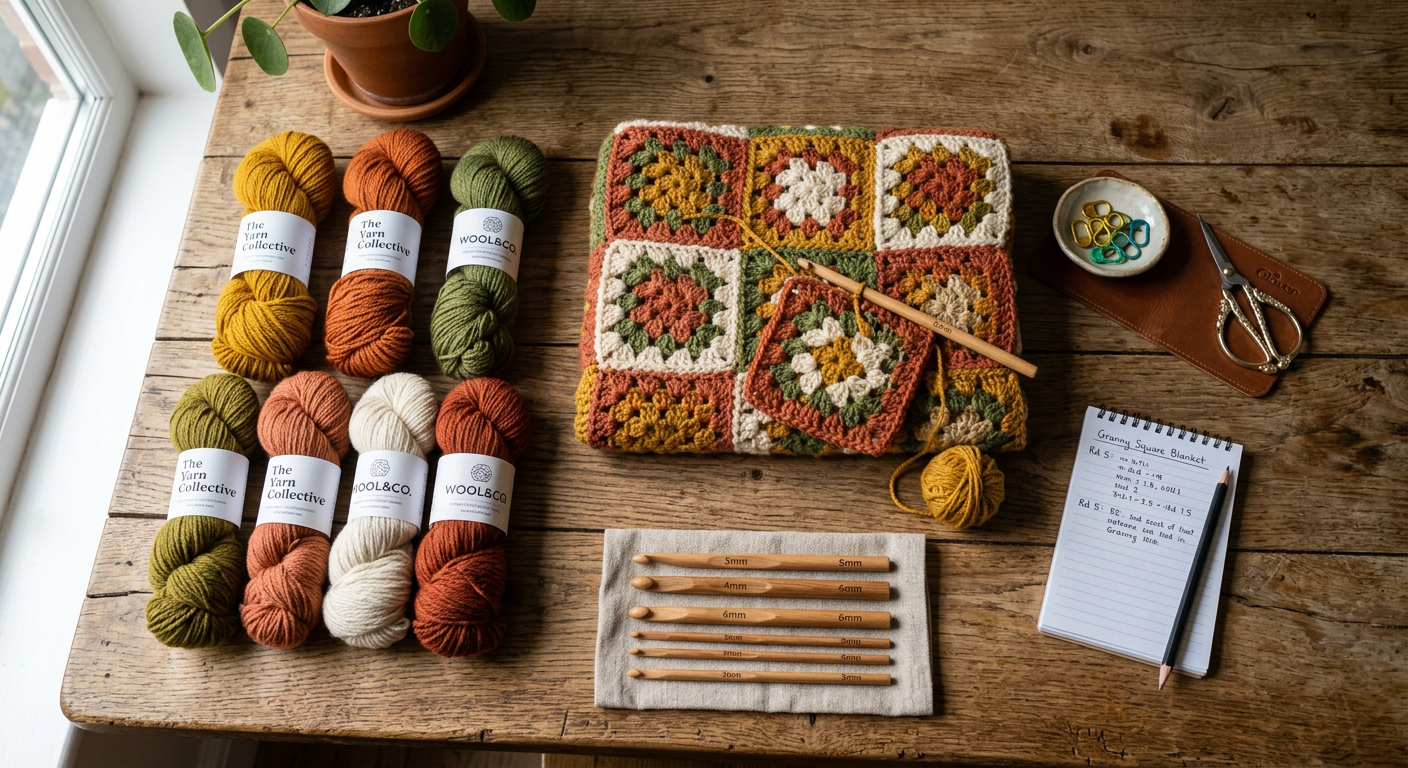
Hi there, crafty friend! I’m so glad you’re here. Lately I’ve been seeing the most beautiful crocheted cardigans all over Pinterest, and it’s got me in the mood to pick up my hook again. There’s something so satisfying about watching a project take shape, one stitch at a time.
If you’ve ever watched someone crochet and thought, “I want to do that,” you’re in the right place. I’m Donna, and crochet has been my constant companion through late nights, long road trips, rainy weekends, and just about every holiday season for more years than I care to count. I’m not an expert on everything, but I’ve picked up a thing or two along the way, and I love helping others discover the joy of creating with yarn and a hook.
Whether you’re a complete beginner looking for crochet instructions for beginners or someone who already knows the basics and wants to expand your crochet stitch library, this guide is for you. I’ve put together everything I wish someone had handed me when I first picked up a hook—from the foundational stitches and essential techniques to project ideas, tool recommendations, and answers to the questions I hear most often.
Think of this as your home base for all things crochet. Bookmark it, come back often, and let’s work through these stitches together!
Grab Your Free Crochet Stitch Guide!
Download my Crochet Stitch Abbreviations Cheat Sheet—perfect for keeping by your chair while you work!
What You’ll Find in This Guide
- Beginner-friendly basics — how to hold your hook, make a slip knot, and work your first chain
- Essential crochet stitches — from single crochet to double crochet, half double crochet, treble, and beyond
- Key techniques — the magic ring, working in the round, changing colors, reading patterns
- Popular project types — blankets, hats, scarves, amigurumi, bags, garments, and home décor
- Tools and supplies — what you actually need (and what you can skip)
- Common mistakes and how to fix them — so you don’t have to learn the hard way
- Featured project ideas — specific, practical projects to try at every skill level
- FAQ — real answers to the questions beginners ask most
Getting Started: Crochet Basics for Beginners
Learning how to crochet step by step doesn’t have to be intimidating. You need exactly two things to start: a crochet hook and a ball of yarn. That’s it. No sewing machine, no loom, no complicated setup. Just you, a hook, and some yarn.
Holding Your Hook and Yarn
There are two common ways to hold a crochet hook: the pencil grip (holding it like a pencil) and the knife grip (holding it like a butter knife). Neither is “correct”—use whichever feels natural. I use the knife grip myself, but I’ve taught plenty of people who prefer the pencil hold. Your tension hand (the one holding the yarn) matters just as much. Wrap the yarn around your index finger and let it flow smoothly. Consistent tension is the single biggest factor in making your stitches look even.
The Slip Knot and Foundation Chain
Every crochet project starts with a slip knot followed by a foundation chain. The chain is your starting row—it’s the base that everything else builds on. Make a loop, pull the yarn through, and tighten it on your hook. Then yarn over and pull through to create each chain stitch. Count your chains carefully; getting the count right here saves headaches later.
Essential Crochet Stitches Every Crocheter Should Know
Once you have your foundation chain, it’s time to learn the core stitches. These are the building blocks for virtually every crochet pattern out there. Master these, and you can tackle just about anything.
Chain Stitch (ch)
You already learned this one with your foundation chain. The chain stitch is also used throughout patterns to create spaces, turning chains, and decorative elements. It’s the simplest stitch, but it shows up everywhere.
Slip Stitch (sl st)
The slip stitch is the shortest crochet stitch. Insert your hook, yarn over, and pull through both loops at once. It’s used to join rounds, move across stitches without adding height, and create surface details. You’ll use it constantly when working in the round.
Single Crochet (sc)
Single crochet creates a short, tight, dense fabric. Insert your hook into the stitch, yarn over, pull up a loop (two loops on hook), yarn over again, and pull through both loops. This is the stitch I recommend every beginner learn first. It’s easy, forgiving, and produces a sturdy fabric that’s perfect for dishcloths, amigurumi, and bags.
Half Double Crochet (hdc)
The half double crochet stitch sits between single and double crochet in height. Yarn over before inserting your hook, pull up a loop (three loops on hook), then yarn over and pull through all three loops. HDC creates a slightly softer, more flexible fabric than single crochet. It’s one of my favorite stitches for hats and cowls because it works up quickly and has a nice drape.
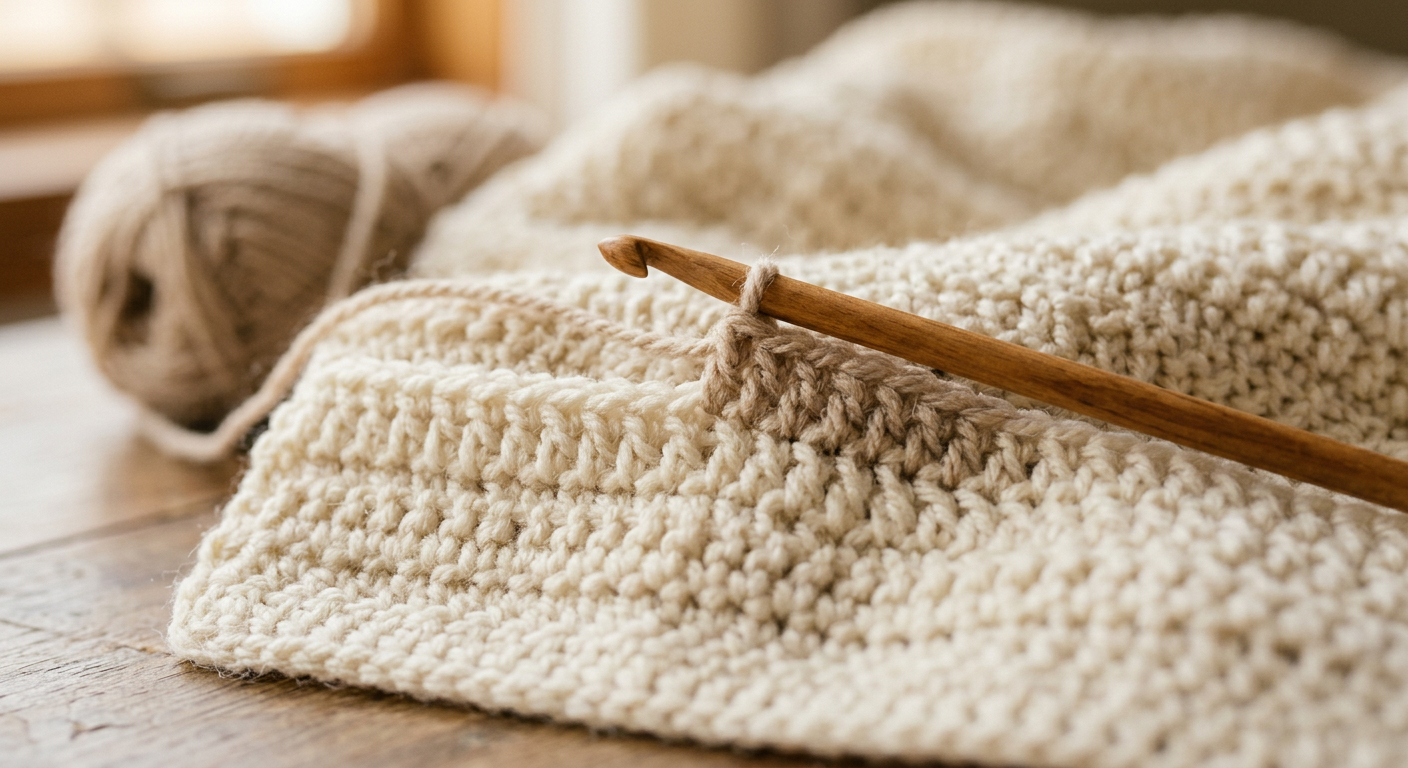
Double Crochet (dc)
Double crochet is probably the most widely used stitch in crochet. Yarn over, insert hook, pull up a loop, yarn over and pull through two loops, yarn over and pull through the remaining two loops. It’s taller than HDC, works up faster, and creates a fabric with a bit more drape. Granny squares, afghans, scarves, and garments all rely heavily on double crochet.
Treble Crochet (tr) and Beyond
Treble crochet (also called triple crochet) adds another yarn over at the beginning, making it even taller. These taller stitches create open, lacy fabrics and are common in lace patterns and decorative work.
Key Techniques That Open Up New Possibilities
Knowing the basic stitches is essential, but these techniques are what take you from “I can make a rectangle” to “I can make anything.”
The Magic Ring (Magic Circle)
The magic ring is a technique for starting projects worked in the round—hats, amigurumi, granny squares, and round motifs. Instead of chaining and joining (which leaves a hole in the center), the magic ring lets you pull the center completely closed. It takes a little practice to get comfortable with, but once you have it, you’ll never go back.
Working in the Round
Many crochet projects—hats, beanies, amigurumi toys, round coasters, and bags—are worked in continuous rounds or joined rounds rather than flat rows. Understanding how to increase evenly to keep your work flat (or not increase to create a tube) is fundamental. Use stitch markers to mark the beginning of each round so you don’t lose your place.
Changing Colors and Working with Multiple Yarns
Color changes open up a whole world of design possibilities—stripes, colorwork, tapestry crochet, and more. The key is to introduce the new color on the last pull-through of the stitch before the color change. This keeps your color transitions clean.
Reading Crochet Patterns
Crochet patterns can look like a foreign language at first—all those abbreviations and brackets. But once you learn the standard abbreviations (ch, sc, dc, hdc, tr, sl st, sk, rep), it clicks. Patterns come in written form, chart format, diagram format, and sometimes video. I keep a printable reference card next to my chair—and you can grab one for free using the signup form above!
Popular Crochet Stitch Patterns and Textures
Beyond the basic stitches, there are hundreds of stitch pattern combinations that create unique textures and visual effects. Here are some of the most popular ones to explore:
The Granny Square
The granny square is probably the most iconic crochet motif. It’s worked in the round with clusters of double crochet separated by chain spaces. You can make them in one color or dozens. Join them together for blankets, bags, cardigans, and more.
The V-Stitch
The V-stitch is made by working a double crochet, chain one, double crochet all in the same stitch. It creates a light, airy fabric with a pretty V-shaped pattern. It’s great for scarves, shawls, and lightweight blankets.
The Zigzag (Chevron) Pattern
Zigzag patterns (also called chevron or ripple) create a wavy effect by strategically placing increases and decreases. They’re stunning in multi-color combinations and are a classic choice for blankets and afghans.
The Moss Stitch (Linen Stitch)
Alternating single crochet and chain stitches creates a woven-looking fabric called the moss stitch or linen stitch. It’s dense, has minimal stretch, and is perfect for bags, washcloths, and structured items.
Common Crochet Project Types
One of the best things about crochet is the sheer variety of things you can make. Here’s a rundown of the most popular project categories:
Blankets and Afghans
Crochet blankets are among the most popular projects, and for good reason. There’s nothing quite like wrapping up in a blanket you made yourself. From simple striped throws to elaborate sampler blankets with different stitch patterns in each row, blankets are a great way to practice new stitches.
Hats, Beanies, and Headbands
Crochet hats are perfect quick projects. A basic beanie can be finished in an evening. They’re great for practicing working in the round and make wonderful gifts. Headbands are even faster—a crochet headband project is often one of the first things I recommend to new crocheters.
Amigurumi and Stuffed Toys
Amigurumi—the Japanese art of crocheting small stuffed figures—has exploded in popularity. These projects use single crochet worked tightly in the round, increases and decreases for shaping, and safety eyes or embroidered features.
Garments: Tops, Cardigans, and Sweaters
Crocheted garments have come a long way from the scratchy vests of the 1970s. Modern crochet patterns for tops, cardigans, and sweaters use beautiful draping stitches and soft yarns. Crochet tops are trending heavily right now, with mesh tops, cropped cardigans, and oversized sweaters being especially popular.
Bags, Purses, and Accessories
Crocheted bags are practical and stylish. From market bags to structured purses to tiny pouches, crochet bag projects are satisfying because they’re usually quick and immediately useful.
Seasonal and Holiday Projects
Crochet Christmas ornaments, stockings, and decorations are a holiday tradition for many crafters. Autumn items like pumpkins and leaf garlands are popular too. If you enjoy holiday crafting, check out our holiday craft ideas for even more seasonal projects.
Featured Project Ideas
Here are some specific projects to try at different skill levels. Each one teaches you something new while giving you a finished item you’ll actually use.
Beginner Projects
- Simple Dishcloth — Work a square in single crochet using cotton yarn. Practice keeping your edges straight.
- Chunky Infinity Scarf — Use chunky yarn and double crochet to make a wide rectangle, then join the ends.
- Basic Beanie — Start with a magic ring, increase in rounds to create the crown, then work even for the sides.
- Granny Square Sampler — Make several granny squares in different colors and practice joining them.
Intermediate Projects
- Chevron Blanket — A chevron blanket in 3-5 colors teaches you increases, decreases, and color changes.
- Market Bag — A mesh market bag uses chain spaces and double crochet to create a stretchy, reusable bag.
- Amigurumi Animal — Try a simple stuffed animal like a bunny or turtle for amigurumi practice.
- Textured Throw Pillow Cover — Combine different stitch patterns (bobbles, cables, popcorn stitches) for visual interest.
Advanced Projects
- Crocheted Cardigan — A cardigan project involves garment construction, shaping, buttonholes, and finishing.
- Tapestry Crochet Bag — Tapestry work involves carrying multiple colors and following a chart to create pictures or geometric designs.
- Lace Shawl — Lace shawls use fine yarn and complex stitch patterns for heirloom-quality pieces.
Essential Crochet Supplies
You don’t need a lot to get started, but having the right tools makes everything easier. Here are the basic supplies every crocheter needs:
This post contains affiliate links. If you buy through them, I may earn a commission at no extra cost to you. As an Amazon Associate I earn from qualifying purchases.
| Supply | Why It’s Popular | Where to Buy |
|---|---|---|
| Clover Amour Crochet Hook Set | Features ergonomic soft-grip handles that reduce hand fatigue. The aluminum hooks glide smoothly through yarn. Highly rated by thousands of crocheters for comfort during long sessions. | View on Amazon |
| Clover Locking Stitch Markers | Locking design clips securely onto any stitch without slipping. Essential for marking rounds, pattern repeats, and counting stitches. Comes in a convenient storage case. | View on Amazon |
| Clover Tapestry Needles (Bent Tip) | Bent tip makes weaving in ends much easier than straight needles. The blunt tip won’t split your yarn. A must-have for finishing crochet projects neatly. | View on Amazon |
| Wooden Yarn Bowl | Keeps yarn contained and tangle-free while you work. The curved slot guides yarn smoothly. A beautiful and functional addition to any crafter’s toolkit. | View on Amazon |
Supplies Crafters Love
Once you’ve got the basics covered, these tools can make your crochet experience even better:
| Supply | Why It’s Popular | Where to Buy |
|---|---|---|
| Stanwood Needlecraft Yarn Winder | Transforms messy skeins into neat center-pull cakes. Makes yarn easier to work with and prevents frustrating tangles. A game-changer for anyone with a growing yarn stash. | View on Amazon |
| Blocking Mats and T-Pins Set | Essential for finishing garments, shawls, and lace projects. Grid lines help with measuring and blocking evenly. Helps your projects hold their shape beautifully. | View on Amazon |
| Crochet Project Bag with Pockets | Keeps your current work organized and portable. Multiple pockets hold hooks, scissors, and accessories. Perfect for crocheting on the go or keeping projects tidy at home. | View on Amazon |
| Crochet Hook Organizer Case | Keeps all your hooks organized and easy to find. Slots for different sizes plus pockets for accessories. No more digging through a tangled mess to find the right hook! | View on Amazon |
| Knit/Crochet Gauge Ruler Tool | Essential for checking gauge before starting garments. The 2-inch window makes counting stitches and rows quick and accurate. Helps ensure your finished project matches pattern sizing. | View on Amazon |
Common Mistakes and How to Avoid Them
I’ve made every mistake in the book, so let me save you some trouble:
- Not counting stitches. This is the number one beginner mistake. Count your stitches at the end of every row until it becomes second nature.
- Skipping the turning chain. When you turn your work at the end of a row, you need a turning chain to bring your hook up to the correct height. Forgetting it will make your edges shrink inward.
- Inconsistent tension. If your stitches are tight in some places and loose in others, your fabric will look uneven. This gets better with practice.
- Working into the wrong part of the stitch. Each stitch has a front loop, back loop, and both loops. Unless the pattern says otherwise, work under both loops.
- Not making a gauge swatch. For garments, skipping the gauge swatch is a gamble. Spend 15 minutes making one—it could save you hours of rework.
- Using the wrong hook size for your yarn. Check the yarn label for the recommended hook size. Using a hook that’s too small makes tight, stiff fabric; too large makes loose, floppy fabric.
Frequently Asked Questions
How long does it take to learn to crochet?
Most people can learn the basic chain and single crochet stitch in an afternoon. Getting comfortable enough to follow a simple pattern usually takes a few days to a couple of weeks of regular practice. Within a month of consistent practice, you should be able to tackle beginner patterns with confidence.
What’s the easiest crochet project for a complete beginner?
A dishcloth or washcloth in single crochet using cotton yarn. It’s a small, flat rectangle—no shaping, no complicated stitches, and you end up with something useful. After that, try a scarf or a simple beanie.
What size crochet hook should I start with?
A 5mm (US H/8) hook paired with worsted weight yarn is the standard recommendation for beginners. The hook is large enough to see what you’re doing but not so large that the stitches feel awkward.
Is crochet easier than knitting?
Many people find crochet easier to learn because you only use one hook (instead of two needles) and it’s easier to fix mistakes—you can simply pull out stitches and redo them. Crochet is also better for 3D shapes and amigurumi. That said, both crafts have their strengths, and many crafters enjoy both.
How do I read a crochet pattern?
Start by learning the standard abbreviations: ch (chain), sc (single crochet), dc (double crochet), hdc (half double crochet), tr (treble crochet), sl st (slip stitch), sk (skip), rep (repeat). Instructions in parentheses or brackets are usually repeated. Download our free Crochet Stitch Abbreviations Cheat Sheet using the signup form above!
What’s the difference between US and UK crochet terms?
This is important! A US “single crochet” is the same as a UK “double crochet.” A US “double crochet” is a UK “treble.” Always check which terminology your pattern uses—most patterns will specify.
Why are my edges uneven?
Usually this means you’re missing the first or last stitch of each row, or you’re adding extra stitches somewhere. Count your stitches every row until you build the habit of working into the turning chain (or skipping it correctly, depending on the pattern).
How do I change colors neatly?
The trick is to change colors on the last yarn-over of the last stitch before the color change. So if you’re making a double crochet, do your first yarn-over and pull through (two loops on hook), then yarn over with the new color and pull through both loops. The old color completes the stitch, and the new color is ready for the next stitch.
Ready to Start Your Crochet Journey?
Crochet is one of those crafts that meets you exactly where you are. You can make something beautiful with just a hook, some yarn, and a little patience. Start with the basics, practice consistently, and don’t be afraid to unravel and try again—every crocheter does it!
The most important thing is to enjoy the process. Whether you’re making a simple dishcloth or an intricate lace shawl, the rhythmic motion of hook and yarn is its own reward. And when you finish that first project? There’s nothing quite like it.
Pick up your hook and try that first stitch. I’ll be here with more tutorials, patterns, and tips whenever you need them. Happy crocheting!
Don’t forget to grab your free Crochet Stitch Abbreviations Cheat Sheet using the form above!
Explore More
If you enjoyed this crochet guide, you might also like these related topics on Crafting with Donna:
- Knitting Patterns — Discover our collection of knitting tutorials and patterns
- Embroidery Patterns — Add decorative touches to your crochet projects with embroidery
- Craft Organization Tips — Keep your yarn and supplies organized and accessible
- Holiday Craft Ideas — Seasonal crochet and craft projects throughout the year
- DIY Home Decor Ideas — Use your crochet skills to beautify your home
— Donna
Crafting with Donna
Knitting Patterns: Complete Guide to Stitches, Techniques, and Projects
There’s something deeply satisfying about the rhythm of knitting needles clicking together while a piece of fabric grows row by row in your hands. I started knitting over twenty years ago with a lopsided garter stitch scarf, and I’ve been hooked ever since. Whether you’re picking up needles for the very first time or you’ve been knitting for decades, there’s always a new stitch to learn, a fresh pattern to try, and another project calling your name from the yarn basket.
Knitting is one of those crafts that rewards you at every level. As a beginner, you can make a beautiful scarf in a weekend. With a bit more practice, you’ll be turning out hats, mittens, and blankets. And once you’ve built confidence with the basics, the world of cables, lace, colorwork, and sweater construction opens up in ways that never stop being exciting. I still get a thrill every time I finish a pair of socks or block a lace shawl for the first time.
This guide is everything I wish someone had handed me when I first learned to knit. I’ve packed it with practical advice on stitches, techniques, tools, and project ideas — organized so you can jump to whatever’s most useful for where you are right now. Think of it as your knitting home base, a place to come back to whenever you need direction or a spark of inspiration.
What You’ll Find in This Guide
- Beginner-friendly patterns and stitches to get you started with confidence
- Common project types — scarves, hats, blankets, sweaters, socks, and more
- Essential tools and materials including needles, yarn weights, and accessories
- Techniques and stitch patterns from garter stitch to cables, lace, and colorwork
- Tips for avoiding common mistakes that trip up new (and experienced) knitters
- Seasonal and gift project ideas for holidays, home decor, and special occasions
- Featured project suggestions with specific details to get you casting on
- Answers to frequently asked questions from real knitters
Getting Started: Knitting Patterns for Beginners
If you’ve never held a pair of knitting needles before, take a deep breath — this is going to be fun. The best knitting patterns for beginners focus on just two stitches: the knit stitch and the purl stitch. Every single knitting pattern in existence is built from combinations of these two basic moves. Master them, and you have the foundation for everything else.
I always tell new knitters to start with a dishcloth or a simple scarf. These are flat, rectangular projects that let you practice your tension and get comfortable with the feel of yarn moving through your fingers. Knitting patterns for scarves using garter stitch (knitting every row) are the simplest place to begin. You don’t need to worry about shaping, counting complicated stitch repeats, or switching between knit and purl. Just cast on, knit, and keep going.
Once your garter stitch feels even and consistent, try stockinette stitch — that’s alternating one row of knit stitches with one row of purl stitches. This creates the classic smooth “V” fabric you see in most store-bought knits. From there, knitting patterns easy for beginners open up quickly: ribbed hat bands, seed stitch washcloths, and simple striped projects that introduce color changes without any complicated techniques.
A few beginner tips that saved me a lot of frustration early on:
- Use light-colored, smooth yarn so you can see your stitches clearly
- Choose medium-weight yarn (worsted or aran weight) and size US 7–9 needles
- Count your stitches at the end of every row until it becomes second nature
- Don’t knit too tightly — most beginners squeeze the yarn, which makes stitches hard to work
- Practice casting on and binding off separately before starting your first real project
Common Knitting Project Types
One of the best things about knitting is the sheer range of projects you can make. Here’s a rundown of the most popular categories and what makes each one worth trying.
Scarves and Cowls
Knitting patterns for scarves remain the most popular starting point, and for good reason. A scarf is forgiving, portable, and satisfying to finish. Once you’re comfortable with basic scarves, cowls (tube-shaped neck warmers knit in the round) are a natural next step. Knitting patterns for hooded scarves combine warmth with style — they’re one of my favorite gifts to make.
Hats and Headbands
Hats are the gateway to knitting in the round. Using circular needles or double-pointed needles, you can knit a basic beanie in an evening. Knitting patterns for beanies and knitting patterns for headbands are great confidence builders because they’re small, quick, and immediately wearable. They also introduce you to decreasing (shaping the crown of a hat) without a huge time commitment.
Blankets and Throws
There’s nothing like wrapping up in a blanket you made yourself. Knitting patterns for blankets range from simple garter stitch squares sewn together to elaborate cable and colorwork designs. Knitting patterns for easy blankets often use chunky or super chunky yarn on large needles, so the fabric grows fast. If you want a quicker finish, knitting patterns using bulky yarn are your best friend.
Sweaters and Cardigans
Making your first sweater is a milestone. Knitting patterns for sweaters range from simple top-down raglans to intricate cabled pullovers. Knitting patterns for cardigans — including knitting patterns for chunky cardigans and knitting patterns for long cardigans — are incredibly popular because they’re versatile to wear and forgiving on fit. Many modern knitting patterns use top-down construction, which lets you try the sweater on as you go.
Socks and Mittens
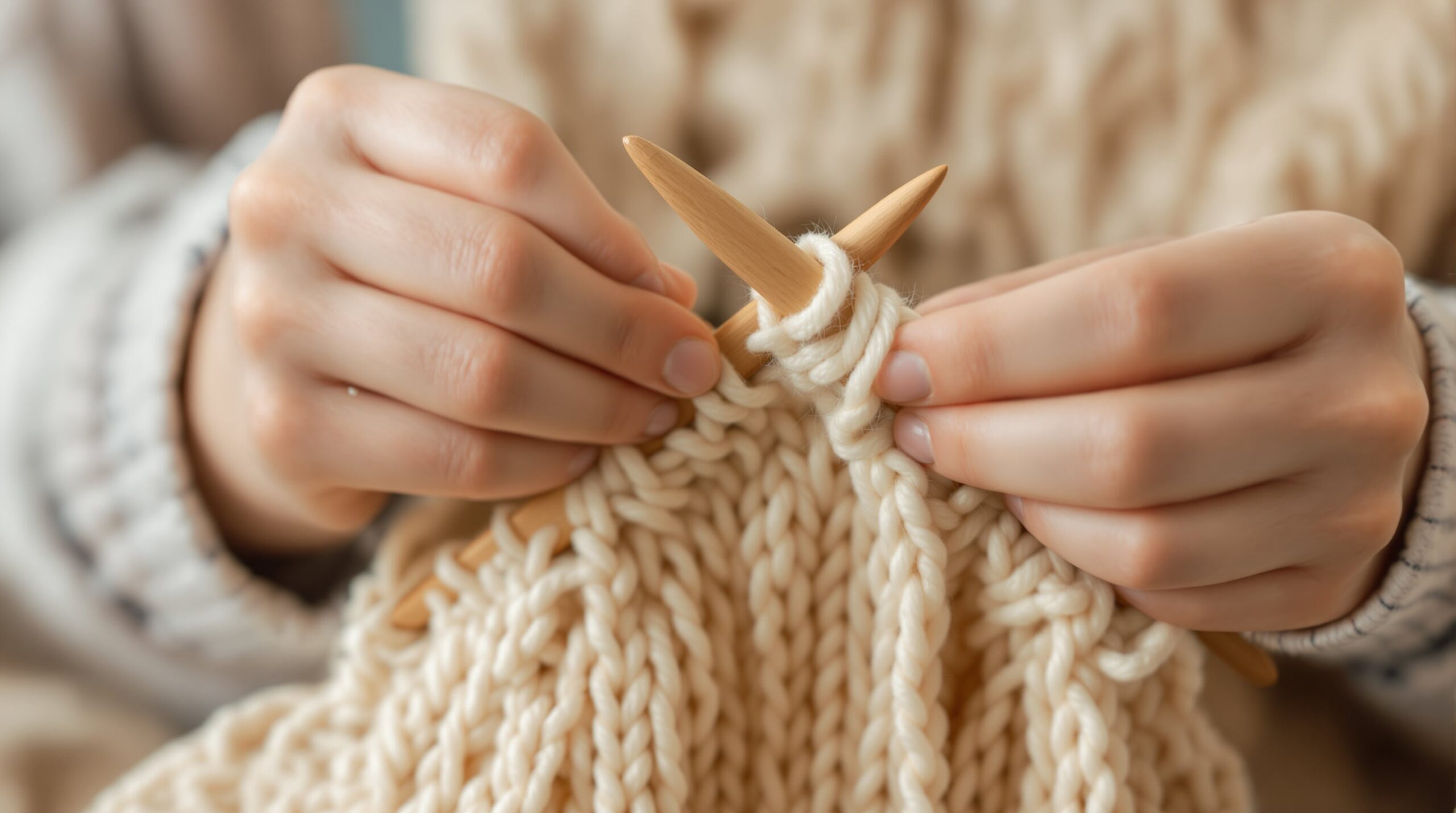
Sock knitting is almost a craft within a craft — once you start, you may never stop. Knitting patterns for socks teach you about working with fine yarn, turning heels, and picking up stitches. Knitting patterns for mittens and knitting patterns for gloves are equally rewarding small projects, perfect for using up special hand-dyed yarn that’s too precious for larger projects.
Toys, Home Decor, and Gifts
Knitting patterns for teddy bears and knitting patterns for dolls make heartfelt gifts for children. Knitting patterns for animals — cats, rabbits, dogs — are charming to display or give away. On the practical side, knitting patterns for dishcloths and knitting patterns for tea cosies are quick projects that also make wonderful housewarming gifts.
Essential Knitting Stitches and Techniques
Understanding knitting stitches and patterns is what transforms you from someone who can follow instructions into a knitter who understands why the fabric behaves the way it does. Here are the core techniques worth learning, roughly in order of complexity.
Foundation Stitches
Garter stitch — Knit every row. Creates a squishy, reversible fabric with horizontal ridges. Knitting patterns using garter stitch are ideal for beginners and produce fabric that lies flat without curling. Stockinette stitch — Knit one row, purl one row. The smooth side shows the classic “V” pattern. Most garments use stockinette as their base fabric. Seed stitch — Alternate knit and purl across each row, offsetting them on the next row. Creates a beautiful textured fabric that’s great for borders and standalone projects.
Intermediate Techniques
Ribbing — Alternating columns of knit and purl (like K2, P2) creates stretchy fabric used for hat brims, cuffs, and necklines. Cable knitting — Crossing groups of stitches over each other creates those gorgeous rope-like patterns. Knitting patterns with cables look complex but use a simple cable needle to hold stitches temporarily. Once you try one cable panel, you’ll want to cable everything. Knitting in the round — Using circular needles or double-pointed needles to knit tubes for hats, socks, and seamless sweaters. Knitting patterns in the round eliminate most seaming.
Advanced Techniques
Lace knitting — Yarn overs and decreases create open, decorative fabric. Knitting patterns for lace produce stunning shawls, scarves, and garment details. Knitting patterns for lace weight yarn demand patience but reward you with heirloom-quality pieces. Colorwork — Knitting with multiple colors in a single row. Stranded colorwork (Fair Isle), intarsia, and mosaic techniques each produce different effects. Knitting patterns for colorwork let you create pictorial designs, geometric motifs, and richly patterned garments. Top-down construction — Starting at the neckline and working down. Knitting patterns top down are popular for sweaters because you can try on the garment as you go and adjust length easily.
Tools and Supplies Every Knitter Needs
You don’t need much to start knitting, but having the right tools makes a real difference in your experience. Here’s what I recommend based on where you are in your knitting practice. If you’re building a broader crafting toolkit, check out my guides on essential craft supplies and essential craft tools for more recommendations.
Needles
Straight needles — The classic pair of long, single-pointed needles. Good for flat projects like scarves and dishcloths. Knitting patterns with straight needles are the most beginner-friendly format. Circular needles — Two short needle tips connected by a flexible cable. Essential for knitting in the round and comfortable for large flat projects too. Double-pointed needles (DPNs) — Sets of four or five short needles used for small circumference knitting like socks, mittens, and hat crowns. Interchangeable needle sets — A worthwhile investment once you’re committed. They let you swap needle tips onto different cable lengths, covering nearly every project situation.
Yarn
Yarn weight matters more than brand. Here’s a quick reference:
- Lace/Fingering — Fine yarn for socks, shawls, and delicate garments. Knitting patterns using sock yarn typically call for this weight.
- DK/Worsted — Medium weight, the most versatile. Works for almost everything from hats to sweaters.
- Aran — Slightly heavier than worsted. Knitting patterns aran weight produce warm, structured fabric ideal for cables.
- Chunky/Super Chunky — Thick yarn that knits up fast. Knitting patterns for chunky wool and knitting patterns for super chunky yarn are perfect for quick blankets and cozy cardigans.
- Cotton — Great for warm-weather projects, dishcloths, and summer tops. Knitting patterns in cotton produce crisp, breathable fabric.
Accessories
A few small tools make a big difference: stitch markers for keeping track of pattern repeats, a tapestry needle for weaving in ends, a row counter, scissors, and a knitting pattern holder to keep your instructions visible while you work. A good project bag keeps everything organized — if you’re anything like me, you’ll end up with several for different works in progress. For more ideas on keeping your craft space tidy, my craft organization tips can help.
Tips, Techniques, and Best Practices
After years of knitting, these are the habits and techniques that have made the biggest difference in my finished projects.
Always Swatch
I know, I know — nobody wants to hear this. But knitting a gauge swatch before starting a garment will save you from heartbreak. A sweater knit at the wrong gauge can end up several sizes too big or too small. Swatch, wash and block the swatch, then measure. It takes thirty minutes and prevents days of wasted effort.
Learn to Read Your Knitting
This is a game-changer. Once you can look at your fabric and identify knit stitches, purl stitches, yarn overs, and decreases, you can catch mistakes immediately instead of discovering them ten rows later. Spend time studying your work — notice how a knit stitch makes a V, how a purl stitch creates a bump, and how a dropped stitch looks different from the surrounding fabric.
Block Everything
Blocking — wetting or steaming your finished knitting and pinning it to shape — transforms lumpy, uneven fabric into something polished and professional. Lace especially needs blocking to open up the stitch patterns. Even a simple stockinette hat looks better after a quick soak and lay-flat dry.
Keep Notes
Write down modifications you make to patterns — needle size changes, extra length added, yarn substitutions. Future you will be grateful. I keep a small notebook in my project bag, and it’s one of the most useful tools I own.
Common Knitting Mistakes and How to Fix Them
Every knitter makes mistakes. The difference between a frustrated knitter and a confident one is knowing how to fix them.
- Dropped stitches — Use a crochet hook to pick them back up through each row’s ladder. Practice this on a swatch before you need it in a project.
- Uneven tension — Usually improves with practice. Try to hold the yarn consistently and avoid pulling it too tight after each stitch. Continental style knitting (holding yarn in the left hand) can help some people achieve more even tension.
- Twisted stitches — Happen when you wrap yarn the wrong direction or place stitches back on the needle incorrectly. Learn to identify the leading leg of each stitch.
- Accidental increases — Usually caused by picking up the bar between stitches or bringing the yarn to the front at the wrong time. Count stitches regularly.
- Tight cast-on or bind-off — Use a needle one or two sizes larger for casting on and binding off. This prevents puckered edges.
- Curling stockinette — This is normal, not a mistake. Blocking helps, and adding borders of garter stitch, seed stitch, or ribbing eliminates the curl entirely.
Seasonal and Gift Knitting Projects
Knitting and the seasons go hand in hand. Some of my favorite projects are tied to specific times of year — and knitting handmade gifts adds something store-bought presents simply can’t match.
Fall and Winter
This is peak knitting season. Knitting patterns for Christmas stockings, knitting patterns for Christmas decorations, and free knitting patterns for xmas decorations keep my needles busy from September onward. Warm accessories — hats, mittens, neck warmers, and leg warmers — make perfect gifts. Knitting patterns for chunky cardigans and cable-knit throws are ideal for cozy evenings. If you enjoy holiday crafting across multiple disciplines, you’ll find more seasonal inspiration in my holiday craft ideas guide.
Spring and Summer
Warmer months are perfect for lightweight projects. Knitting patterns for summer tops, knitting patterns for tank tops, and knitting patterns for vest tops in cotton or linen yarn are breezy and wearable. Knitting patterns for cotton yarn produce crisp market bags and spa cloths. Lace-weight shawls work beautifully as light layers for cool summer evenings.
Holiday and Special Occasion Gifts
Handknit gifts show real thoughtfulness. Knitting patterns for gifts include quick projects like dishcloths, headbands, and coffee cup cozies as well as bigger commitments like sweaters and blankets. Knitting patterns for Easter produce adorable baskets and egg cozies. Knitting patterns for Halloween can include spooky dishcloths and costume accessories. For more gift-worthy craft ideas, check out the guides on sewing projects and embroidery patterns — handmade gifts in any fiber art are always appreciated.
Featured Knitting Project Ideas
Here are specific projects I recommend for different skill levels. Each one teaches useful techniques while producing something you’ll actually want to use or give away.
Beginner: Garter Stitch Dishcloth Set
Cast on 40 stitches with worsted-weight cotton yarn and size US 7 needles. Knit every row until you have a square. Bind off. Make three or four in coordinating colors, tie them with ribbon, and you’ve got a thoughtful housewarming gift. This project teaches casting on, the knit stitch, binding off, and weaving in ends — every fundamental skill in one small package.
Beginner-Intermediate: Ribbed Beanie
Using worsted-weight yarn and size US 8 circular needles (16-inch), cast on 80 stitches and join for knitting in the round. Work in K2, P2 ribbing for about 7 inches, then decrease for the crown. This hat introduces circular knitting, ribbing, and basic shaping. You’ll finish it in a couple of evenings and have a warm, stretchy hat that fits almost everyone.
Intermediate: Cable Scarf
A six-stitch cable panel flanked by reverse stockinette creates a classic, timeless scarf. Use aran-weight yarn and size US 9 needles. The cable crossing happens every sixth row, giving you plenty of plain knitting between the action. This project builds cable confidence and produces a scarf that looks far more complicated than it actually is.
Intermediate: One-Skein Mittens
Knitting patterns for one-skein projects are great for using up single skeins of special yarn. A pair of basic mittens uses about 200 yards of worsted-weight yarn on double-pointed needles. You’ll learn thumb gusset construction, Kitchener stitch for a seamless tip, and the satisfaction of knitting patterns for mittens that actually keep your hands warm.
Advanced: Top-Down Raglan Sweater
A top-down raglan is the most accessible sweater construction for a first garment. Starting at the neckline, you increase at four points to create the yoke, then separate sleeves and body. Knitting patterns top down let you try the sweater on as you work, adjusting length and fit. Use a smooth DK or worsted-weight yarn so you can clearly see your stitches and count your increases.
Advanced: Colorwork Hat
Stranded colorwork (Fair Isle) produces stunning patterned knitting. Start with a hat — it’s small enough to be manageable while you learn to carry two colors across a row. Knitting patterns for colorwork using just two colors per row are the easiest entry point. Choose high-contrast colors so the pattern pops, and don’t worry about your floats being perfect on the first try. Colorwork gets smoother with every project.
How Knitting Connects to Other Crafts
One of the things I love about knitting is how naturally it connects to other fiber and handwork disciplines. If you enjoy the meditative rhythm of knitting, you’ll likely love crochet tutorials — many knitters pick up crochet for edgings, borders, and projects that work up differently. The combination of knitting and crochet skills makes you incredibly versatile.
Macramé patterns share knitting’s love of working with yarn and cord to create textured fabric and home decor. Embroidery patterns offer a way to add decorative details to knitted garments — duplicate stitch on knitting is essentially embroidery on a knit grid. And if you enjoy making wearable items, sewing projects complement knitting perfectly, from adding fabric linings to knit bags to constructing garments that combine knit and woven fabrics.
For knitters who love working with beads, beading projects can be integrated directly into knitting with beaded knitting techniques — knitting patterns with beads add sparkle to shawls and accessories. And no matter what crafts you practice, having a well-organized workspace makes everything more enjoyable. My craft organization tips guide covers yarn storage, needle organization, and pattern management.
Frequently Asked Questions About Knitting
What’s the easiest knitting project for a complete beginner?
A garter stitch dishcloth or scarf. You only need to know one stitch (the knit stitch), and the project is flat and rectangular — no shaping required. Use medium-weight cotton yarn and size US 8 needles. You’ll have a finished, usable project in just a few hours.
What’s the difference between knitting and crocheting?
Knitting uses two needles and creates fabric by interlocking loops in rows. Crochet uses one hook and builds fabric one stitch at a time. Knitted fabric tends to be thinner and more drapey, while crocheted fabric is thicker and sturdier. Many crafters enjoy both — they produce different textures and are suited to different types of projects.
How much yarn do I need for a scarf?
For a standard adult scarf about 6 inches wide and 60 inches long in worsted-weight yarn, plan on roughly 300–400 yards. A chunky yarn scarf uses less yardage (about 150–200 yards) because the stitches are larger. Check your pattern for specific requirements, and always buy an extra skein if you’re unsure — you can always use leftovers for other projects.
What are the best knitting needles for beginners?
Bamboo or wooden needles in size US 7–9 are ideal for beginners. They have a slight grip that prevents stitches from sliding off, unlike slippery metal needles. Start with straight needles for flat projects, then add a set of circular needles when you’re ready to knit hats or work on larger projects.
Can I knit a sweater as a beginner?
Yes, but I’d recommend completing a few smaller projects first — a scarf, a hat, and a pair of mittens or a dishcloth. These build the skills you need for sweater construction: knitting in the round, basic shaping, and maintaining even tension over many stitches. An experienced-beginner-friendly top-down raglan sweater is a realistic first garment after a few months of practice.
Where can I find free knitting patterns online?
Ravelry is the largest database of knitting patterns, with thousands of free options. Yarn company websites also publish free patterns to showcase their products. Knitting patterns online free are widely available for every project type and skill level. Many independent designers offer at least one or two free patterns on their personal websites or through pattern platforms.
How do I fix a dropped stitch without unraveling my whole project?
Grab a crochet hook in a size close to your knitting needles. Insert it through the dropped stitch from front to back, catch the horizontal ladder bar above it, and pull it through. Repeat for each row the stitch has dropped. Work carefully to make sure you’re pulling the bars through in the right order. This is one of the most useful skills in knitting, and it’s worth practicing on a swatch before you need it in a real project.
What’s the best way to store yarn?
Keep yarn in a cool, dry place away from direct sunlight. Clear plastic bins or cotton bags work well for storage — avoid airtight containers where moisture can get trapped. Cedar blocks or lavender sachets help deter moths, which are the biggest threat to natural fiber yarn. Organize by weight or color for easy project planning. For more storage ideas, see my craft organization tips.
Final Thoughts: Why Knitting Is Worth Every Stitch
Knitting gives you something few other hobbies can match: a productive, meditative practice that results in beautiful, useful objects you can wear, gift, and treasure. Whether you’re working through your first scarf or designing your own colorwork sweater, every row is a small accomplishment that adds up to something real.
I’ve been knitting for over two decades, and I still learn something new with almost every project. That’s part of what keeps it exciting. There’s always a technique to refine, a stitch pattern to explore, or a yarn fiber to experiment with. If you’re just getting started, be patient with yourself. Those first few inches of knitting might look a little wobbly, but I promise — your hands will find their rhythm, your tension will even out, and before you know it, you’ll be casting on your next project before you’ve even bound off the current one.
Grab your needles, pick a pattern that excites you, and start stitching. I’ll be here with more project ideas, technique guides, and inspiration whenever you need it. Happy knitting!
Fall Jewelry Making Tutorials: Create Stunning Autumn-Inspired Pieces at Home
Hello, my wonderful crafting friends!
As the leaves turn golden and the air gets crisp, I find myself reaching for my jewelry-making supplies more than ever. There’s something absolutely magical about creating beautiful autumn-inspired jewelry pieces while sipping hot apple cider and watching the world transform outside my window. Today, I’m thrilled to share my favorite fall jewelry making tutorials that will have you creating stunning pieces perfect for the season!
Whether you’re a complete beginner or have been crafting for years, these jewelry making projects are designed to inspire your creativity and help you embrace the beautiful colors and textures of fall. Let’s dive into this wonderful world of handmade jewelry together!
Why Fall is the Perfect Season for Jewelry Making
Fall has always been my favorite time for jewelry crafting, and here’s why: the color palette is absolutely breathtaking! Think rich burgundies, warm ambers, deep forest greens, and those gorgeous burnt oranges that remind us of pumpkin patches and cozy evenings. These colors translate beautifully into jewelry pieces that complement our fall wardrobes perfectly.
Plus, with the holidays approaching, handmade jewelry makes the most thoughtful and personal gifts. I’ve found that people truly appreciate the time and love that goes into creating something by hand, and jewelry is something they can wear and treasure for years to come.
Essential Tools and Materials for Jewelry Making
Before we jump into our tutorials, let’s talk about what you’ll need in your jewelry-making toolkit. Don’t worry – you don’t need to break the bank to get started! Here’s what I recommend:
Basic Tools (Investment: $30-50)
- Round-nose pliers: Perfect for creating loops and curves
- Chain-nose pliers: Your go-to for gripping and bending
- Wire cutters: Essential for trimming wire and headpins
- Jewelry files: For smoothing rough edges
- Bead mat: Keeps your beads from rolling away (a towel works too!)
Fall-Inspired Materials
- Beads: Look for amber, carnelian, tiger’s eye, and wooden beads in autumn hues
- Wire: 20-24 gauge craft wire in copper, bronze, or gold tones
- Findings: Jump rings, clasps, earring hooks, and headpins
- Natural elements: Small acorns, pressed leaves (sealed), pinecones
- Resin supplies: For preserving autumn leaves and flowers
Budget Tip: Start with a beginner’s jewelry-making kit from your local craft store. These usually run $20-30 and include most basic tools and supplies!
Trending Jewelry Techniques for 2025
I’m always excited to see what’s trending in the jewelry-making world, and 2025 is bringing some absolutely gorgeous styles! Here’s what’s hot right now:
Wire Wrapping Magic
Wire wrapping has made a huge comeback, and I couldn’t be happier! This technique involves wrapping wire around beads or gemstones to create beautiful, organic-looking pieces. It’s perfect for showcasing those gorgeous fall-colored stones like amber and carnelian.
Baroque Pearls and Organic Shapes
Irregular, baroque pearls are having their moment, and they’re absolutely stunning in fall jewelry. Their imperfect beauty pairs wonderfully with copper wire and autumn-toned beads.
Layered and Stacked Designs
The maximalist trend continues! Multiple necklaces, stacked bracelets, and layered pieces are all the rage. This is perfect for fall when we’re layering our clothing anyway.
Sustainable and Upcycled Materials
More crafters are embracing eco-friendly practices, using recycled metals, natural materials, and upcycled components. This aligns beautifully with fall’s harvest theme!
Tutorial 1: Autumn Leaf Wire-Wrapped Pendant
Skill Level: Beginner-Friendly | Time Required: 45-60 minutes | Cost: $8-12
This is one of my absolute favorite fall projects! You’ll create a beautiful pendant featuring a preserved autumn leaf wrapped in copper wire.
What You’ll Need:
- One pressed and dried autumn leaf (maple or oak work beautifully)
- Clear resin or Mod Podge for sealing
- 20-gauge copper wire (about 3 feet)
- 24-gauge copper wire for wrapping
- Round-nose pliers
- Chain-nose pliers
- Wire cutters
- Necklace chain (18-24 inches)
Step-by-Step Instructions:
Step 1: Prepare Your Leaf
First, you’ll want to preserve your leaf. I press mine between heavy books for about a week, then seal both sides with Mod Podge or a thin layer of resin. Let it dry completely – this usually takes 24 hours. The sealing process is crucial because it prevents the leaf from crumbling when you work with it.
Step 2: Create the Wire Frame
Cut about 18 inches of your 20-gauge wire. Using your round-nose pliers, create a small loop at one end – this will be where your chain attaches. Now, gently bend the wire to follow the outline of your leaf, creating a frame that cradles it perfectly.
Step 3: Secure the Leaf
This is where the magic happens! Using your 24-gauge wire, carefully wrap around both the frame and the leaf stem, securing everything in place. I like to create a spiral pattern that’s both functional and decorative. Take your time here – there’s no rush!
Step 4: Add Decorative Wrapping
Continue wrapping the thinner wire around your frame, creating interesting patterns and textures. I often add small beads in amber or bronze tones as I wrap. This adds dimension and catches the light beautifully.
Step 5: Finish and Attach
Trim any excess wire and use your chain-nose pliers to tuck in the ends securely. Attach your pendant to a chain, and voila! You’ve created a wearable piece of autumn art.
Donna’s Pro Tip: If you’re nervous about working with a real leaf, practice first with a silk leaf from the craft store. Once you’ve mastered the technique, move on to the real thing!
Tutorial 2: Beaded Fall Harvest Bracelet
Skill Level: Beginner | Time Required: 30-45 minutes | Cost: $10-15
This cheerful bracelet celebrates all the beautiful colors of fall and is perfect for gifting or keeping for yourself!
Materials Needed:
- Elastic beading cord (0.8mm)
- Assorted beads in fall colors (about 25-30 beads)
- Wooden beads in natural tones
- Glass beads in amber, burgundy, and forest green
- Small gold or copper accent beads
- Scissors
- Super glue or jewelry glue
- Bead mat or towel
Instructions:
Step 1: Measure and Cut
Measure your wrist and add 4 inches to that measurement. Cut your elastic cord to this length. The extra length gives you room to work and tie secure knots.
Step 2: Plan Your Pattern
Before you start threading, lay out your beads in the pattern you want. I love creating a gradient effect, starting with lighter autumn golds and transitioning to deep burgundies. Or try a random pattern for a more organic, harvest-inspired look!
Step 3: Thread Your Beads
Start threading your beads onto the elastic cord. Here’s a trick I learned: if you’re having trouble getting the cord through smaller beads, stiffen the end with a tiny bit of super glue and let it dry. It acts like a needle!
Step 4: Tie It Off
Once all your beads are threaded, tie the ends together with a surgeon’s knot (that’s just a double knot, tied twice). Pull it tight, add a tiny drop of glue to the knot, and let it dry. Trim the excess cord close to the knot.
Step 5: Hide the Knot
Gently slide the knot inside one of the larger beads. This gives your bracelet a professional, finished look!
Variation Ideas:
- Add small charm dangles between beads for extra interest
- Use letter beads to spell out “FALL” or “AUTUMN”
- Create a matching set with earrings and a necklace
Tutorial 3: Copper Wire-Wrapped Gemstone Earrings
Skill Level: Intermediate | Time Required: 60-90 minutes | Cost: $15-20
These elegant earrings showcase beautiful fall-colored gemstones and are perfect for dressing up your autumn wardrobe.
What You’ll Need:
- Two matching gemstone beads (carnelian, tiger’s eye, or amber work beautifully)
- 22-gauge copper wire
- Earring hooks (copper or gold-toned)
- Round-nose pliers
- Chain-nose pliers
- Wire cutters
- Small file or sandpaper
Creating Your Earrings:
Step 1: Cut Your Wire
Cut two 8-inch pieces of copper wire. This gives you plenty to work with while learning the technique.
Step 2: Create the Base Loop
Using your round-nose pliers, create a small loop about 2 inches from one end of the wire. This loop will attach to your earring hook later.
Step 3: Thread Your Bead
Slide your gemstone bead onto the longer end of the wire, bringing it up to sit just below your loop.
Step 4: Wrap and Secure
Here’s where your creativity shines! Wrap the shorter end of wire around the base of your loop several times, securing the bead in place. Then, bring the longer end up and over the bead, creating decorative wraps that frame the stone.
Step 5: Create the Bottom Loop
After wrapping, use your round-nose pliers to create another small loop at the bottom. This adds visual balance and a professional finish.
Step 6: Attach Earring Hooks
Open the loop on your earring hook slightly, attach it to the top loop of your wrapped bead, and close it securely.
Step 7: Repeat
Make the second earring, trying to match the wrapping pattern as closely as possible. Don’t worry if they’re not identical – the handmade charm is part of their beauty!
Troubleshooting Tip: If your wire wrapping looks messy, don’t panic! Use your chain-nose pliers to gently adjust and tighten the wraps. Practice makes perfect, and even “imperfect” wraps have character.
Tutorial 4: Resin Autumn Leaf Pendant
Skill Level: Intermediate | Time Required: 2-3 days (including curing time) | Cost: $20-25
This stunning pendant preserves the beauty of fall leaves in crystal-clear resin. It’s a bit more involved but absolutely worth the effort!
Materials:
- Small pressed autumn leaves
- Two-part epoxy resin
- Pendant mold or bezel
- Mixing cups and stir sticks
- Gloves
- Toothpicks for removing bubbles
- Pendant bail and chain
Process:
Step 1: Prepare Your Workspace
Resin work requires a clean, level surface in a well-ventilated area. Cover your work surface with plastic or wax paper. Trust me on this – resin is sticky!
Step 2: Arrange Your Leaf
Place your pressed leaf in the pendant mold or bezel. Arrange it exactly how you want it to appear in the finished piece. Take a photo for reference!
Step 3: Mix Your Resin
Following the manufacturer’s instructions carefully, mix equal parts resin and hardener. Stir slowly to avoid creating bubbles. This step is crucial – improper mixing means your resin won’t cure properly.
Step 4: First Pour
Pour a thin layer of resin into your mold, just enough to cover the bottom. Use a toothpick to carefully position your leaf if it shifts. Let this layer cure for about 4 hours.
Step 5: Second Pour
Once the first layer is tacky but not fully cured, pour the second layer to fill your mold. Use a toothpick to pop any bubbles that appear.
Step 6: Cure and Finish
Cover your piece loosely (to keep dust out) and let it cure for 24-48 hours. Once fully cured, remove it from the mold, attach a bail, and add your chain.
Safety Note: Always work with resin in a well-ventilated area and wear gloves. Some people are sensitive to the fumes, so take breaks if needed!
Styling Your Fall Jewelry
Now that you’ve created these beautiful pieces, let’s talk about how to wear them! Fall fashion is all about layering and texture, which makes it perfect for showcasing handmade jewelry.
Layering Tips:
- Pair your wire-wrapped pendant with 2-3 delicate chains in varying lengths
- Stack your beaded bracelets with leather cuffs for a bohemian vibe
- Mix metals! Copper, gold, and bronze all play beautifully together
Outfit Pairings:
- Chunky knit sweaters: Let your statement necklaces shine against solid colors
- Flannel shirts: Add delicate earrings for a touch of femininity
- Fall dresses: Layer multiple necklaces for a boho-chic look
Caring for Your Handmade Jewelry
To keep your beautiful creations looking their best:
- Store properly: Keep pieces in a jewelry box or soft pouch to prevent tangling and scratching
- Avoid water: Remove jewelry before showering, swimming, or washing dishes
- Clean gently: Use a soft cloth to wipe down pieces after wearing
- Check regularly: Inspect wire wraps and knots periodically to ensure everything is secure
Troubleshooting Common Issues
Problem: Wire keeps breaking while I’m wrapping
Solution: You might be using wire that’s too thin or bending it too sharply. Try 20-gauge wire and make gentler curves.
Problem: Beads keep rolling everywhere!
Solution: Work on a bead mat or towel. The texture keeps beads in place. You can also use a muffin tin to organize different bead colors!
Problem: My resin has bubbles
Solution: Use a heat gun or lighter (carefully!) to pop surface bubbles. Move it quickly over the surface – don’t hold it in one spot.
Problem: Elastic cord keeps breaking
Solution: Make sure you’re using jewelry-grade elastic and tying proper knots. Also, don’t stretch the cord too tightly when threading beads.
Budget-Friendly Alternatives
Crafting doesn’t have to be expensive! Here are my favorite money-saving tips:
- Upcycle old jewelry: Break apart pieces you no longer wear and reuse the beads and findings
- Shop sales: Stock up on supplies when craft stores run their 40-50% off sales
- Natural materials: Collect acorns, pinecones, and leaves for free embellishments
- Make your own tools: A towel works as well as a fancy bead mat!
- Buy in bulk: Team up with crafting friends to split bulk bead orders
Gift-Giving Ideas
These handmade jewelry pieces make wonderful gifts! Here are some presentation ideas:
- Package earrings on decorative cards with a fall theme
- Present necklaces in small burlap pouches tied with twine
- Create a “jewelry-making kit” gift with supplies and instructions
- Make matching sets for mother-daughter gifts
- Include a care card with each piece
Taking Your Skills Further
Once you’ve mastered these tutorials, here are some ways to expand your jewelry-making journey:
- Join online communities: Facebook groups and Instagram hashtags connect you with fellow jewelry makers
- Take a workshop: Many craft stores offer jewelry-making classes
- Experiment with new techniques: Try metal stamping, bead weaving, or kumihimo braiding
- Start selling: Etsy, craft fairs, and local boutiques are great venues for handmade jewelry
- Document your process: Share your creations on social media to inspire others!
Seasonal Variations
While we’re focusing on fall today, these techniques work beautifully year-round:
- Winter: Use icy blues, silvers, and snowflake charms
- Spring: Incorporate pastels, flower beads, and butterfly motifs
- Summer: Bright colors, seashells, and beach-inspired themes
The Joy of Handmade
There’s something truly special about wearing jewelry you’ve made with your own hands. Every time you put on that wire-wrapped pendant or beaded bracelet, you’ll remember the peaceful afternoon you spent creating it. You’ll notice the little imperfections that make it uniquely yours. And when someone compliments your jewelry and you can say “I made it myself,” well, that feeling is priceless!
Jewelry making has brought so much joy into my life, and I hope these tutorials inspire you to pick up some pliers and wire and give it a try. Remember, every expert was once a beginner, and every “mistake” is just a learning opportunity. Some of my favorite pieces came from happy accidents!
Your Crafting Journey Starts Now
I encourage you to start with whichever tutorial speaks to you most. Maybe it’s the simple beaded bracelet, or perhaps you’re ready to dive into resin work. There’s no wrong choice – just follow your creative instincts!
Gather your supplies, put on some cozy music, brew a cup of tea, and let your creativity flow. Take your time, enjoy the process, and don’t worry about perfection. The beauty of handmade jewelry is in its unique, personal character.
I’d absolutely love to see what you create! Share your finished pieces with our crafting community, ask questions if you get stuck, and most importantly, have fun with it. Jewelry making is meant to be enjoyable, relaxing, and rewarding.
As the autumn leaves continue to fall and the days grow shorter, let’s celebrate this beautiful season by creating jewelry that captures its essence. Whether you’re making pieces for yourself or as gifts for loved ones, you’re creating something meaningful and lasting.
So grab those pliers, pick out your favorite fall-colored beads, and let’s make some magic together! Remember, the only limit is your imagination, and autumn provides endless inspiration.
Happy crafting until next time!
With love and creativity,
Donna
Pin this post for later! Save these fall jewelry making tutorials to your Pinterest boards so you can come back to them whenever inspiration strikes. And don’t forget to share your creations with me – I love seeing what you make!
Transform Your Garden This Fall: Creative Flower Pot Decorating Ideas That Will Make Your Neighbors Jealous
Hello, my wonderful crafting friends!
As the crisp autumn air settles in and the leaves begin their spectacular color show, I find myself absolutely giddy with excitement about one of my favorite seasonal crafting activities—flower pot decorating! There’s something truly magical about transforming plain terracotta pots into stunning autumn masterpieces that bring warmth and personality to your porch, patio, or garden.
Today, I’m thrilled to share with you my comprehensive guide to fall flower pot decorating. Whether you’re a seasoned crafter or just dipping your toes into the creative waters, I promise you’ll find inspiration and practical tips that will have you reaching for your paintbrushes faster than you can say “pumpkin spice!”
Why Fall is the Perfect Time for Flower Pot Decorating
Let me tell you, friends, fall is absolutely THE season for getting creative with your flower pots. The cooler temperatures mean your painted designs will dry beautifully without the summer heat causing issues, and the stunning autumn color palette gives us endless inspiration. Plus, with Thanksgiving and Halloween just around the corner, decorated pots make fantastic gifts and seasonal displays!
I remember last year when I decorated a set of pots for my neighbor’s birthday in October. She was so touched that she still displays them on her front porch year-round! That’s the beauty of handmade crafts—they carry so much more meaning than store-bought decorations.
Trending Techniques for 2025: What’s Hot in Flower Pot Decorating
After spending countless hours researching the latest trends (and let’s be honest, getting lost in Pinterest rabbit holes!), I’m excited to share what’s absolutely taking the crafting world by storm this fall:
The Textured Roman Clay Finish
Oh my goodness, this technique has completely stolen my heart! By mixing joint compound with paint, you can create this gorgeous, aged Mediterranean look that adds incredible depth and character to your pots. The best part? It’s surprisingly forgiving for beginners. I tried this technique last weekend, and even though I was worried about messing it up, the textured finish actually hides any imperfections beautifully!
Skill Level: Intermediate
Time Estimate: 2-3 hours (including drying time)
Cost: $15-20 for supplies
Ombre Magic
The ombre effect continues to be wildly popular, and for good reason—it’s stunning! This technique involves painting thick stripes in graduating colors and blending the wet edges with a clean brush. The dreamy, gradient effect you achieve is absolutely worth the effort. I love using warm autumn tones like burnt orange fading into deep burgundy, or starting with golden yellow and transitioning to rich chocolate brown.
Upcycled Embellishments
Sustainability is huge right now, and I’m here for it! We’re seeing crafters incorporate natural materials like jute rope, bark pieces, and even broken tiles to create unique mosaic effects. Not only does this reduce waste, but it also gives your pots incredible texture and visual interest. Plus, it’s budget-friendly—always a win in my book!
Stenciled Perfection
For those of us who might not trust our freehand painting skills (guilty!), stencils are an absolute lifesaver. The 2025 trend is leaning toward bold geometric patterns, delicate florals, and whimsical animal designs. I recently used a bee stencil on a set of pots, and they turned out so adorable that I’m already planning my next project with ladybugs!
Essential Materials You’ll Need
Before we dive into the fun part, let’s talk supplies. Here’s what I always keep in my crafting arsenal:
Basic Supplies:
- Terracotta or clay pots (various sizes)
- Clay pot sealer (crucial for outdoor pots!)
- Acrylic paints in your chosen colors
- Foam and bristle brushes (various sizes)
- Clear acrylic sealer or varnish
- Painter’s tape
- Sandpaper (fine grit)
- Clean cloths
Optional But Amazing:
- Stencils (store-bought or Cricut-cut)
- Sponges for texture
- Metallic paint pens
- Glitter (because why not?)
- Hot glue gun for embellishments
- Natural materials (twine, shells, stones)
Budget Tip: You don’t need to buy everything at once! Start with basic paints and brushes, then add specialty items as you discover what techniques you love most. I’ve found amazing deals at dollar stores and thrift shops—never underestimate the treasure trove of crafting supplies hiding in unexpected places!
Step-by-Step: Creating Your Fall Masterpiece
Preparation is Key (Don’t Skip This!)
I know, I know—we all want to jump straight to the fun painting part. But trust me, proper preparation makes ALL the difference between a pot that lasts one season and one that becomes a cherished garden staple for years to come.
Step 1: Clean Your Pots
Start with squeaky-clean pots. Use warm, soapy water to remove any dust, dirt, or residue. If you’re working with used pots, give them a good scrub and let them dry completely—and I mean COMPLETELY. I once got impatient and started painting a slightly damp pot, and let’s just say the paint didn’t adhere properly. Learn from my mistakes, friends!
Step 2: Apply Sealer
This step is especially important for outdoor pots. Apply a clay pot sealer to prevent moisture from seeping through and causing your beautiful paint job to peel. Let it dry for at least 24 hours. I usually do this step in the evening so the pots can dry overnight.
Step 3: Base Coat
Apply 2-3 coats of your base color, allowing each coat to dry completely before adding the next. This creates a smooth, even foundation for your design. Pro tip: If you’re working in humid conditions, add extra drying time between coats.
Design Ideas That Will Wow
The Classic Fall Harvest Look
Create a stunning autumn display by painting your pots in rich, warm tones—think burnt orange, deep red, golden yellow, and chocolate brown. Add hand-painted leaves, acorns, or pumpkins for that quintessential fall feel. I love pairing these pots with actual mini pumpkins and gourds for a cohesive harvest display.
Modern Geometric Patterns
For a contemporary twist, use painter’s tape to create clean, geometric designs. Triangles, chevrons, and color-blocked sections look incredibly sophisticated. This style works beautifully with a more neutral color palette—think charcoal gray, cream, and metallic gold.
Whimsical Animal Friends
Add personality with adorable animal designs! Bees, ladybugs, cats, and owls are all trending this year. These are perfect for kids’ crafts too—my niece and I spent a wonderful afternoon creating a whole garden of “critter pots,” and she was so proud of her creations!
Elegant Marbled Effect
Using nail polish or acrylic paints, create stunning marbled patterns that look like expensive stone. This technique is easier than it looks and creates a truly unique piece every time. The swirling patterns catch the light beautifully and add an upscale touch to any garden space.
Planting Ideas to Complete Your Fall Display
Now that you’ve created these gorgeous pots, let’s talk about what to plant in them! The “thriller-filler-spiller” method is your best friend here:
Thrillers (Height):
- Ornamental grasses like fountain grass
- Tall mums in autumn colors
- Decorative kale
Fillers (Body):
- Compact mums
- Pansies and violas
- Ornamental peppers
- Coral bells
Spillers (Cascade):
- Trailing sedum
- Sweet potato vine
- Ivy
Pro Tip: Don’t forget to add seasonal elements like mini pumpkins, gourds, dried corn stalks, or colorful berries to really amp up that fall factor!
Troubleshooting Common Issues
Let me share some solutions to problems I’ve encountered (so you don’t have to!):
Problem: Paint is peeling or chipping
Solution: Make sure you’re using proper sealer both before and after painting. Also, check that each layer is completely dry before adding the next.
Problem: Colors look muddy when blending
Solution: Work quickly with wet paint, and don’t overwork the area. Sometimes less is more!
Problem: Stencil edges are bleeding
Solution: Use less paint on your brush (dab off excess), and make sure your stencil is firmly pressed down. Painter’s tape around the edges helps too!
Problem: Design looks too busy
Solution: Remember, negative space is your friend! Sometimes a simple design with plenty of breathing room looks more sophisticated than an overly decorated pot.
Making Your Pots Last
To ensure your beautiful creations withstand the elements:
- Seal, seal, seal! Apply 2-3 coats of clear acrylic sealer or outdoor varnish
- Bring pots indoors during harsh weather if possible
- Touch up as needed throughout the season
- Store properly during winter months—I keep mine in my garage wrapped in bubble wrap
Budget-Friendly Alternatives
Crafting doesn’t have to break the bank! Here are my favorite money-saving tips:
- Use leftover house paint for base coats
- Shop dollar stores for basic supplies
- Repurpose old pots instead of buying new ones
- Make your own stencils from cardboard or plastic folders
- Collect natural embellishments from your yard (free!)
- Buy paints in bulk and share with crafting friends
- Watch for after-season sales to stock up for next year
Safety Considerations
While flower pot decorating is generally safe, keep these tips in mind:
- Work in a well-ventilated area, especially when using sealers
- Wear old clothes or an apron—acrylic paint stains!
- Keep paints and sealers away from children and pets
- Use non-toxic, outdoor-safe paints if you have curious pets
- Wash hands thoroughly after crafting
Taking Your Skills to the Next Level
Once you’ve mastered the basics, try these advanced techniques:
- Decoupage with fabric or napkins for intricate patterns
- Add dimensional elements with modeling paste
- Experiment with metallic leaf for a luxe look
- Try reverse stenciling for unique effects
- Incorporate LED lights for evening ambiance
- Create themed sets for cohesive garden displays
Sharing the Joy
One of my favorite things about crafting is sharing the joy with others. Consider:
- Hosting a pot-decorating party with friends
- Creating sets as gifts for holidays
- Teaching kids these techniques (great for fine motor skills!)
- Donating decorated pots to community gardens or senior centers
- Sharing your creations on social media to inspire others
Final Thoughts
Friends, there’s truly something special about creating beautiful things with your own hands. Every time I look at my collection of decorated flower pots lining my porch, I feel a sense of pride and joy. They’re not just containers for plants—they’re expressions of creativity, markers of seasons, and reminders of happy crafting hours.
Whether you’re painting your first pot or your fiftieth, remember that the process is just as important as the result. Don’t stress about perfection—embrace the happy accidents and unique quirks that make your creations truly yours. Some of my favorite pots are the ones where I “messed up” and had to improvise!
I’d love to hear about your flower pot decorating adventures! What techniques are you most excited to try? Do you have any tips or tricks to share with our crafting community? Drop a comment below—I read every single one and love connecting with fellow crafters!
Now, grab those paintbrushes, put on your favorite cozy sweater, maybe brew a cup of apple cider, and let’s make something beautiful together. Your garden is waiting for its fall makeover!
Happy crafting until next time!
Eco-Friendly Holiday Crafts: 15 Sustainable Christmas Decorations and Gift Ideas for 2025
The holiday season is approaching, and 2025 is all about celebrating with a conscience! Sustainable crafting has emerged as the #1 trend in the DIY world, with searches for “eco-friendly holiday decor” surging by 68% this year. If you’re looking to reduce your environmental impact while creating beautiful, meaningful decorations and gifts, you’re in the right place.
In this comprehensive guide, I’ll share 15 trending eco-friendly holiday craft ideas that are not only kind to the planet but also budget-friendly, beginner-accessible, and absolutely stunning. Let’s dive into the world of sustainable holiday crafting!
Why Choose Eco-Friendly Holiday Crafts?
Before we jump into the projects, let’s talk about why sustainable crafting matters more than ever:
- Reduce Waste: The average American throws away 25% more trash during the holiday season. By upcycling and using natural materials, you can significantly cut down on landfill waste.
- Save Money: Natural and upcycled materials are often free or very inexpensive, making these crafts budget-friendly.
- Create Meaningful Gifts: Handmade gifts carry emotional value and show recipients you’ve invested time and thought into their present.
- Support Mental Wellness: Crafting has been proven to reduce stress and anxiety—what better way to combat holiday overwhelm?
- Start Family Traditions: These projects are perfect for creating lasting memories with loved ones.
Trending Eco-Friendly Ornament Ideas
1. Pinecone and Wood Slice Ornaments
Natural materials are having a major moment this year! Wood slice ornaments and pinecone decorations are trending for their rustic charm and zero-waste appeal.
Materials Needed:
- Pinecones (foraged from your yard or a local park)
- Wood slices (fallen branches cut into thin rounds)
- Twine or hemp string
- Non-toxic acrylic paint (optional)
- Drill with small bit
Instructions:
- Clean and dry your pinecones in a 200°F oven for 30 minutes to remove sap and bugs
- For wood slices, sand rough edges and drill a small hole near the top
- Leave natural or paint with festive designs—think snowflakes, stars, or minimalist geometric patterns
- Thread twine through the hole and tie a loop for hanging
- Optional: Add a coat of beeswax for a natural shine and preservation
Pro Tip: Create a set of matching ornaments for a cohesive tree look. These also make excellent gift tags!
2. Upcycled Fabric Scrap Ornaments
Got fabric scraps from old projects or worn-out clothing? Don’t toss them! Transform them into charming quilted ornaments or stuffed fabric balls.
Materials Needed:
- Fabric scraps in holiday colors (red, green, white, gold)
- Embroidery thread
- Stuffing (use old pillow filling or cotton balls)
- Needle and thread
- Ribbon for hanging
Instructions:
- Cut fabric into circles (4-6 inches diameter for ornaments)
- Place two circles together (right sides facing) and sew around the edge, leaving a 2-inch opening
- Turn right-side out and stuff with filling
- Hand-stitch the opening closed
- Add decorative embroidery like snowflakes, stars, or your family initial
- Attach a ribbon loop for hanging
Trending Twist: Try using denim from old jeans for a rustic, modern look. The patchwork denim star ornament is going viral on social media this year!
3. Salt Dough Ornaments
This classic craft is experiencing a major comeback! Salt dough ornaments are perfect for families with kids and cost literally pennies to make.
Materials Needed:
- 2 cups all-purpose flour
- 1 cup salt
- 1 cup cold water
- Cookie cutters
- Straw (for making holes)
- Non-toxic paint or markers
Instructions:
- Mix flour and salt, then gradually add water until dough forms
- Knead for 5-10 minutes until smooth
- Roll out to ¼-inch thickness and cut shapes with cookie cutters
- Use a straw to poke a hole at the top for hanging
- Bake at 250°F for 2-3 hours until hardened
- Let cool completely, then decorate with paint or markers
- Seal with non-toxic varnish or mod podge
Creative Ideas: Make handprint ornaments with kids, create ornaments with family members’ names, or stamp designs using household items like bottle caps or textured fabrics.
Sustainable Gift Wrapping Ideas
4. Fabric Gift Wraps (Furoshiki Style)
Zero-waste wrapping is THE trending gift presentation method for 2025. The Japanese art of Furoshiki uses fabric squares to wrap gifts beautifully—and the wrap becomes part of the gift!
Materials Needed:
- Square fabric pieces (old scarves, bandanas, or cut fabric from worn sheets)
- Optional: ribbon or twine for extra decoration
Basic Furoshiki Technique:
- Place gift in center of fabric square (fabric should be 2-3x larger than gift)
- Bring two opposite corners up over the gift and tie once
- Take the remaining two corners, wrap around the gift, and tie with the first two corners
- Adjust and fluff the knot for a decorative look
Bonus: Include a small card explaining the Furoshiki tradition and encourage recipients to reuse the fabric!
5. Brown Paper and Natural Embellishments
Kraft paper creates a beautiful minimalist aesthetic that’s on-trend for 2025. Elevate it with natural decorations for an elegant, earthy look.
Materials Needed:
- Brown kraft paper or saved paper bags
- Twine or hemp cord
- Natural elements: pinecones, dried orange slices, cinnamon sticks, sprigs of evergreen or rosemary
- Optional: stamps and ink for personalization
Instructions:
- Wrap gifts in brown paper
- Tie with twine in a cross pattern or simple bow
- Tuck natural elements under the twine
- Optional: Hand-stamp designs or write recipient names with calligraphy
Make Your Own Dried Orange Slices: Slice oranges ¼-inch thick, place on a baking sheet, and dry at 200°F for 3-4 hours, flipping halfway through.
Natural Home Decor Crafts
6. Evergreen and Pinecone Wreaths
Nothing says “holiday home” like a beautiful wreath on your door. Create a completely natural version using foraged materials.
Materials Needed:
- Wire wreath frame (reusable year after year) or make one from grapevine
- Fresh evergreen branches (pine, fir, cedar, or spruce)
- Pinecones
- Floral wire or twine
- Optional: dried berries, cinnamon sticks, ribbon
Instructions:
- Cut evergreen branches into 6-8 inch pieces
- Secure first bundle to wreath frame with floral wire
- Layer the next bundle overlapping the stems of the first, working in one direction
- Continue around the entire wreath until full
- Wire pinecones onto the wreath for added texture
- Add optional embellishments
- Hang with a natural ribbon
Minimalist Trend: For a modern look, create a half-wreath or asymmetrical design—this style is trending big on Pinterest!
7. Beeswax Candles with Dried Herbs
Eco-friendly candles are trending as both decor and gifts. Beeswax candles are natural, non-toxic, and smell amazing without any added fragrance.
Materials Needed:
- 100% beeswax sheets
- Cotton candle wick
- Dried herbs or flowers (lavender, rosemary, dried rose petals)
- Optional: essential oils
Instructions:
- Warm beeswax sheet slightly with a hairdryer to make it pliable
- Place wick along one edge of the sheet
- Press dried herbs onto the sheet (they’ll be visible through the wax when rolled)
- Tightly roll the sheet around the wick
- Press the edge to seal
- Trim wick to ¼ inch above the candle
Gift Idea: Bundle three candles together with twine and attach a handwritten note about the herbs’ aromatherapy benefits.
8. Upcycled Glass Jar Luminaries
Transform saved jars into magical lighting for your holiday decor. This is perfect for using up pasta sauce jars, jam jars, or pickle jars!
Materials Needed:
- Clean glass jars (various sizes)
- Epsom salt
- White glue or mod podge
- Paint brush
- Battery-operated tea lights
- Optional: twine, evergreen sprigs
Instructions:
- Remove labels from jars (soak in warm soapy water)
- Brush glue over the outside of the jar
- Roll jar in Epsom salt to coat (or sprinkle salt over glued areas)
- Let dry completely (4-6 hours)
- Wrap twine around jar rim and add evergreen sprigs
- Place battery-operated tea light inside
Variation: Paint the jars with non-toxic paint in winter whites, icy blues, or metallic gold for a modern look.
Handmade Gift Ideas
9. Homemade Sugar Scrub in Upcycled Jars
Handmade spa gifts are incredibly popular and show you care about the recipient’s self-care. Plus, they’re budget-friendly!
Materials Needed:
- 1 cup coconut oil (melted)
- 2 cups white or brown sugar
- 10-15 drops essential oil (peppermint, vanilla, or lavender)
- Small glass jars with lids
- Labels or tags
Instructions:
- Mix melted coconut oil and sugar in a bowl
- Add essential oils and stir well
- Spoon mixture into clean jars
- Create custom labels with ingredients and instructions
- Tie twine around jar and add a small wooden scoop
Holiday Variations:
- Peppermint Joy: Add crushed candy canes for color and scent
- Cinnamon Spice: Mix in ground cinnamon and cloves
- Orange Vanilla: Combine orange and vanilla essential oils with dried orange zest
10. Personalized Embroidered Tea Towels
Embroidery is one of 2025’s top “emotional support crafts”—it’s meditative, therapeutic, and creates beautiful results. Tea towels are practical gifts that can be customized for anyone.
Materials Needed:
- Plain cotton or linen tea towels
- Embroidery floss in festive colors
- Embroidery needle
- Embroidery hoop
- Transfer paper or washable fabric marker
Instructions:
- Sketch or transfer your design onto the towel (try simple motifs like snowflakes, holly, stars, or recipient’s initials)
- Place towel in embroidery hoop, pulling fabric taut
- Thread needle with 3 strands of embroidery floss
- Use basic stitches: backstitch for outlines, satin stitch for filling, French knots for texture
- Once complete, gently hand wash and iron
Beginner-Friendly Designs: Simple words like “JOY,” “PEACE,” or “GRATEFUL” with small star accents are trending and easy to execute.
11. Natural Bath Salts
Another luxurious yet affordable gift that’s perfect for the holidays. Bath salts promote relaxation and are incredibly simple to make.
Materials Needed:
- 2 cups Epsom salt
- ½ cup coarse sea salt
- ¼ cup baking soda
- 15-20 drops essential oils
- Optional: dried flower petals, natural food coloring
- Glass jars
Instructions:
- Combine Epsom salt, sea salt, and baking soda in a large bowl
- Add essential oils and mix thoroughly
- Optional: Add dried lavender, rose petals, or a few drops of food coloring
- Transfer to jars and seal
- Create labels with instructions: “Add ¼ cup to warm bath water”
Gift Pairing: Bundle bath salts with the sugar scrub and a handmade beeswax candle for a complete spa gift set!
Kids & Family Craft Projects
12. Popcorn and Cranberry Garlands
This nostalgic craft is making a huge comeback! It’s 100% natural, biodegradable, and perfect for family crafting time.
Materials Needed:
- Air-popped popcorn (let it sit out for a day to dry and harden)
- Fresh cranberries
- Strong thread or fishing line
- Large needle
Instructions:
- Cut thread to desired length (add extra for hanging)
- Tie a large knot at one end or attach a button to prevent items from sliding off
- Thread needle and carefully push through popcorn pieces
- Alternate with cranberries for a festive pattern
- Continue until garland reaches desired length
- Tie off the end and hang on your tree or mantel
Eco-Bonus: After the holidays, hang these garlands outside for birds to enjoy as a winter treat!
13. Nature-Pressed Gift Cards
Ditch the expensive greeting cards and create beautiful, one-of-a-kind cards using pressed flowers and leaves.
Materials Needed:
- Blank cardstock or recycled cardstock (cut from cereal boxes, old greeting cards)
- Pressed flowers, leaves, or ferns
- White glue or mod podge
- Small paintbrush
- Optional: stamps, markers for messages
How to Press Flowers:
- Place flowers between two sheets of parchment paper
- Put inside a heavy book
- Stack more books on top
- Leave for 1-2 weeks until completely dry
Card Assembly:
- Fold cardstock to create card
- Arrange pressed botanicals on card front
- Carefully brush thin layer of glue under each piece
- Press gently into place
- Let dry completely
- Optional: Add a thin layer of mod podge over entire design to seal
- Write your message inside
14. Cinnamon Stick Star Ornaments
These smell amazing and look rustic-chic. They’re easy enough for kids with supervision but elegant enough for adult trees.
Materials Needed:
- 5 cinnamon sticks per star
- Hot glue gun
- Twine
- Optional: star anise, dried orange slices, small bells
Instructions:
- Arrange 5 cinnamon sticks in a star pattern
- Hot glue each connection point where sticks overlap
- Let dry completely
- Tie twine around one point of the star for hanging
- Optional: Glue star anise in the center or tie a small bell at the bottom point
Display Idea: Create a set of 5-7 stars and hang at varying heights in a window for a stunning natural mobile.
Advanced Eco-Friendly Projects
15. Upcycled Sweater Stockings
Don’t throw out that old sweater with holes! Transform it into cozy, unique Christmas stockings with personality.
Materials Needed:
- Old wool or knit sweaters
- Stocking template or pattern
- Sewing machine or needle and thread
- Ribbon or fabric for hanging loop
- Optional: embroidery floss, buttons, felt for decoration
Instructions:
- Wash and dry sweater to felt it (prevents fraying)
- Cut sweater apart at seams to create flat pieces
- Trace stocking template onto sweater (use interesting elements like cables or patterns strategically)
- Cut two stocking shapes
- Pin together with right sides facing
- Sew around edges, leaving top open
- Turn right-side out
- Create cuff from sweater ribbing or contrasting fabric
- Attach hanging loop at back seam
- Personalize with embroidered names, buttons, or felt appliqués
Design Tips: Striped sweaters create dynamic stockings, cable knit adds texture, and Fair Isle patterns give instant holiday charm.
Tips for Successful Eco-Friendly Holiday Crafting
Start Early
Sustainable crafting often requires foraging or collecting materials. Give yourself time to gather supplies without purchasing new items. Start in October or early November!
Save Throughout the Year
Keep a craft bin for potential upcycling materials:
- Glass jars with lids
- Fabric scraps from sewing projects or old clothing
- Buttons from worn-out shirts
- Cardboard boxes and tubes
- Ribbons from received gifts
- Wine corks
Involve the Whole Family
Make crafting a social event! Host a “crafternoon” where everyone makes ornaments or wrapping supplies together. This is one of 2025’s biggest crafting trends—combining creativity with quality time.
Gift Experiences, Not Just Objects
Consider making craft kits as gifts! Bundle materials for one of these projects (salt dough ornaments, beeswax candles) with simple instructions. This gives the gift of a creative experience.
Share Your Sustainable Story
When giving handmade gifts, include a note explaining why you chose sustainable materials and what they mean. This adds emotional depth and may inspire others to craft eco-consciously.
Where to Source Eco-Friendly Craft Materials
Free Natural Materials
- Your Yard: Pinecones, evergreen clippings, fallen branches, seed pods
- Local Parks: (Check regulations first) Interesting leaves, acorns, decorative grasses
- Beaches: Driftwood, shells, smooth stones
- Your Kitchen: Orange peels, cinnamon sticks, dried fruits
Affordable Sustainable Options
- Thrift Stores: Fabric, old sweaters, buttons, jars, ribbons
- Dollar Stores: Baking supplies for salt dough, Epsom salt, twine
- Farmers Markets: Beeswax sheets, essential oils, dried flowers
- Online Bulk Suppliers: Buy beeswax, natural cotton wick, and kraft paper in bulk
What to Avoid
- Plastic glitter (use biodegradable alternatives or skip it)
- Styrofoam shapes
- Synthetic ribbons (choose cotton, jute, or hemp)
- Petroleum-based materials when natural options exist
- Non-recyclable gift wrap
The Mental Health Benefits of Sustainable Crafting
One of the most exciting craft trends for 2025 is the recognition of crafting as “emotional support.” Research shows that repetitive, creative activities like the ones in this guide can:
- Reduce cortisol levels (the stress hormone)
- Provide a sense of accomplishment and purpose
- Offer a digital detox from screens
- Create opportunities for mindfulness and meditation
- Combat holiday anxiety and overwhelm
- Foster connection when done with loved ones
Sustainable crafting adds an extra layer of satisfaction—you’re not just creating something beautiful, you’re also making a positive environmental choice. This double-benefit amplifies the mental health rewards.
Final Thoughts: Make This Your Most Sustainable Holiday Yet
Eco-friendly holiday crafting isn’t about perfection—it’s about progress. Even if you only try one or two of these projects, you’re making a meaningful difference. You’re reducing waste, supporting your mental wellness, creating unique gifts, and building memories with loved ones.
The beauty of sustainable crafting is that it often results in more meaningful, personal, and memorable gifts and decorations than anything you could buy. Your handmade pinecone ornament will be cherished far longer than a mass-produced plastic one. Your hand-embroidered tea towel will spark joy every time it’s used. Your natural wreath will fill the home with the genuine scent of the season.
As you embark on your eco-friendly holiday crafting journey, remember: every small choice matters. Every jar saved from the landfill, every sweater transformed instead of discarded, every gift made instead of bought—these choices ripple outward, inspiring others and protecting our planet.
This holiday season, let’s celebrate with consciousness, creativity, and care. Your future self, your loved ones, and the Earth will thank you.
Happy sustainable crafting, and may your holidays be merry, bright, and beautifully green!
Which eco-friendly craft will you try first? Share your sustainable holiday creations in the comments below—I’d love to see what you make! Don’t forget to tag your projects with #SustainableHolidayCrafts to inspire others in our crafting community.
Epoxy Resin Crafts: The Ultimate Beginner’s Guide to Creating Stunning DIY Projects in 2025
If you’re looking for a creative hobby that’s both trendy and incredibly versatile, epoxy resin crafts might be exactly what you need. In 2025, resin crafting has exploded in popularity on platforms like TikTok and Pinterest, and for good reason. Whether you want to make gorgeous jewelry, elegant home décor, or unique gifts, epoxy resin opens up a world of creative possibilities.
Why Epoxy Resin Crafts Are Taking Over in 2025
Epoxy resin crafting isn’t just another passing trend—it’s become one of the most sought-after crafts for several compelling reasons:
- Beginner-Friendly: Unlike many crafts that require years to master, resin projects can look professional even on your first try
- Endless Customization: From embedding dried flowers to creating ocean-inspired art, the creative possibilities are truly limitless
- Profitable: Many crafters turn their resin hobby into a thriving side business selling coasters, jewelry, and home décor
- Therapeutic: The process of mixing colors and watching resin cure is incredibly calming and meditative
- Sustainable Options: You can upcycle materials and create long-lasting pieces instead of buying mass-produced items
According to recent craft trend reports, emotional support crafts and handmade gifts are dominating 2025, and resin crafts check both boxes beautifully.
What Exactly Is Epoxy Resin?
Epoxy resin is a two-part system consisting of resin and hardener. When these components are mixed together in the correct ratio (typically 1:1), they undergo a chemical reaction that transforms the liquid into a hard, crystal-clear, glass-like material. The result is incredibly durable, resistant to scratching, and features a beautiful high-gloss finish.
What makes epoxy resin perfect for crafts is its versatility. You can:
- Cast it in molds to create 3D objects
- Coat surfaces for a glossy finish
- Embed objects like flowers, glitter, or photographs
- Add colorants for vibrant or translucent effects
- Create layers for stunning depth
Essential Safety Precautions (Please Don’t Skip This!)
Before we dive into the fun part, let’s talk safety. While modern epoxy resins are much safer than older formulations, they’re still chemical products that require proper handling.
Must-Have Safety Equipment:
- Nitrile Gloves: Essential for every step—never let uncured resin touch your skin
- Respirator Mask: A NIOSH-approved respirator with organic vapor cartridges protects your lungs
- Safety Goggles: Protect your eyes from splashes and fumes
- Protective Clothing: Wear long sleeves or an apron to prevent skin contact
Safety Best Practices:
- Work in a Well-Ventilated Area: Open windows, use fans, or work outdoors when possible. Even “low-odor” resins release VOCs that you don’t want to breathe
- Never Use Solvents on Skin: If resin gets on your skin, wash immediately with soap and water—never use alcohol or other solvents
- Keep Away from Heat Sources: The curing process generates heat, especially in large pours
- No Food or Drinks: Never eat, drink, or smoke in your work area
- Seal Porous Materials: Items like paper, fabric, or wood should be sealed before embedding to prevent bubbles and discoloration
Remember: once you’re sensitized to epoxy, even minimal exposure can trigger reactions. Prevention is key!
Essential Supplies for Getting Started
The Basics:
Epoxy Resin: Choose a high-quality epoxy formulated for crafts. Popular beginner-friendly options include:
- ArtResin: Praised for exceptional clarity, minimal odor, and UV resistance (rated #1 in independent testing)
- Craft Resin: Self-leveling formula perfect for jewelry and home décor
- Promise Deep Pour: Ideal for thicker projects like river tables or large molds
- UV Resin: Great for small, quick projects that cure in minutes under UV light
Molds: Silicone molds are reusable and come in endless shapes—coasters, jewelry, trays, and more
Measuring Cups and Stir Sticks: Accurate measurement is crucial for proper curing
Heat Gun or Torch: Essential for removing bubbles from your resin
Colorants and Embellishments:
- Mica powders for metallic, shimmery effects
- Alcohol inks for vibrant, transparent colors
- Liquid dyes for solid, opaque colors
- Dried flowers, glitter, beads, or photos for embedding
Jewelry Hardware (if making jewelry): Jump rings, earring hooks, chains, and ring backs
10 Beginner-Friendly Resin Project Ideas
1. Resin Coasters
The perfect starter project! Pour resin into coaster molds with your choice of colors, glitter, or dried flowers. They make excellent gifts and are always in demand if you decide to sell your creations.
2. Statement Jewelry
Create unique earrings, pendants, and rings using jewelry molds. Embed tiny flowers, mix colors, or add gold leaf for elegant pieces that look high-end.
3. Decorative Trays
Serve snacks in style with custom resin trays featuring ocean-inspired swirls, geode effects, or embedded designs.
4. Keychains and Bag Charms
Small projects perfect for practicing technique and using up leftover resin. Personalize with initials, photos, or favorite colors.
5. Bookmarks
Thin, elegant bookmarks with pressed flowers or inspirational quotes make thoughtful gifts for book lovers.
6. Picture Frames
Add a resin coating to plain frames or create entirely resin frames with embedded decorations.
7. Plant Markers
Garden lovers will adore cute resin plant markers with labels or decorative designs.
8. Holiday Ornaments
Create seasonal decorations by embedding glitter, pine needles, or festive colors in ornament molds.
9. Paperweights
Functional art! Embed meaningful items like seashells from a beach vacation or dried flowers from a special occasion.
10. Domino Art
Coat game pieces or small tiles with resin for magnets, pendants, or decorative elements.
Step-by-Step: Your First Resin Project
Let’s walk through making resin coasters—an ideal beginner project:
Preparation (5-10 minutes):
- Set up your workspace on a level surface covered with wax paper or a silicone mat
- Gather all supplies: resin, hardener, coaster molds, colorants, gloves, mixing cups, stir sticks, and heat tool
- Read your resin brand’s instructions for the correct mixing ratio and cure time
- If working in a cool room (below 70°F), warm your resin bottles in warm water for easier mixing
Mixing (5 minutes):
- Put on your safety gear (gloves, mask, goggles)
- Measure equal parts resin and hardener (for a 1:1 ratio resin) in a graduated mixing cup
- Stir slowly and steadily for 2-3 minutes, scraping sides and bottom thoroughly
- If adding colorant, mix it in now until fully incorporated
- Pour your mixed resin into a clean cup and stir for another minute (this helps eliminate streaks)
Pouring (10-15 minutes):
- Slowly pour resin into your coaster molds, filling about halfway if you’re creating a design
- Add any embellishments (dried flowers, glitter, gold leaf)
- If creating layers, wait 4-6 hours for the first layer to partially cure before adding the second
- For a single-pour project, fill to your desired level
Bubble Removal (5 minutes):
- Wait 2-3 minutes for bubbles to rise to the surface
- Gently wave a heat gun or torch over the surface (don’t hold in one spot!)
- Pop remaining bubbles with a toothpick if needed
- Check again after 15 minutes and remove any new bubbles
Curing (24-72 hours):
- Cover your molds with a dust cover or box to prevent particles from settling on the surface
- Let cure on a level surface at room temperature (ideally 70-75°F)
- Most resins are demolding-ready in 24 hours but reach full hardness after 72 hours
- Don’t rush the process—patience yields the best results!
Finishing:
- Carefully flex the mold to pop out your coasters
- If edges are sharp, sand gently with fine-grit sandpaper
- Wipe clean and admire your creation!
Pro Tips for Flawless Results
Avoid These Common Mistakes:
Inaccurate Measuring: This is the #1 cause of sticky, uncured resin. Always measure carefully and mix thoroughly.
Working Too Fast: Rushing the mixing process creates bubbles and poor curing. Take your time stirring, but work within your resin’s pot life (working time).
Ignoring Temperature: Resin cures best between 70-75°F. Too cold, and it won’t cure properly. Too hot, and it may crack or yellow.
Using Wet Materials: Water and resin don’t mix! Always ensure embellishments are completely dry, and seal porous items beforehand.
Skipping the Second Stir: Transfer your mixed resin to a clean cup and stir again—this eliminates unmixed resin stuck to the sides.
Level-Up Techniques:
- Dirty Pour: Mix multiple colors separately, pour them into one cup, then pour as one for marbled effects
- Cells and Lacing: Add a tiny amount of rubbing alcohol or silicone oil for organic, cell-like patterns
- Layers: Create dimension by pouring multiple layers at different cure stages
- Doming: Overfill slightly for a rounded, professional-looking dome effect
- Embedding Perfectly: Place heavier items in a partially cured first layer so they don’t sink
Trending Resin Project Ideas for 2025
Based on current social media trends, these projects are especially popular:
- Ocean and Beach Art: Swirling blues and whites with embedded shells create stunning coastal vibes
- Geode Coasters: Metallic golds and purples mimic natural stone formations
- Pressed Flower Jewelry: Sustainable and beautiful, featuring real botanicals
- Miniature Scenes: Tiny dioramas or landscapes captured in resin
- Pet Memorial Pieces: Embedding fur, paw prints, or photos for keepsake jewelry
- Custom Phone Grips: Personalized PopSocket-style accessories
- Resin + Wood Combinations: River tables, cutting boards, and serving boards
Selling Your Resin Creations
Many crafters successfully monetize their resin hobby. Here’s how:
Best-Selling Items:
- Coasters ($15-30 per set)
- Jewelry (earrings $10-25, necklaces $20-50)
- Decorative trays ($30-60)
- Custom keychains ($8-15)
- Holiday ornaments ($10-20)
Where to Sell:
- Etsy (great for niche, handmade items)
- Local craft fairs and markets
- Instagram and Facebook Marketplace
- Your own Shopify store
- Wholesale to local boutiques
Pricing Formula:
Materials + Time (at your hourly rate) + Overhead (15-20%) + Profit Margin (20-50%) = Retail Price
Troubleshooting Common Issues
Resin Won’t Cure (Stays Sticky):
- Most likely cause: Incorrect ratio or insufficient mixing
- Solution: Remove uncured resin and start over (unfortunately, there’s no fix once poured)
Too Many Bubbles:
- Cause: Stirring too fast, cold resin, or humidity
- Solution: Warm resin beforehand, stir slowly, use a heat tool multiple times during curing
Yellowing Over Time:
- Cause: Lack of UV protection or exposure to heat
- Solution: Only use UV-resistant resins for items that will be displayed in sunlight
Cloudiness or Haziness:
- Cause: Moisture in materials, humid environment, or low-quality resin
- Solution: Seal porous items first, work in low-humidity conditions, invest in quality resin
Cracking:
- Cause: Pouring too thick, curing too fast, or temperature fluctuations
- Solution: Use deep-pour formulas for thick projects, maintain consistent temperature
Caring for Your Resin Creations
Properly cared for, resin pieces last for years:
- Clean with mild soap and water—avoid harsh chemicals
- Keep out of direct sunlight for prolonged periods (unless UV-protected)
- Avoid extreme temperatures and don’t put in dishwasher or microwave
- Store flat to prevent warping
- Handle with care—while durable, resin can still break if dropped on hard surfaces
Final Thoughts: Your Resin Journey Starts Now
Epoxy resin crafting is one of those rare hobbies that’s simultaneously relaxing, creative, and practical. Whether you’re making gifts for loved ones, decorating your home, or building a craft business, resin offers endless possibilities.
Start with simple projects like coasters or jewelry to build your confidence and learn how your specific resin behaves. Don’t be discouraged by early mistakes—even experienced resin artists have pieces that don’t turn out perfectly. Each project teaches you something new about color mixing, timing, and technique.
The resin crafting community is incredibly welcoming and supportive. Join Facebook groups, follow hashtags like #ResinArt and #ResinCrafts on Instagram and TikTok, and don’t hesitate to ask questions. You’ll find tons of inspiration and helpful advice from fellow crafters.
Most importantly, have fun! There’s something magical about mixing colors, watching them swirl together, and uncovering your finished piece. The anticipation of demolding never gets old, and the pride you’ll feel when someone admires your handmade creation is unmatched.
Ready to start your resin journey? Grab a beginner kit, set up your workspace, and let your creativity flow!
What resin project are you most excited to try? Share your thoughts in the comments below!
DIY Holiday Wreath Making: 2025 Trends & Your Complete Step-by-Step Guide
The art of wreath making is experiencing a major renaissance in 2025, and it’s easy to see why. As we move toward the holiday season, crafters everywhere are embracing this timeless tradition with fresh, innovative approaches that blend sustainability, personalization, and stunning aesthetics. Whether you’re a seasoned crafter or picking up your first wreath form, this comprehensive guide will help you create show-stopping wreaths that reflect the hottest trends of 2025.
Essential Supplies for Holiday Wreath Making
Before you begin your wreath making journey, gather these essential supplies for creating beautiful holiday wreaths:
This post contains affiliate links. If you buy through them, I may earn a commission at no extra cost to you. As an Amazon Associate I earn from qualifying purchases.
| Supply | Purpose | Where to Find |
|---|---|---|
| Grapevine Wreath Form | Rustic natural base for dried and faux elements | Check prices on Amazon |
| Wire Wreath Frame | Sturdy base for fresh greenery wreaths | Check prices on Amazon |
| Floral Wire (assorted gauges) | Securing greenery and accents to base | Check prices on Amazon |
| Hot Glue Gun Kit | Attaching decorations and dried elements | Check prices on Amazon |
| Wire Cutters | Cutting floral wire and stems | Check prices on Amazon |
| Pruning Shears | Cutting fresh greenery and branches | Check prices on Amazon |
| Wired Ribbon Assortment | Creating bows and decorative accents | Check prices on Amazon |
| Pinecones (natural or frosted) | Classic winter accents | Check prices on Amazon |
Why Wreaths Are the Must-Make Craft of 2025
Wreaths have claimed their spot as one of the most popular DIY projects this year, and for good reason. According to recent craft trend reports, wreath making combines several of 2025’s biggest movements: sustainable crafting, emotional support through creativity, and the desire for personalized home decor. Unlike disposable decorations, a well-crafted wreath can be reused year after year, making it both eco-friendly and budget-conscious—two priorities that resonate strongly with today’s crafters.
The rise of social media platforms like TikTok and Instagram has also fueled wreath-making’s popularity, with viral tutorials and satisfying time-lapse videos inspiring millions to try their hand at this accessible craft. Plus, wreaths offer endless versatility—they’re perfect for every season, holiday, and personal style.
Top 5 Wreath Trends for 2025
1. Sustainable & Foraged Wreaths
The sustainability movement is dominating craft circles in 2025, and wreaths made from natural, foraged materials are leading the charge. Think pinecones, branches, dried florals, moss, and even seed pods collected from your own backyard or local parks.
Why it’s trending: This approach minimizes waste, costs next to nothing, and creates authentic, nature-inspired pieces with character. The imperfect, organic aesthetic aligns perfectly with the biophilic design trend sweeping home decor.
Materials to forage:
- Pinecones and acorns
- Evergreen branches (pine, cedar, eucalyptus)
- Dried grasses and seed heads
- Berries and rosehips
- Birch bark and twigs
- Dried flowers from your garden
2. Vintage & Nostalgic Wreaths
Nostalgia reigns supreme in 2025, with crafters turning to vintage-inspired designs that evoke mid-century charm and grandmother’s attic treasures. These wreaths incorporate repurposed items like vintage ornaments, old jewelry, retro ribbon, and thrift store finds.
Why it’s trending: Thrifting and upcycling have become mainstream as economic consciousness meets environmental awareness. Vintage wreaths tell a story and offer one-of-a-kind results that you simply can’t buy in stores.
Vintage elements to incorporate:
- Vintage Christmas ornaments (especially shiny brites)
- Old brooches and costume jewelry
- Retro tinsel and ribbon
- Antique buttons and spools
- Repurposed book pages or sheet music
- Vintage bottle brush trees
3. Minimalist Modern Wreaths
For those who prefer clean lines and understated elegance, minimalist wreaths are having a major moment. These designs focus on simple, sculptural forms with limited color palettes—often just greenery with subtle metallic accents or monochromatic schemes.
Why it’s trending: As maximalism fatigue sets in and smaller living spaces become more common, many crafters are gravitating toward designs that make a statement without overwhelming a space.
Minimalist design tips:
- Stick to 1-2 colors maximum
- Use single-variety greenery (all eucalyptus, all olive branches)
- Incorporate geometric wreath forms (hexagon, asymmetrical)
- Add one simple focal point (a single velvet ribbon, brass ring)
- Embrace negative space
4. Textured & Layered Wreaths
On the opposite end of the spectrum, bold, textured wreaths with multiple layers of materials are captivating crafters who love drama and visual interest. These designs mix different textures—velvety moss, spiky pinecones, soft feathers, and glossy berries—for a tactile feast.
Why it’s trending: The sensorial trend in home design extends to crafts, with people seeking pieces that engage multiple senses. These wreaths are Instagram gold and create stunning focal points.
Texture combinations to try:
- Boucle yarn with dried florals
- Burlap ribbon with velvet leaves
- Smooth magnolia leaves with fluffy cotton bolls
- Rustic grapevine with metallic accents
- Preserved moss with crystal elements
5. Color-Drenched Statement Wreaths
Breaking away from traditional green and red, color-drenched wreaths embrace the bold color trend dominating 2025 decor. Think jewel tones, saturated burgundies, rich teals, and warm terracottas—often in monochromatic schemes.
Why it’s trending: The “color drenching” interior design trend has crafters rethinking traditional palettes. These wreaths coordinate with modern home color schemes and make powerful style statements.
2025 color palette ideas:
- Deep burgundy with copper accents
- Dusty rose and mauve
- Forest green with sage
- Burnt orange and rust
- Navy blue with silver
- Plum purple with gold
Essential Materials & Tools for Wreath Making
Before diving into your first project, gather these fundamental supplies. The beauty of wreath making is that you can start with basics and expand your collection over time.
Basic Wreath Forms
- Grapevine wreaths: Rustic, natural, perfect for hot glue
- Straw wreaths: Ideal for pinning florals and greenery
- Wire frames: Great for fresh greenery that needs water access
- Foam wreaths: Best for lightweight materials and dried elements
- Metal rings: Modern, minimalist, perfect for asymmetrical designs
Must-Have Tools
- Floral wire (various gauges)
- Wire cutters
- Hot glue gun and plenty of glue sticks
- Floral pins (for straw bases)
- Pruning shears (for cutting greenery)
- Ribbon scissors
- Measuring tape
Material Categories
- Greenery: Fresh or faux evergreens, eucalyptus, olive branches
- Florals: Dried flowers, faux blooms, seasonal fresh flowers
- Accents: Pinecones, berries, pods, ornaments
- Ribbons: Velvet, burlap, satin, wired ribbon
- Special touches: Bells, lights, signs, monograms
Budget tip: Start with a simple grapevine or foam wreath base (under $5), forage natural materials, and shop your craft stash or thrift stores for accents. You can create stunning wreaths for $10-15.
Step-by-Step Tutorial: Classic Holiday Evergreen Wreath
This timeless design works for any skill level and incorporates 2025’s sustainability trend by using natural materials.
Materials Needed:
- 14″ wire wreath frame
- Fresh evergreen branches (pine, cedar, or fir—about 4-5 pounds)
- Floral wire
- Wire cutters
- Pinecones (optional)
- Red berries (optional)
- Ribbon for hanging
Instructions:
Step 1: Prepare Your Greenery
Cut your evergreen branches into 6-8 inch pieces. Sort them by size—you’ll want some fuller pieces and some smaller sprigs.
Step 2: Create Your Base Layer
Take 3-4 greenery pieces and lay them on the wreath frame, all facing the same direction. Secure them tightly to the frame with floral wire, wrapping several times. The stems should point toward the center of the wreath.
Step 3: Continue Adding Layers
Add your next bundle of greenery, overlapping the stems of the previous bundle so only the foliage shows. Secure with wire. Continue this process around the entire wreath form, maintaining the same direction and fullness.
Step 4: Fill Gaps
Once you’ve completed the circle, look for any sparse areas. Tuck smaller sprigs into gaps and secure with wire or by weaving them into existing layers.
Step 5: Add Accents
If using pinecones and berries, wire them to floral picks and insert them evenly around the wreath. For a 2025 minimalist twist, use just 3-5 pinecones asymmetrically placed rather than evenly distributed.
Step 6: Finishing Touches
Create a hanging loop with ribbon or wire on the back. Fluff and shape your greenery, and your wreath is complete!
Longevity tip: Mist your fresh wreath with water every few days and keep it out of direct sunlight to extend its life. A well-maintained fresh wreath can last 4-6 weeks.
Tutorial: Sustainable Dried Floral Wreath
Perfect for year-round display and incorporating the upcycling trend.
Materials Needed:
- 12″ grapevine wreath base
- Dried flowers (from your garden or store-bought): lavender, strawflower, baby’s breath, statice
- Dried grasses and wheat
- Hot glue gun
- Jute twine or natural ribbon
Instructions:
Step 1: Plan Your Design
Lay out your dried materials and decide on your color story. For 2025, try a muted palette with dusty rose, cream, and sage green, or go bold with deep burgundy and burnt orange.
Step 2: Create a Focal Point
Choose your largest, most statement-making flowers and glue them to one section of the wreath (usually bottom or bottom-left for visual weight). This creates an asymmetrical, modern look that’s trending in 2025.
Step 3: Build Out From Your Focal Point
Add medium-sized flowers and grasses, working outward from your focal area. Vary the angles slightly for natural movement—nothing should look too perfectly placed.
Step 4: Fill With Texture
Use smaller, airier elements like baby’s breath or dried grasses to fill gaps and add softness. These also help transition between larger elements.
Step 5: Balance Your Design
Step back and assess. Add small clusters of flowers to the opposite side if needed, but embrace the asymmetry—it’s very 2025!
Step 6: Seal and Hang
If desired, lightly spray with hairspray to seal and prevent shedding. Add a jute twine hanger for that natural, sustainable aesthetic.
Sustainability win: Dried wreaths last for years and can be refreshed by simply swapping out a few elements each season.
Sourcing Materials Sustainably
One of the biggest trends in 2025 crafting is conscious consumption. Here’s how to source wreath materials responsibly:
Forage Responsibly
- Only collect from your own property or public lands where foraging is permitted
- Never take more than 10% from any single plant
- Avoid rare or protected species
- Use hand pruners for clean cuts that won’t damage plants
Shop Secondhand
- Thrift stores for vintage ornaments, ribbon, and decorative elements
- Estate sales for unique vintage finds
- Buy/sell/trade groups for craft supplies
- Repurpose items from your own home
Choose Sustainable New Materials
- FSC-certified wreath bases
- Dried flowers from local farms
- Natural, biodegradable ribbons (cotton, jute, linen)
- Preserved greenery instead of plastic faux stems
- Soy-based floral wire when available
Upcycle & Repurpose
- Use fabric scraps as ribbon alternatives
- Turn old sweaters into felted balls for accents
- Repurpose broken jewelry as wreath embellishments
- Save and reuse wreath bases year after year
Beyond Christmas: Year-Round Wreath Ideas
While holiday wreaths steal the spotlight, 2025 crafters are embracing wreaths for every season:
Spring: Cherry blossom branches, pastel eggs, fresh tulips, moss, and nesting birds
Summer: Bright sunflowers, seashells, starfish, lavender, and lemon slices
Fall: Autumn leaves, mini pumpkins, wheat stalks, dried corn, and warm-toned berries
Winter (Non-Holiday): Frosted pinecones, white berries, silver branches, and snowflake accents
Everyday: Eucalyptus and olive branches, neutral ribbons, monogrammed signs
Display & Care Tips
Make your beautiful creation last with these expert tips:
Fresh Wreaths:
- Hang in a cool spot away from direct heat
- Mist with water every 2-3 days
- Bring indoors just a week or two before you need it
- Consider a wreath storage bag with moisture retention
Dried Wreaths:
- Keep out of direct sunlight to prevent fading
- Display away from humid areas like bathrooms
- Dust gently with a soft brush or blow dryer on cool setting
- Store flat in a box with tissue paper between layers
Faux Wreaths:
- Clean seasonally with a damp cloth or duster
- Replace faded elements rather than the entire wreath
- Store in a wreath storage container to prevent crushing
Wreath Making as Self-Care
Don’t overlook the mental health benefits of wreath making, which aligns with 2025’s “emotional support crafts” trend. The repetitive motions, connection with natural materials, and focused creativity provide stress relief and mindfulness benefits. Many crafters report that wreath making offers:
- Meditative focus that quiets anxiety
- A sense of accomplishment and pride
- Connection to nature and seasons
- An outlet for creative expression
- Opportunities for social bonding (craft parties!)
Consider hosting a wreath-making party this season—it’s one of the top “social crafting” trends for 2025, replacing traditional dinners with creative, hands-on experiences.
Final Thoughts: Make It Your Own
The beauty of wreath making in 2025 is that there are truly no rules. Whether you’re drawn to minimalist eucalyptus circles or maximalist vintage extravaganzas, the key is making something that reflects your personal style and brings you joy.
Start with the trends that resonate with you, but don’t be afraid to break away and create something entirely unique. After all, the most memorable wreaths are those that tell a story—your story.
So gather your materials, put on your favorite playlist, and let your creativity flow. Your front door (or wall, or mantel) is waiting for your handmade masterpiece. Happy crafting!
What wreath style will you try first? Share your creations with us in the comments below—we’d love to see your 2025 wreath designs!
How To Knit A Fruit Salad Vest
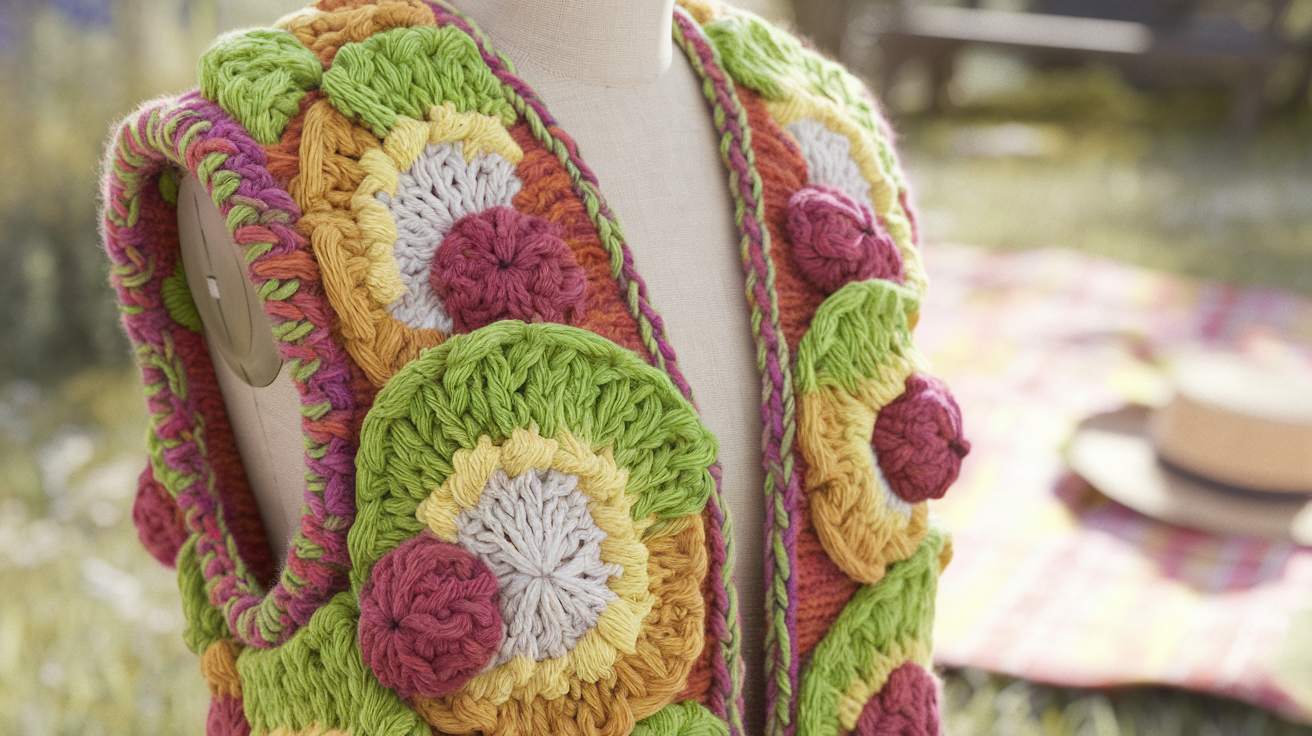
If the Fruit Salad Vest caught your eye because it looks cheerful, colorful, and a little bit daring, you are not alone. Vanessa Ewing’s design is a playful stranded-colorwork vest with fruit motifs, and it is exactly the kind of project where a little planning up front can save a lot of frustration later.
I would not treat this as a quick “grab yarn and go” project. The charm is in the color choices, the chart reading, the fit, and the finishing. This guide is here to help you decide whether the pattern fits your skill level, what to gather before casting on, and how to approach the trickier parts with confidence.
If you are comparing this to other knitting patterns, think of the Fruit Salad Vest as a statement project: bright, detailed, and best for knitters who enjoy charts, color decisions, and careful finishing.
What Makes the Fruit Salad Vest Worth Knitting?
The biggest reason to knit this vest is personality. The fruit motifs — including strawberries, grapes, peaches, blueberries, and kiwi — make it feel more like wearable art than a plain layering piece. It is also a good project if you have been wanting to practice colorwork in a garment instead of another small accessory.
The tradeoff is that the project asks for attention. Multiple colors, charted motifs, gauge, and finishing details all matter. That does not mean you should avoid it; it means you should set yourself up well before the first round.
Choosing Your Fruit Salad Vest Yarn
Yarn choice matters because the fruit motifs need clear stitch definition. A fingering-weight or sock-yarn base keeps the vest lightweight while still giving the colorwork enough detail to show the fruit shapes clearly.
Look for yarn that feels comfortable against the body and can hold up to repeated wear. Wool blends are often helpful for colorwork because they block well and help the motifs settle into an even fabric. Cotton, linen, or plant-fiber blends may feel cooler for warm-weather layering, but they can behave differently in colorwork, so swatching becomes even more important.
Color Palette Tips
The current article notes that the design can use up to 13 colors, which makes it a fun project for mini skeins or carefully chosen leftovers. Before you start, separate your fruit colors from your background or outline colors. I would also take a quick phone photo of the yarns together in black and white; if the colors look too similar in grayscale, the fruit shapes may disappear.
If you want to customize the palette, keep fruit readability in mind. You can change the mood of the vest with the background color, but the fruit motifs still need enough contrast to be recognizable after blocking.
- Fingering-weight or sock yarn in the colors required by the pattern
- Circular needles or DPNs in the sizes required to meet gauge
- Stitch markers
- Tapestry needle for weaving in ends
- Scrap yarn or stitch holders
- Blocking mats and pins
- A row counter, chart keeper, sticky notes, or another tracking method
Verify exact needle sizes, yardage, size range, and gauge against the purchased pattern before you buy yarn or cast on.
Gauge and Swatching
Please do not skip the gauge swatch on this one. A plain stockinette swatch can tell you part of the story, but colorwork tension often behaves differently, so a small colorwork swatch is more useful for this project.
Watch your floats as you swatch. Tight floats can pucker the fabric and change the finished measurements. Loose, even tension will help the fruit motifs sit flat after blocking.
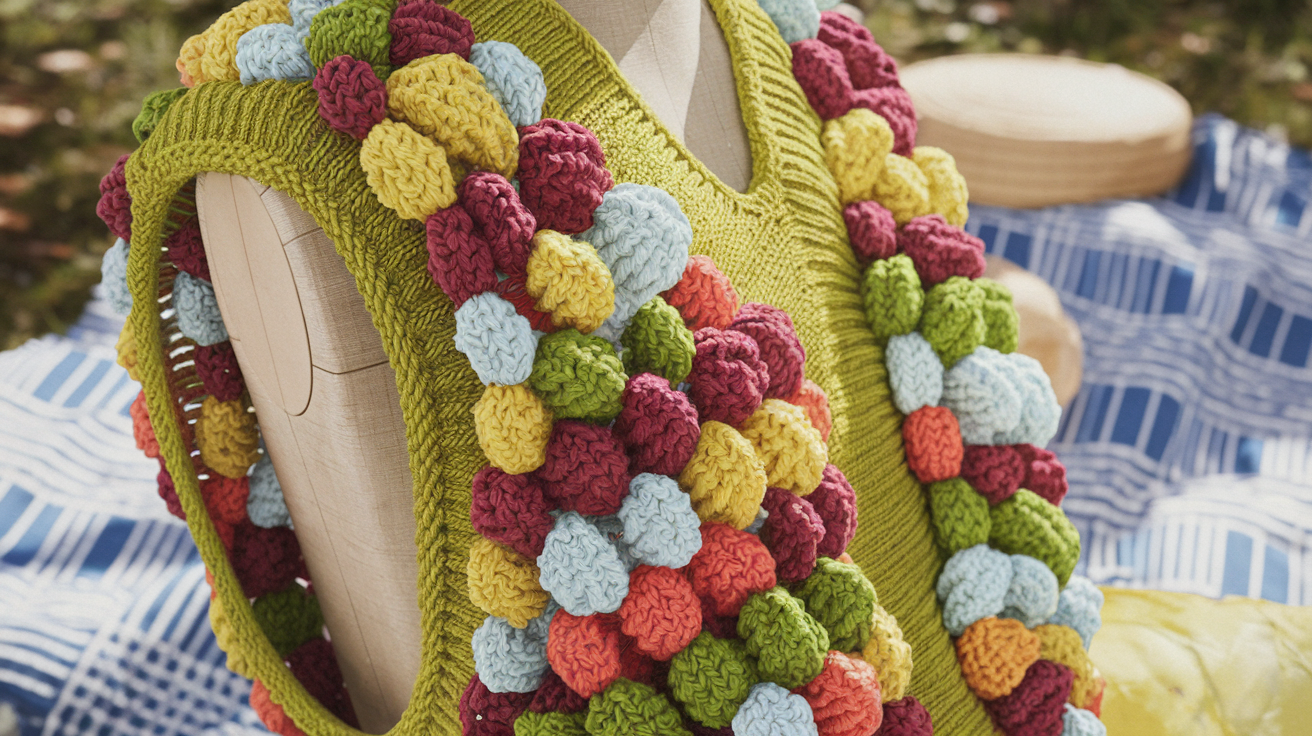
Understanding Vanessa Ewing’s Pattern
Vanessa Ewing’s Fruit Salad Vest is described in the current article as a bottom-up vest worked from a split hem and shaped with cap sleeves and ribbed armholes. Preserve that pattern credit when you talk about or share the project. For the official source, review the designer’s pattern listing on Ravelry or another confirmed pattern marketplace before purchasing.
The fruit motifs are charted, so the best preparation is to read through the charts before starting and decide how you will track rows, color changes, and motif repeats. If you are newer to complex charted colorwork, mark each chart section before you begin knitting.
The article also mentions steeking for armhole construction. Because steeking is an advanced technique, do not rush past it. Review the pattern instructions, practice the reinforcement method if steeking is new to you, and make sure you understand the cutting step before you get there.
Questions to Ask Before Casting On
- Do I have enough contrast between the background and fruit colors?
- Have I checked gauge in colorwork, not just plain stockinette?
- Am I comfortable reading charts and tracking multiple motifs?
- Do I understand the steeking or finishing instructions?
- Have I confirmed the exact size, yardage, and needle requirements from the official pattern?
Common Mistakes to Avoid
- Choosing colors only because they look pretty in the skein. Pretty colors still need enough contrast in the knitted fabric.
- Pulling floats too tightly. Tight floats can make the vest pucker and affect fit.
- Skipping the planning step. With many colors, a simple yarn map or chart-tracking system makes the project calmer.
- Ignoring finishing until the end. If steeking makes you nervous, learn and practice before the vest is already on your needles.
Why This Project Makes a Good Campaign Piece
The Fruit Salad Vest is naturally visual. It gives CraftingWithDonna strong angles for Pinterest pins, Instagram carousel slides, short videos, and email teasers because the article can show color palettes, fruit motifs, swatching reminders, and “before you cast on” tips. Readers do not just need the pattern link; they need help deciding whether they are ready for the project and how to start wisely.
Before You Start
Read the full pattern first, choose high-contrast colors, swatch in colorwork, and make a simple color-management plan. This is a project where preparation makes the knitting more enjoyable.
If CraftingWithDonna later confirms store inventory, affiliate links, or local class/support details, this article is a natural place to add a small yarn-and-notions checklist, a disclosure, and a soft local note for readers who want help choosing colors.
Snowflakes Falling On My Head Winter Quilt Pattern Tutorial
Snowflake quilt pattern enthusiasts find winter quilting tutorial projects like this a delightful way to bring seasonal sewing inspiration into their homes. Icy blue fabrics and elegant home decor merge in Wendy Sheppard’s beginner quilt pattern, featuring floral-inspired snowflake blocks created with Moda Fabrics, Cascade prints, and delicate prints.
Quilt piecing technique is simplified for all skill levels, making this seasonal quilt project ideal for festive quilt or wall hanging use.
Applique snowflake blocks and piecing methods combine to evoke the cold weather comfort and professional finish crafters crave, all delivered in a detailed sewing tutorial perfect for winter crafting projects.
Snowflake Quilting: A Winter Quilt Design
Elegant home accents take center stage as the Snowflakes Falling on My Head winter quilt design offers intricate floral quilt blocks and an icy color palette featuring blues, creams, and pale grays.
Wendy Sheppard designs are known for unique pattern guide innovation, blending modern quilting with traditional winter ambiance motifs. Throw quilt pattern dimensions of 59 x 75 suit both twin beds and wall displays, adding seasonal stitches and holiday decor impact.
Fabric choice guide suggests mixing solid fabrics with delicate prints for creative sewing expression. For a stunning centerpiece, choose a large snowflake applique block in a complementary tone to highlight your cold season crafting style.
Key design elements highlight the potential for seasonal charm in this beautiful quilt.
Fabric choice guide flexibility allows for mixing solid fabrics with delicate prints.
For a stunning centerpiece, select a large snowflake applique block in a complementary tone to showcase your cold season crafting style.
Icy Color Palette: Choosing Fabrics
Winter quilt design enthusiasts often look to the color theory behind winter’s cool spectrum for authentic seasonal sewing projects. Snowflake quilt pattern palettes should start with colors possessing an unmistakably icy, blue undertone—think frosty blues, crisp whites, and pale silvers capturing the serene mood of a winter landscape. [1][2][3] The fabric texture you select can subtly amplify this effect, suggesting the glisten of fresh snow without adding visual clutter. [4] For a cohesive look, limit your palette to one soft white, two varying icy blues, and a hint of pale silver or gray.
Wise fabric choice for winter ambiance involves considering textures that enhance the cool tones effectively. [4]
A pale icy blue cotton sateen from Moda Fabrics’ Cascade prints is a perfect example of a suitable cool-toned fabric for this project; this fabric offers both the right color profile and a gentle luster, making it ideal for showcasing intricate snowflake quilting motifs and achieving refined, elegant home accents in your handmade gift ideas.
Fabric Choice Guide: Delicate Prints
Delicate prints are a key selection for the Snowflakes Falling on My Head quilt pattern, offering subtle visual interest while complementing the primary winter hues. [1] These prints are characterized by their small-scale motifs and understated colorways, ensuring they enhance rather than compete with the appliqué snowflake blocks. [3] Referencing the earlier color palette, the importance of maintaining a small print scale supports visual harmony—small florals or fine geometric prints in pale blue or silver blend smoothly with solid fabrics, creating a cohesive look. [1] This balanced approach in your fabric choice guide ensures that even beginner quilting projects deliver a cohesive, professional finish, elevating both creative sewing and elegant home accents as part of your cold season crafting repertoire. [1][4] For creative sewing, consider pairing small floral quilt blocks using delicate prints with solid fabrics for a balanced design.
- Icy color palettes for winter quilt designs often utilize frosty blues, crisp whites, and pale silvers to capture a serene winter landscape.
- Fabric textures can subtly amplify the icy effect, suggesting the glisten of fresh snow.
- A pale icy blue cotton sateen from Moda Fabrics’ Cascade prints is recommended for its cool tone and gentle luster.
- Delicate prints with small-scale motifs and understated colorways enhance winter hues without competing with snowflake appliqué blocks.
Best Glue For Polymer Clay Earrings And How To Use It
Sculpting vibrant polymer clay earrings lets your creativity shine, but reliable attachment of jewelry findings is the secret behind long-lasting, professionallooking results. Polymer clay adhesive choice matters: for the strongest clay-to-metal bond when attaching earring posts or jump rings to cured clay, two-part epoxy and super glue gel (cyanoacrylate) stand out for their durability and messfree application.
E6000 offers flexibility but can create crafting mistakes like bond failures if not fully cured, while liquid polymer clay excels at clay-to-clay bonds when rebaking is possible.
For best results, always sand and clean contact areas with alcohol before gluing and avoid unsuitable adhesives like white or hot glue, which do not provide secure attachment on nonporous surfaces.
Move seamlessly to choosing the right glue formulation for your next masterpiece.
Choosing the Right Polymer Clay Glue
Material compatibility is key; not every polymer clay adhesive forms a reliable bond on nonporous, baked surfaces, so selecting a compatible glue prevents premature attachment failures. Two-part epoxy delivers professional durability and peak performance for earring post glue, especially where sturdiness and longevity are priorities.
Super glue gel excels for quick, clean finishes and is easier to control during application. Liquid polymer clay stands out for embedding findings if you can rebake, while E6000 demands caution due to its odor and occasional brittleness.
For optimal, strong bonds, always test on scrap clay, assess flexibility, and avoid adhesives that are too rigid, as flexibility preserves your durable polymer clay earrings even with everyday wear.
Adhesive Properties and Performance
The properties of your chosen polymer, clay, and glue significantly affect performance and longevity when creating earring components.
Selecting the correct polymer clay adhesive ensures a lasting bond on metal.
Two-part epoxy and super glue gel are top choices for a strong clay-to-metal bond, offering excellent durability and professional results for your earring projects.
E6000 provides a flexible bond but can lead to crafting mistakes if not properly handled; its fumes require good ventilation. Liquid polymer clay is formulated for clay-to-clay bonds, ideal when you can rebake your creations for an integrated attachment.
Surface Preparation Techniques
Proper surface prep is paramount to avoid bond failures and ensure the security of your jewelry findings.
Avoid using adhesives not formulated for nonporous surfaces, as these will lead to immediate attachment issues.
- Lightly sand the attachment spot on the baked clay and the metal post for better grip.
- Clean both surfaces with alcohol to remove any oils or residue that could prevent a strong bond.
- Scoring the area on the clay offers the glue more purchase.
Follow these actionable steps for strong, lasting creations.
Application and Curing Tips
Achieving a seamless, professionallooking finish requires careful application and allowing adequate cure time. Applying too much glue can lead to a mess and potentially weaken the bond.
- Use small dots of glue and align components before pressing to prevent overflow.
- Let the pieces cure undisturbed; disturbing them too soon compromises the bond.
- For added security, optionally cover the base of the post with a thin layer of matching polymer and rebake if your adhesive instructions permit.
- Always follow the adhesive instructions for full curing times to maintain durability.
By adhering to these preparation and application tips, your creations can remain strong and beautiful.
Adhesive Essentials for Polymer Clay Creations
Polymer clay adhesive options extend beyond common glues, as baked polymer‘s nonporous nature necessitates careful glue selection for a truly durable polymer clay earrings bond. Adhesive categories range from rigid types like super glue gel, a fast-setting cyanoacrylate for a firm, immovable hold, to flexible ones like E6000 that accommodate slight movement.
Bakeable choices, such as liquid polymer clay, are ideal for clay-to-clay connections during a rebake process.
Considering how chemicals or pH levels might react with polymer clay is important, as some adhesives may not be fully compatible, potentially leading to bond failures or diminished attachment integrity over time.
For best longevity, store your adhesives in a cool, dry location, sealing caps tightly to prevent premature drying or contamination, ensuring your creations remain secure and professionallooking, paving the way for specific comparisons.
Comparing Popular Polymer Clay Adhesives
Moving from general to specific insights, we explore popular choices for ensuring a strong clay-to-metal bond for your polymer clay earrings.
Super Glue Gel (Cyanoacrylate)
Super glue gel, a type of cyanoacrylate, offers a rapid cure, often within seconds, providing a strong, rigid hold perfect for earring post glue when speed and a messfree application are priorities.
Its fast-acting nature makes it excellent for quick assembly of jewelry findings, though its rigidity might not suit components requiring flexibility. Always use this type of adhesive in well-ventilated areas due to its powerful fumes; ensuring proper surface preparation, like light sanding and cleaning with alcohol to remove any oils or residue, is key to achieving a secure bond.
E6000: Flexibility and Strength
E6000 is a widely used adhesive, offering a good balance of strength and flexibility.
This adhesive cures fully over a longer period, typically 24–72 hours, allowing it to tolerate minor movement, which can be beneficial for durable polymer clay earrings that might experience slight flexing.
While versatile, its effectiveness on polymer clay can sometimes lead to a rubbery or brittle finish over time, and users should be mindful of its strong odor, necessitating good ventilation.
Proper surface prep, including applying to clean, dry surfaces, is essential for optimal performance and longevity.
Two-Part Epoxy: The High-Strength Option
Two-part epoxy is renowned for its exceptional strength and heat resistance, making it a top contender for attaching jewelry findings to baked polymer clay. This adhesive typically involves mixing two components, which then cure to form a very robust bond.
When attaching earring posts, the precision in mixing and application is important to avoid weak spots. Ensure both the clay surface and the metal component are clean and slightly roughened for maximum adhesion.
Proper curing without disturbance is paramount for achieving the strongest possible attachment.
Liquid Polymer Clay: For Clay-to-Clay Bonds
Liquid polymer clay, such as Kato Poly Paste or Sculpey Bake & Bond, proves excellent for clay-to-clay bonds or when embedding jewelry findings can be incorporated into a subsequent baking process.
This method allows for a seamless bond that becomes part of the polymer structure itself.
For best results, ensure the surfaces are clean and ready for rebaking. This technique is particularly useful for reinforcing connections or achieving a professional finish where the adhesive can be baked alongside the clay piece, solidifying the attachment.
Essential Preparation and Application Techniques
Achieving a lasting bond requires attention to detail, from surface preparation to final curing, avoiding common crafting mistakes.
Surface Preparation for Optimal Adhesion
For a strong, reliable bond, proper surface prep is non-negotiable when working with polymer. Begin by ensuring your baked clay pieces are completely cool.
Lightly sanding the area where the attachment will be made on both the clay and the component, such as an earring post, creates a slightly rougher surface for better grip.
Following this, wiping both areas with rubbing alcohol effectively removes any surface oils, dust, or manufacturing residue, preparing the surfaces for optimal adhesion.
For even greater grip, consider light scoring on the clay surface with a sharp tool.
Application Tips for Clean Finishes
When applying your chosen polymer clay adhesive, less is often more; use small dots of glue. This prevents unsightly overflow and ensures a clean finish.
Carefully align your components before gently pressing them together. If any excess glue squeezes out, use a toothpick or cotton swab for precise removal before the adhesive begins to set.
Allow the pieces to cure completely undisturbed, as premature handling can significantly weaken the bond.
Always follow the specific instructions provided with your adhesive for the best security and durability.
Reinforcing and Finishing Touches
For added security, especially with heavier jewelry findings or those under stress, consider reinforcing the base of the attached component.
You can cover the joined area with a thin layer of matching polymer clay. If your adhesive is bakeable, such as liquid polymer clay, you can then rebake the piece to integrate this extra layer seamlessly.
This technique not only adds strength but.
- Polymer clay’s nonporous nature requires careful adhesive selection for durable bonds.
- Adhesives like super glue gel offer fast, rigid holds, while E6000 provides flexibility.
- Liquid polymer clay is ideal for clay-to-clay bonds during a rebake process.
- Proper surface preparation, including cleaning with alcohol and light sanding, is crucial for optimal adhesion.
How to Bond Metal Post
Securing a metal earring post to baked clay requires careful consideration to achieve a strong clay-to-metal bond. For attaching earring posts, two-part epoxy and super glue gels are favored options for their high strength.
Preparation is key to avoiding crafting mistakes that can lead to bond failures.
Begin by lightly sanding the base of both the intended metal attachment point on the polymer and the metal post itself.
Following this, ensure these surfaces are perfectly clean by wiping them with isopropyl alcohol to remove any oils or residue; this step is essential for better polymer clay adhesive grip. For small posts, it’s advisable to apply a precise, small dot of your chosen glue, such as super glue gel or a two-part epoxy, using a fine tool like a toothpick, taking care to prevent any overflow.
Once applied, carefully align the post with its intended position and hold it with gentle pressure or provide support, ensuring it remains undisturbed throughout the entire cure period, which guarantees a secure and professionallooking finish for your creations.
Liquid Polymer Clay for Attachments
As an alternative bonding solution, liquid polymer clay offers a method for creating integrated attachments and contributes to a seamless connection, especially when traditional glue isn’t the most suitable choice. For optimal adhesion, polymer clay’s unique properties must be considered.
Application techniques involve brushing a thin layer of compatible liquid polymer clay, such as Sculpey Bake & Bond, onto both the baked polymer and the designated attachment spot.
The subsequent baking of the fully assembled piece allows the polymer clay adhesive to melt and fuse, effectively securing jewelry findings with minimal mess and an almost invisible joint.
To enhance strength on delicate or thin earring sections, consider reinforcing these critical attachment points with an additional layer of liquid polymer clay before the final bake, and ensure complete full curing for exceptionally durable polymer clay earrings.
| Bonding Method | Key Preparation Steps | Recommended Adhesives | Resulting Finish |
|---|---|---|---|
| Direct Adhesion | Light sanding and cleaning with isopropyl alcohol | Two-part epoxy and super glue gels | Strong, professional-looking bond |
| Liquid Polymer Clay | Brushing a thin layer onto both surfaces | Compatible liquid polymer clay (e. g. , Sculpey Bake & Bond) | Seamless, integrated, and durable connection |
Here’s the refined content:
Avoiding Common Crafting Pitfalls
Polymer clay adhesive selection plays a critical role in preventing crafting mistakes that compromise the security and appearance of your earrings. Proper surface preparation ensures a strong clay-to-metal bond; always begin by cleaning baked polymer clay and metal findings with alcohol to remove oils and residue, then sand attachment points lightly for improved grip.
Glue application should be minimal—applying too much glue or earring post glue increases the risk of mess and weakens the bond, making clean finishes difficult to achieve.
Avoid unsuitable adhesives like tacky glue or white glue, which lack compatibility with nonporous polymer surfaces and often result in bond failures.
Rushing the curing process will disturb the adhesive, so allow full curing undisturbed for maximum durability before handling your creations or moving to the next step. Thoughtful preparation and patience are key for mess-free, professionallooking results and long-lasting attachment.
Achieving Durable Clay Earring Bonds
Polymer clay earring designs that last hinge on both strategic component placement and using a compatible glue such as two-part epoxy or super glue gel.
Weight distribution matters—position connection points and reinforce stress areas, especially on larger pieces, by adding extra earring post glue or scoring the attachment area for better grip. Baked polymer clay can be further protected by covering the base of glued findings with a thin clay layer and rebaking, if appropriate for your adhesive.
Handling finished jewelry with care—avoiding dropping or exposure to sudden impacts—also preserves the integrity and longevity of the bond.
By following actionable tips and proper application techniques, your polymer clay earrings will remain durable and professionallooking, ready for everyday wear.
| Key to Strong Polymer Clay Earring Bonds | Common Pitfalls to Avoid |
|---|---|
| Proper surface preparation (cleaning with alcohol, light sanding) | Using unsuitable adhesives (tacky glue, white glue) |
| Minimal and precise glue application | Rushing the curing process |
| Strategic component placement and weight distribution | Applying too much glue |
| Reinforcing stress areas (scoring, extra glue) | Neglecting careful handling of finished jewelry |
Step-by-Step Mess-Free Glue Application
polymer clay adhesive application requires careful attention to detail and the correct tools for a clean, professional finish. Fine-tip applicators, such as syringe dispensers or small bottles, allow you to dispense earring post glue precisely, helping to avoid overflow and maintaining neat jewelry findings.
Preparing for a Strong Bond
For optimal adhesion, it’s important to prepare your baked clay and the metal earring post meticulously.
Lightly sand both surfaces.
Then, wipe each with rubbing alcohol to remove any residue.
This step ensures a strong clay-to-metal bond. Scoring the surface with a tool can also give adhesives additional grip.
Use small dots of glue.
Align components before pressing together. This prevents overflow and mess, enabling a messfree application.
Applying Adhesives for Durable Earrings
When attaching earring posts, two-part epoxy and super glue gels (cyanoacrylate) are favored for their high strength and reliability.
E6000 is another option, though it can have mixed results.
Liquid polymer clay is excellent for clay-to-clay bonds and for embedding findings if items can be rebaked.
Let your glue cure fully without disturbance. Rushed handling can weaken bonds.
Always use adhesives according to safety recommendations, especially when dealing with strong chemicals or baking. Avoid classic white craft glues, hot glue, or soft adhesives, as these fail quickly on nonporous polymer surfaces.
Not prepping surfaces, like leaving oily residues or dust, results in bond failures.
Applying too much glue can weaken the bond and create a mess.
For a seamless, professional look, cover the glued post with a thin layer of matching polymer clay and rebake if compatible with your adhesive.
This adds security and ensures your durable polymer clay earrings remain professionally looking.
Comparing Top Adhesive Options
polymer clay properties affect adhesive performance and bond longevity. Dedicated products are required for lasting bonds, as polymer clay does not adhere well to all adhesives.
Understanding these differences aids in preventing common crafting mistakes.
Two-Part Epoxy
Two-part epoxy offers a very strong and durable bond. It requires mixing equal parts of resin and hardener.
This type of epoxy creates a rigid bond that is excellent for permanent attachments like earring posts.
Prepare surfaces by lightly sanding and cleaning with alcohol for the best attachment.
Ensure clean finishes.
Lightly sand and clean with alcohol to remove oils or residue.
Super Glue Gel (Cyanoacrylate)
Super glue gel, a type of cyanoacrylate, provides a fast-setting and strong clay-to-metal bond.
Its gel consistency allows for better control, reducing drips and overflow during application. For the best results, ensure the metal post and baked clay surfaces are clean and dry before application.
Apply a small dot of glue.
Press firmly and clean excess immediately with a toothpick or cotton swab.
E6000
E6000 is a versatile industrial adhesive widely used in crafting.
While strong, its performance on polymer can sometimes be unpredictable, potentially remaining rubbery or becoming brittle. It has a strong odor and requires good ventilation during use.
If you choose E6000, allow for full cure time.
Surface scoring can give adhesives more grip. This enhances bond strength for your creations.
Liquid Polymer Clay
Liquid polymer clay is ideal for clay-to-clay bonds and embedding jewelry findings when pieces can be rebaked.
Products like Kato Poly Paste or Sculpey Bake & Bond are formulated.
- Fine-tip applicators like syringe dispensers or small bottles ensure precise application of earring post glue, preventing overflow and maintaining neat jewelry findings.
- Preparing surfaces by lightly sanding and wiping with rubbing alcohol is crucial for optimal adhesion and a strong clay-to-metal bond.
- Two-part epoxy and super glue gels (cyanoacrylate) are recommended for their high strength and reliability when attaching earring posts to polymer clay.
- Classic white craft glues, hot glue, or soft adhesives should be avoided on nonporous polymer surfaces as they tend to fail quickly.