
knitting-patterns
Easy Coffee Cozy Knitting Patterns For Beginners
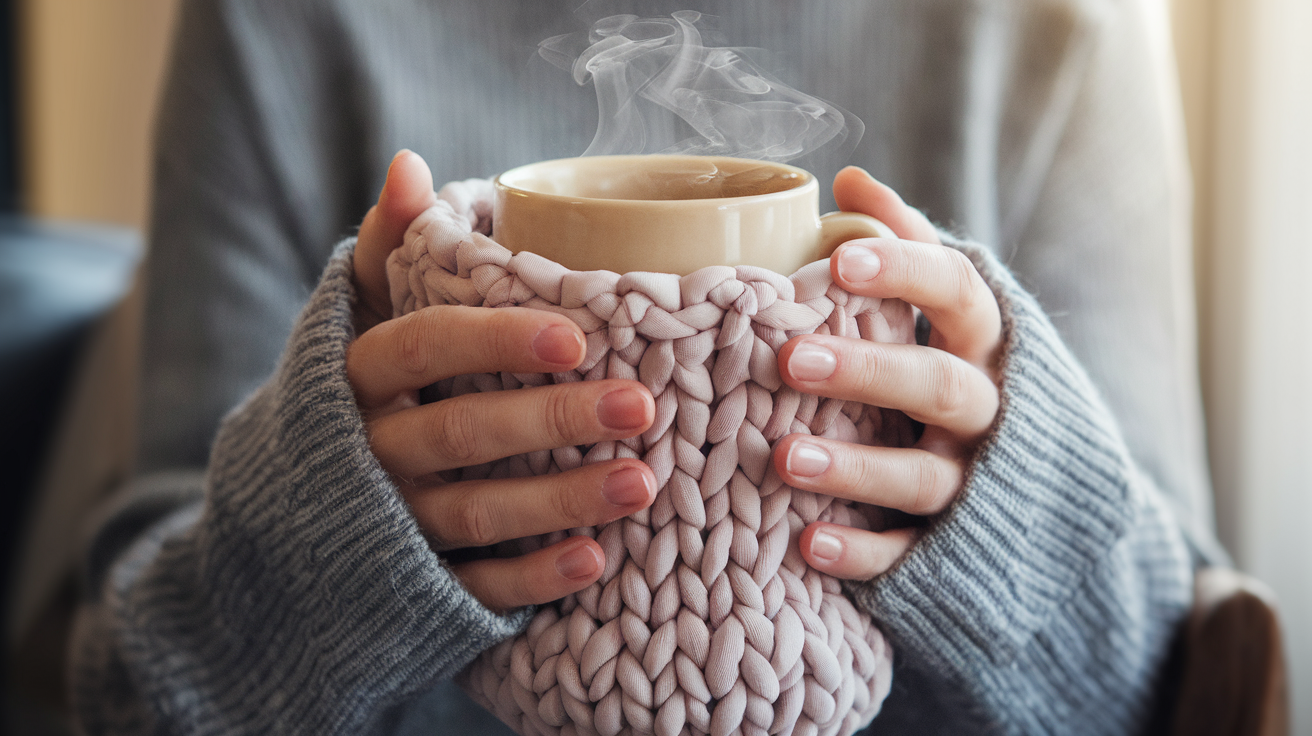
Knitting patterns for coffee cozies offer a simple and eco-friendly crafts path to creating something both practical and stylish, a favorite beginner knitting project for crafters year-round. These coffee cozy patterns can be completed quickly using only minimal yarn quantities, allowing for endless creativity and easy gift idea creation.
This quick project is perfect for anyone looking to learn to knit, with many utilizing basic stitches.
The appeal of a handmade cup cozy lies in its ability to keep drinks warm and hands comfortable, making it a sought-after DIY item.
They are also fantastic for stashbusting, using up those yarn scraps effectively. Next, discover how to choose a project that suits your personal style and skill level.
Choosing Your First Coffee Cozy
Coffee cozy projects allow you to easily reflect your personal style—think bold stripes, textured ribbing, or a simple classic design using basic knitting.
Beginner knitting techniques like knit and purl stitches keep the learning curve smooth, while focusing on worsted weight yarn ensures your project fits most standard mugs and cups. Worsted weight yarn offers predictable results and is friendly to both beginners and budget.
For your first cozy, pick a smooth, light-colored acrylic yarn to spot stitches easily and enjoy a forgiving, quick project.
These coffee cozy knitting patterns are satisfying, stashbusting ways to start your journey into handmade, reusable beverage accessories.
When selecting your initial coffee cozy project, prioritize designs that showcase basic knitting and knit stitches.
This allows you to practice fundamental techniques like knit and purl stitches, which form the foundation of many knitting projects. A beginnerfriendly pattern will often guide you through simple shaping or edge treatments, perhaps introducing ribbing for a snug fit or the pleasing texture of the double seed stitch.
The yarn you choose is also key; worsted weight yarn is a common recommendation for beginners due to its gauge and ease of handling, making it ideal for creating a snug mug cozy. Think about selecting a smooth, lighter-colored yarn, such as acrylic yarn or cotton yarn, to easily see your stitches while you work, ensuring a more enjoyable learning to knit experience.
This thoughtful selection paves the way for a successful and satisfying first knit.
Knitting patterns for coffee cozies offer a simple and eco-friendly crafts way to keep drinks warm and hands comfortable, making them a favorite beginner project for crafters year-round.
These patterns can be completed quickly using only a small amount of yarn, allowing for endless creativity and easy gift-making.
Easy knit patterns often use minimal yarn quantities, so you can effectively practice stashbusting with yarn scraps.
A free pattern is sometimes available, offering a cost-effective way to try out various techniques. These knitting projects provide crafting inspiration and can be completed in under an hour with clear step-by-step instructions, reducing barriers for new knitters.
Personalized gifts are easily made by customizing cozies with bold colors, stripes, or embellishments; swap yarn fiber choices for seasonal changes or personal preferences.
- Kit your first coffee cozy with basic knitting skills.
- Worsted weight yarn is ideal, ensuring a good fit for most cups.
- Shiny, light-colored yarns make spotting stitches easier as you learn to knit.
- Handmade gifts are thoughtful and eco-friendly crafts.
Coffee lovers will appreciate the warmth and character these handmade accessories provide, serving as excellent reusable cup sleeves. Consider material choices like cotton yarn for breathability or wool yarn for its natural insulation properties, making them versatile for various seasons. These enjoyable knitting projects are also a fantastic crochet alternative for adding a personal touch to your daily routine or as charming DIY gifts.
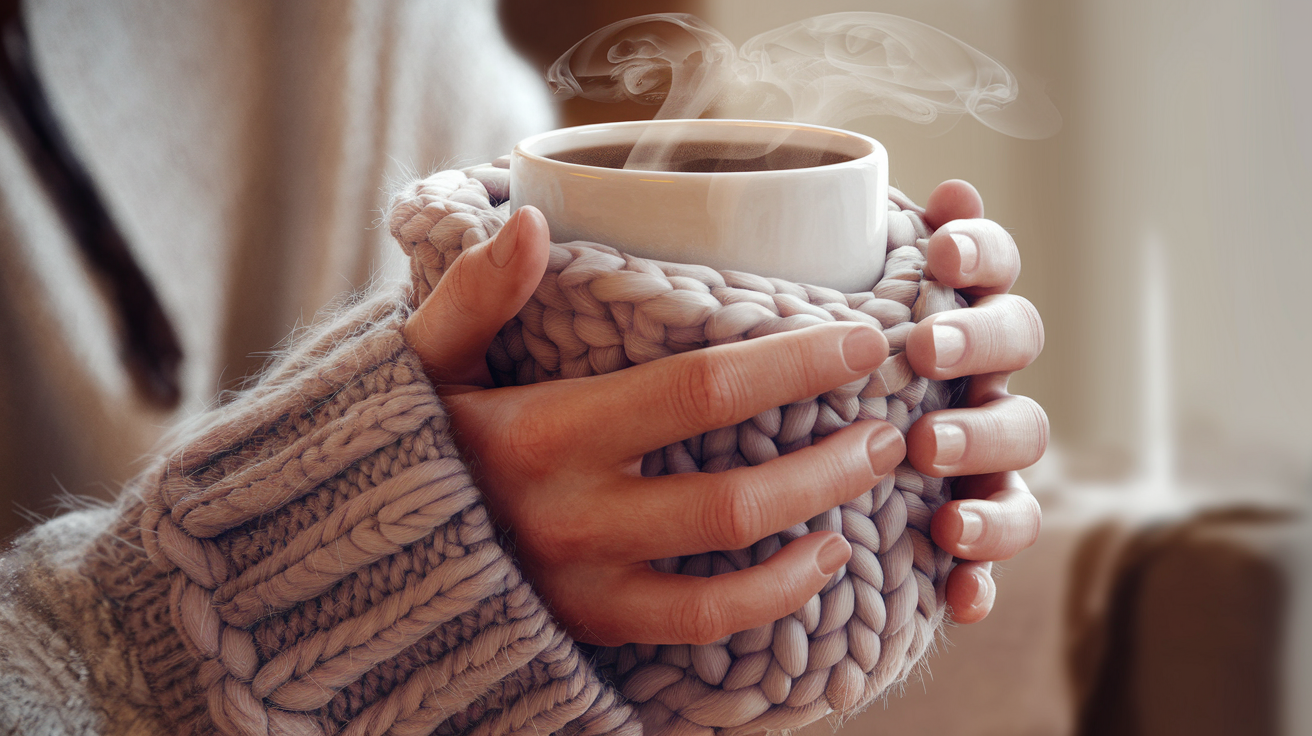
Beginner Knitting Stitches Explained
Knitting patterns featuring cozy coffee sleeves offer a welcoming path for beginner knitting enthusiasts. Mastering basic knitting starts with two essential stitches: the knit and the purl.
A steady, even stitch tension ensures your fabric feels smooth and professional, especially important for a polished coffee cozy.
To begin, use a simple cast-on—like the long-tail method—to form your first row of stitches, then explore the easy knit motion for garter or alternate rows for classic stockinette.
Finish strong with a neat bind-off so your work won’t unravel, practicing on swatches with yarn scraps before graduating to your first mug cozy or ecofriendly crafts project. These satisfying projects are perfect for stash-busting using minimal yarn.
Simple Ribbing Techniques for Cozies
Ribbing elevates your cup cozy from basic to snug and professional by combining knit and purl stitches in a structured pattern, offering a fantastic crafting inspiration.
This technique provides elasticity, allowing any coffee cozy to fit various mug sizes comfortably. For beginners, the 1×1 rib—a classic “knit one, purl one” repeat—is a fast, easy knit that creates vertical columns of texture and stretch, a key element in texture knitting.
Including a few rows of ribbing at both the start and end of your project keeps edges neat and prevents rolling, a great tip for knitting projects.
Experiment with worsted weight yarn to practice this technique on a small swatch, making your next coffee cozy as stylish as it is functional and a true gift idea for coffee lovers.
This method is also a gateway to learning knitting techniques for more complex patterns, a great step for those wanting to learn to knit.
Key Knitting Concepts for Beginners
- Mastering the knit and purl stitches are fundamental for beginner knitting projects like coffee sleeves.
- Achieving steady, even stitch tension is crucial for a smooth and professional fabric finish, especially for coffee cozies.
- Ribbing, such as the 1×1 rib (knit one, purl one), provides elasticity and texture, allowing coffee cozies to fit various mug sizes.
- Practicing on yarn scraps with simple stitches and techniques like ribbing is recommended before completing final projects such as mug cozies or ecofriendly crafts.
How to Knit a Basic Mug Cozy
Coffee cozy knitting patterns transform small amounts of worsted weight yarn into practical, handmade cup insulation, making them a favorite beginner knitting project. To ensure a custom fit for your mug cozy, begin by wrapping a measuring tape around your favorite mug, excluding the handle, then add 1–2 inches for secure overlap; these measurements guide your cast-on for flat knitting.
Typically, between 17 and 30 stitches are sufficient, depending on your yarn and mug size.
Employ basic knitting, specifically ribbing techniques: alternate knit and purl stitches to create stretchy texture, ideal for hugging different mug sizes and offering beverage insulation.
For a functional finish on this quick project, work a buttonhole at one end or braid yarn tails as a DIY tie closure, adding a personalized touch for a wonderful gift idea. This easy knit offers eco-friendly warmth for any hot beverage and is a satisfying project for anyone looking to practice fundamental knit stitches.
This simple project utilizes yarn scraps, proving ideal for stashbusting while creating a charming accessory.
Easy Double Seed Stitch Coffee Cozy
Double seed stitch offers appealing reversible texture, making it a favorite for unique and stylish coffee cozy projects, moving beyond basic knitting.
This technique alternates blocks of knit and purl stitches—such as knit two, purl two—then offsetting them on the next row to achieve a bumpy, visually interesting fabric, providing excellent cup insulation. For added versatility in this knitting pattern, cast on a multiple of four stitches, and remember: on return rows, always knit the purls and purl the knits to maintain the pattern’s signature texture, an important detail for this stitch pattern.
The resulting mug cozy looks great from any angle, efficiently uses minimal yarn, and suits both mug handles and handle-free cups, making it a perfect scrap yarn project for beginner knitters expanding into decorative stitches and texture knitting.
This method showcases how simple adjustments in stitch placement can elevate a practical item into something truly special for your knitting projects.
| Project Type | Key Technique | Yarn Usage | Skill Level |
|---|---|---|---|
| Basic Mug Cozy | Ribbing (Knit/Purl Alternation) | Worsted Weight Yarn, Yarn Scraps | Beginner Knitting |
| Double Seed Stitch Coffee Cozy | Double Seed Stitch (Offset Knit/Purl Blocks) | Minimal Yarn, Scrap Yarn | Beginner Knitters Expanding into Decorative Stitches |
Stashbusting Yarn Scraps for Gifts
Leftover yarn scraps, collected from previous knitting patterns and projects, offer endless creative opportunities for unique DIY gifts. Employing stashbusting techniques transforms small yarn remnants into charming ecofriendly crafts, making them perfect for gift ideas.
By combining colors from your stash, you can create custom pom-poms, tassels, bookmarks, keychains, or add decorative touches to gift packaging—each presenting a memorable gift idea.
For longer lengths, seamlessly join yarn scraps using the Russian join technique or secure knots, ensuring your new strand is strong and visually cohesive.
Embracing stashbusting not only reduces waste but also adds an element of surprise and personality to every handmade gift.
Free Pattern for Quick Knit Cozies
Coffee cozy knitting patterns offer a simple and eco-friendly way to keep drinks warm and hands comfortable, making them a favorite beginner knitting project for crafters year-round. These patterns can be completed quickly using only a small amount of worsted weight yarn, allowing for endless creativity and easy gift-making.
Ideal for beginners—most patterns use basic knit stitches like knit and purl, with some featuring textures such as double seed stitch or classic ribbing.
Versatile sizing—patterns include options for both handle-free coffeehouse cups and mugs, ensuring a snug fit. This makes them a perfect cup cozy or mug cozy.
Minimal yarn needed—typically less than 20 yards of worsted weight yarn per cozy, making these projects perfect for using up yarn scraps and stashbusting.
- Fast and satisfying—cozies can be completed in under an hour with clear step-by-step instructions, reducing barriers for new knitters.
- Personalization possibilities—customize cozies with bold colors, stripes, or embellishments; swap yarn fiber choices for seasonal changes or personal preferences.
- Suitable for all seasons—use cotton yarn or bamboo yarn for summer drinks, or wool yarn and acrylic yarn for winter warmth.
- Gift-friendly—handmade cozies tucked around paper cups or reusable mugs make thoughtful zerowaste crafts for coffee lovers.
- Skill-building—patterns introduce basics of flat knitting and knitting in the round (using double pointed needles or magic loop techniques), and finishing touches like seaming techniques.
These handmade gifts offer a step-by-step approach, enabling anyone to create practical, reusable cup sleeves for every coffee lover enjoying a hot beverage.
Knitting Cozies
- Coffee cozy knitting patterns are beginner-friendly, often using basic knit and purl stitches, with some incorporating textures like double seed stitch or ribbing.
- These projects require minimal yarn, typically less than 20 yards of worsted weight yarn per cozy, making them ideal for using up yarn scraps.
- Cozies can be completed quickly, often in under an hour, and offer personalization through color choices, stripes, or different yarn fiber types suitable for various seasons.
- Handmade cozies are presented as thoughtful, zero-waste gifts for coffee lovers, suitable for both paper cups and reusable mugs, and can teach skills like flat knitting and knitting in the round.
Personalizing Your Cup Cozy Design
Elevating Your Knitting Projects: Beyond the Basics
Knitting patterns for a coffee cozy offer a wonderfully simple and eco-friendly crafts avenue to keep beverages warm and hands comfortable, establishing them as a cherished beginner knitting project for crafters throughout the year. These delightful projects can be completed swiftly, utilizing only a minimal amount of yarn, which in turn unlocks vast creative potential and facilitates effortless gift-making.
Learn to knit with these satisfying projects.
Stash-busting becomes an art form when you pair leftover yarn scraps to create vibrant stripes or playful, unexpected contrasts.
Alternatively, select special trims such as a decorative crochet border or fringe for a truly eye-catching finish on your cup cozy.
Small, thoughtful details, ranging from intricate textured ribbing to charming appliqués, effectively transform these eco-friendly crafts into memorable, personalized handmade gifts. A free pattern can be a fantastic starting point for these easy knit creations, making them a perfect gift idea that’s a quick project to complete.
Adding Texture and Embellishments
Knitting projects can be further enhanced by exploring embellishment techniques.
Consider incorporating embroidery directly onto your knitted surface or employing surface knitting methods to add decorative elements to your mug cozy. This is a fantastic way to inject personal flair into your DIY creations, ensuring each mug cozy is unique.
A step-by-step approach to adding these touches can elevate a simple knit into a work of art.
- Yarn fiber choices drastically influence the feel and look. Cotton or bamboo yarns are ideal for summer beverages, providing breathability, while wool and acrylic offer superior insulation for winter warmth, making them suitable for all seasons.
- Try incorporating a decorative border, such as a delicate picot edge, or add a playful fringe for a unique aesthetic on your hot beverage accessory.
- Experiment with different yarn scraps to create unique striped patterns or color-blocked designs, a popular approach for stash-busting.
- Consider advanced stitches like double seed stitch for added texture, providing a tactile element to your cup cozy.
Crafting Custom Designs
Transforming a basic coffee cozy into something truly special involves embracing personalization. You can incorporate different yarn colors or blend contrasting textures to build a unique, customized look, ensuring each beginner knitting project feels delightfully one-of-a-kind. This flexibility makes them excellent for both personal use and as meaningful handmade gifts.
- Knitting in the round using techniques like the magic loop or double-pointed needles allows for seamless construction of your cup cozy, eliminating the need for seaming techniques and providing a cleaner finish.
- Using worsted weight yarn is common for coffee cup holders and mug warmers, as it works up quickly and provides good insulation.
- These reusable cup sleeves are a wonderful example of sustainable crafting and zerowaste crafts, helping to reduce the need for disposable sleeves.
- For a truly personalized touch, consider adding embroidered initials or small motifs to your tea cozies, making them unique personalized gifts.
Cup Cozy Designs
- Cup cozies are a simple and eco-friendly craft, ideal for beginner knitters and quick gift-making due to minimal yarn usage.
- Stash-busting with yarn scraps can create unique striped or contrasting designs, and embellishments like crochet borders or fringe enhance visual appeal.
- Choosing yarn fibers like cotton or bamboo is suitable for summer, while wool or acrylic offers better insulation for winter warmth.
- Knitting in the round eliminates the need for seaming, providing a cleaner finish for cup cozies, and using worsted weight yarn allows for quick construction and good insulation.
How To Knit A Button Down Collared Shirt Pattern
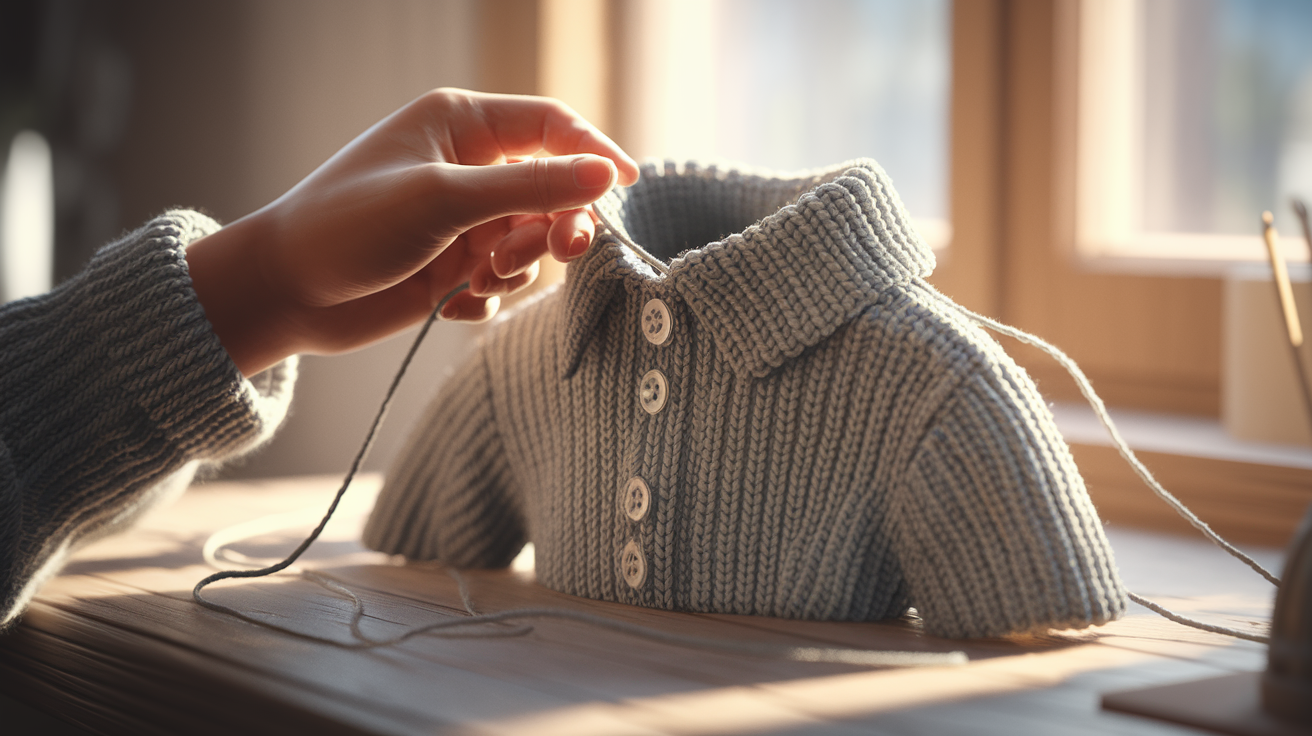
Button down shirt knitting offers a unique blend of classic tailoring and cozy comfort, transforming traditional shirting into a wonderfully wearable knit garment. Embarking on this collared sweater pattern journey means exploring the vast possibilities of knitwear—achieving precision fit, beautiful drape, and the crisp details of authentic shirt styling.
From meticulously planned back panel knitting to the specific techniques for shirt collar shaping, each stage contributes to a garment that is both polished and comfortable.
Ensuring meticulous gauge swatch accuracy is key for a flattering silhouette, and the array of pattern modification options—from simple hem length adjustment to exploring new knit collar styles—allows for a truly personalized knit shirt.
Your next step involves understanding the impact of yarn selection for drape, which sets the stage for fabric that moves beautifully.
Yarn Selection for Drape
Yarn selection for drape is foundational for creating a flattering button down knit shirt, significantly influencing the garment’s movement and overall tailored knitwear design. Consider fiber blends for subtle texture variations; exploring materials like cotton, linen, or bamboo yields a lightweight feel and pleasant visual interest, ideal for a breathable collared sweater pattern.
Pay close attention to yarn weight—opting for fingering, sport, or DK weights helps prevent stiffness, encouraging fabric that gracefully follows the body’s natural contours. Before beginning your knit shirt construction, it is paramount to perform a gauge swatch accuracy test.
A good tip is to swatch a small section to check for pilling resistance, contributing to a lasting knit structure.
This careful approach ensures your garment possesses both crispness and comfort for a truly wearable knit look.
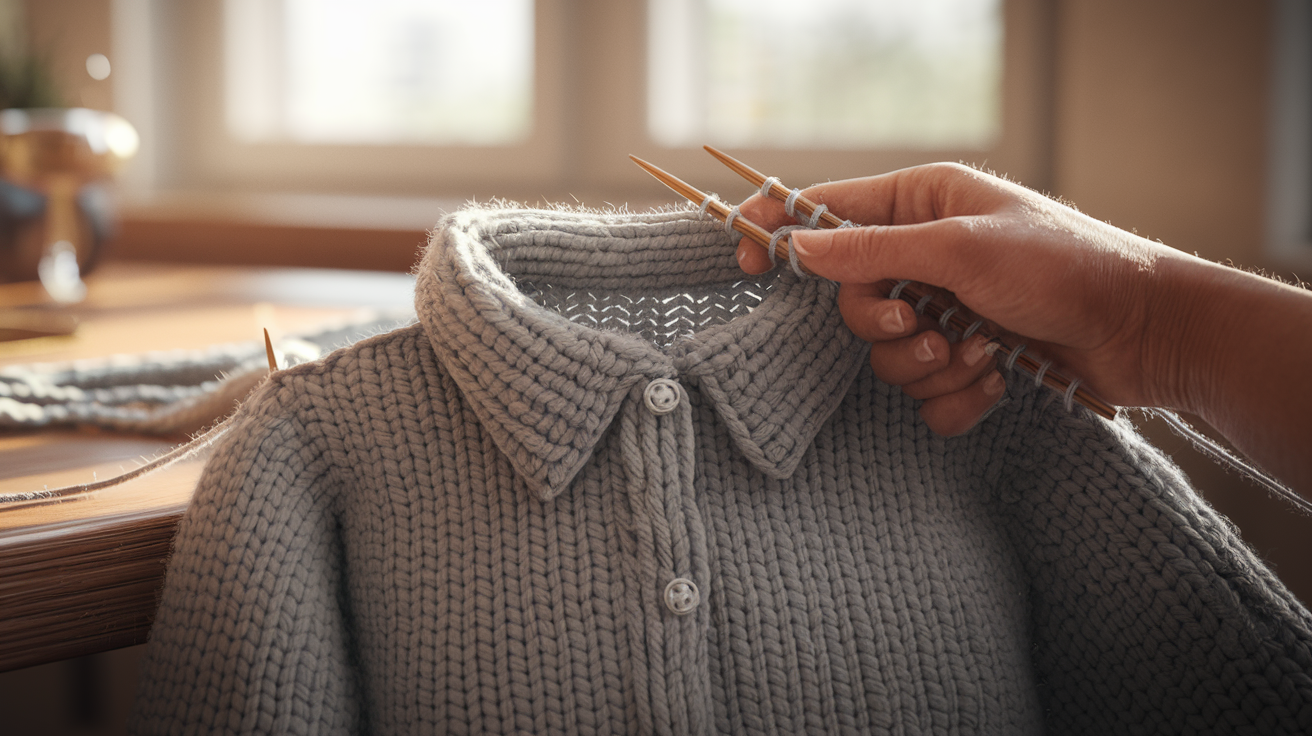
Knit Shirt Construction Basics
Building upon earlier textile discussions concerning seam finishing, this section focuses on techniques that actively prevent stretching, demonstrating how flat-felled seams offer a practical, visual example of superior seam integrity. For a personalized knit shirt, constructing the garment in individual pieces, including the back panel knitting, front panel construction, sleeve knitting techniques, and the essential collar, is foundational.
Moreover, yarn selection for drape significantly impacts the comfort and longevity of your creation, while gauge swatch accuracy is paramount for achieving that flattering knit fit.
Each element, from the subtle shirt collar shaping to the reinforced double knitting bands, contributes to the overall lasting knit structure of your tailored knitwear design.
- Yarn selection for drape influences comfort, stitch definition, and overall shirt longevity, contributing to a wearable knit look.
- Employ modular back panel knitting, front panel construction, and sleeve knitting techniques for manageable shaping and precise fit adjustments knitting.
- Complete button bands with double knitting bands for clean, reinforced edges, ready for precise buttonhole techniques.
- Apply mattress stitch seams for invisible joins that maintain flexibility, essential for flexible knit seams and a professional knit finish.
Assembling Knit Pieces Explained
Successful assembling knit pieces begins with a reinforced understanding of grainline identification, ensuring your chosen knit shirt pattern maintains its intended shape throughout the entire construction process. Prioritize careful pinning, applied strategically and frequently, to prevent the distortion or puckering commonly associated with knit fabrics, especially at critical joins like shoulder seams or armholes. Seam allowances require meticulous attention; tools such as understitching or a narrow zigzag stitch effectively secure raw edges, ensuring a neat, professional finish. The final garment construction often employs mattress stitch seams or another favored seaming knit fabric technique, yielding invisible, flexible results that bolster a polished, professional look for your custom collared sweater pattern.
- Seaming knit fabric with invisibility and integrated stretch guarantees comfort for extended wear knitwear, a key factor in wearable knit look success.
- Control fabric distortion by meticulously matching key points across pieces and utilizing frequent, even pinning during assembly for a flattering knit fit.
- Apply understitching at collars or plackets to securely hold seam allowances inside, reinforcing shape and contributing to tailoring knit garments.
- Utilize mattress stitch seams to join side, shoulder, and sleeve areas, creating invisible joins that add to polished knit versatility and avoid bulk.
Key Takeaways for Knit Shirt Construction
- Employing techniques like flat-felled seams and double knitting bands contributes to superior seam integrity and a lasting knit structure.
- Accurate gauge swatching and careful yarn selection are paramount for achieving a flattering knit fit and ensuring garment comfort and longevity.
- Modular construction of individual pieces, including back, front, and sleeves, alongside specific collar shaping, forms the foundation for a personalized knit shirt.
- Meticulous assembly, including precise pinning, understitching, and the use of mattress stitch seams, prevents fabric distortion and ensures a polished, flexible knit finish.
Buttonhole Techniques for Shirts
Relating buttonhole placement to proportioning, previously discussed for garment fit, ensures a balanced appearance on your knit shirt construction. The choice of interfacing significantly impacts buttonhole stability, with heavier weight fusible or sew-in interfacing recommended for reinforced edges.
A helpful tip is to try a few test buttonholes using double knitting or reinforced edges on scrap knit fabric first, mimicking the button band construction.
Work the button bands using double knitting or reinforced edges, and create buttonholes at even intervals as you go, ensuring consistent spacing for a professional knit finish, a key element for any personalized knit shirt.
Reinforcing Button Bands
For button down knit shirt projects, reinforcing the button bands is essential for lasting knit structure.
Utilizing double knitting bands or other reinforced edges provides the necessary support for buttonholes, preventing stretching and maintaining a crisp appearance over extended wear. This method contributes to a polished knit versatility.
Creating Even Buttonhole Spacing
Achieving uniform buttonhole spacing is key to the aesthetic of any personalized knit shirt.
As you work the button bands using double knitting or reinforced edges, create buttonholes at measured, even intervals. This attention to detail is part of button placement customization, contributing to authentic shirt styling.
Shirt Collar Shaping Guide
Connecting collar construction to the overall garment structure, as discussed in pattern modification, is essential for a polished knit shirt construction.
A well-constructed collar adds tailored knit garments an elevated, professional knit finish, keeping the garment structure intact.
Ease the collar into the neckline for a smooth transition, ensuring it sits correctly.
Knit the collar separately or pick up stitches from the neckline shaping with short rows or increases to achieve a crisp fold. Proper gauge swatch accuracy and yarn selection for drape ensure the collar aligns perfectly with the rest of the shirt, enhancing its wearable knit look and flattering knit fit.
Collar Construction Methods
To create a crisp collar fold for your collared sweater pattern, consider knitting the collar separately from the main garment or picking up stitches directly from the neckline shaping.
Techniques such as short row collar shaping or increase row shaping are widely used to achieve the desired dimensionality and clean edge, contributing to perfect knit collar styles.
Integrating Collar with Neckline
Easing the collar into the neckline is a subtle yet important step in knit shirt construction. This process ensures a smooth, finished appearance where the collar meets the body of the shirt, contributing to the overall professional knit finish and a flattering knit fit for your custom knit shirt design.
| Key Technique | Purpose | Recommended Materials/Methods |
|---|---|---|
| Buttonhole Placement | Ensures a balanced appearance on knit shirts. | Relating to proportioning for garment fit. |
| Button Band Reinforcement | Provides stability for buttonholes, prevents stretching, maintains crisp appearance. | Double knitting bands or reinforced edges; heavier weight fusible or sew-in interfacing. |
| Buttonhole Spacing | Achieves uniform spacing for aesthetic appeal. | Create buttonholes at measured, even intervals on reinforced bands. |
| Collar Construction | Adds an elevated, professional finish and keeps garment structure intact. | Knit separately or pick up stitches; short row or increase row shaping. |
Tailored Knitwear Design Tips
Yarn selection for drape establishes the foundational character for every personalized knit shirt, influencing the final garment’s softness, structure, and breathability from its initial stitch through to its completed fit. Tailored knitwear design truly excels when you consider how diverse fibers, such as fine merino, bamboo, cotton, or linen, will impact each project’s unique silhouette and the overall flow of the fabric.
Strategic darting effectively replicates the classic shaping found in woven shirts, expertly contouring natural body lines at the waist, bust, or shoulders through precise placement of increases, decreases, or short rows.
Knit shirt construction showcases the impact of distinct stitch choices: the fluid drape of stockinette contrasts with the enhanced structure offered by ribbing and cables, which can sharpen a shirt collar or strengthen double knitting bands.
Exploring pattern modification options, whether you’re adjusting the hem length, sleeve width, collar type, or overall fit of your collared sweater pattern, empowers you to achieve a truly flattering, custom-tailored garment with enduring and authentic shirt styling.
Pattern Modification Options
Pattern modification options unlock the creative freedom to transform any button down knit shirt into a piece that perfectly balances ideal drape with ultimate comfort, enhancing its wearable knit look. Selecting a lightweight yarn, such as cotton, linen, bamboo blends, or fine merino, ensures excellent breathability while also significantly improving the pattern’s movement and the fabric’s feel.
To introduce more ease for enhanced movement and flexibility, you can skillfully increase stitches along the body or sleeves, or even customize knit collar styles to reflect unique aesthetic preferences—all these steps are fundamentally key to tailoring knit garments that not only fit beautifully but also flatter the wearer. For more significant changes or to test alterations, a muslin mock-up, which is essentially a sample knit using similar yarn, proves invaluable for previewing potential fit adjustments before committing your final yarn, thereby saving both valuable time and materials for a thoroughly polished, lasting knit structure.
Key Considerations for Tailored Knitwear Design
- Yarn selection, such as fine merino, bamboo, cotton, or linen, significantly influences the drape, softness, structure, and breathability of a personalized knit shirt.
- Strategic darting, achieved through precise placement of increases, decreases, or short rows, can replicate the shaping found in woven shirts to contour natural body lines.
- Stitch choices, like stockinette for fluid drape versus ribbing and cables for enhanced structure, impact the overall look and feel, affecting elements like shirt collars and bands.
- Modifying pattern elements such as hem length, sleeve width, collar type, or overall fit allows for a flattering, custom-tailored garment with authentic shirt styling.
Professional Knit Finish
Button down knit shirt projects demand exceptional attention to finishing, as meticulous seam and edge work elevates handcrafted knits into refined tailored knitwear design. Seam neatness, using invisible methods like the mattress stitch seams, provides internal structure and a clean silhouette that mirrors the precision of authentic shirt styling.
When seaming knit fabric, aim for flexibility and minimal bulk for a smooth fit.
For edges, applying a serger or carefully stitched blind hems delivers a durable, professional finish—essential for areas prone to fraying compared to traditional woven shirts.
Incorporating blocking knitwear at the end is a crucial step; it smooths seams, sets the final garment shape, and ensures the shirt collar shaping stays crisp. Cap off your professional knit finish by sewing on buttons with care, ensuring even spacing and secure attachment, and considering buttonhole techniques that reinforce both function and style.
Essential Finishing Techniques for Tailored Knitwear
Achieving a truly professional knit finish involves several key techniques that enhance both the appearance and longevity of your garment.
From selecting the right yarn to the final button sewing, each step contributes to a polished outcome. This section delves into the specifics of creating a wearable knit look that rivals store-bought quality, focusing on construction details that make a significant difference.
Seam and Edge Neatness
Button down knit shirt creations benefit greatly from neat seams and edges, echoing earlier construction principles.
Employing techniques like blind hems ensures a clean appearance, especially on cuffs and the bottom hem.
For durable and refined edge finishes, consider using a serger; this machine provides a professional knit collar styles execution.
When seaming knit fabric, prioritize methods that offer flexibility and prevent bulk, contributing to a flattering knit fit. Invisible knit seams, achieved through careful seaming, maintain the garment’s smooth lines and structure, emphasizing a lasting knit structure.
Blocking and Buttoning
After assembly, blocking knitwear is essential for smoothing seams and carefully tailoring the garment’s shape, ensuring the crisp collar fold is perfectly set.
This step is key for a tailored knitwear design, allowing the fabric to relax and settle into its intended form.
Button placement customization requires precision.
Button sewing should be done securely, paying attention to even spacing for aesthetic appeal. Consider the weight and style of the buttons to complement your collared sweater pattern.
Properly attached buttons contribute significantly to the overall authentic shirt styling of your knitted piece.
Enhancing Versatility and Durability
When crafting a personalized knit shirt, exploring pattern modification options allows for unique adaptations.
For instance, sleeve width alteration or adjusting the hem length adjustment can significantly change the garment’s silhouette and fit.
Yarn selection for drape impacts how the finished shirt hangs, while gauge swatch accuracy is paramount for achieving the intended size and fit. Techniques like double knitting bands offer a clean, reinforced finish for the front placket, vital for buttonhole integrity and a professional appearance.
Patch pocket sewing adds practicality and a classic design element, further enhancing the tailored features knitting. The result is a polished knit versatility, suitable for various occasions and seasons.
- Meticulous seam and edge work, such as mattress stitch seams and blind hems, are crucial for achieving a refined, tailored knitwear design that mirrors authentic shirt styling.
- Techniques like blocking knitwear are essential for smoothing seams, setting the garment’s final shape, and ensuring crisp collar shaping for a professional knit finish.
- Secure and evenly spaced button sewing, along with reinforced buttonhole techniques, significantly contributes to the overall authentic shirt styling of a knitted piece.
- Enhancing versatility and durability can be achieved through pattern modification options, careful yarn selection for drape, and techniques like double knitting bands for reinforced finishes.
Knitting Projects Spark Creativity In Crafting
Fiber arts enthusiasts are discovering a boundless realm of artistic expression through their chosen medium. The manipulation of yarn and textiles offers a unique avenue for creativity, transforming simple strands into intricate masterpieces.
By exploring diverse techniques and patterns, needlework practitioners unleash their imaginative potential and develop valuable skills.
The benefits of engaging in yarn crafts extend far beyond the finished product.
This creative hobby provides stress relief and promotes mindfulness, offering a meditative escape from daily pressures. Handmade accessories become cherished gifts, infused with personal touch and sentiment.
DIY fashion alternatives emerge, allowing crafters to create sustainable and unique wardrobe pieces. The act of knitting stimulates creativity and allows individuals to engage in DIY fashion while crafting handmade accessories through the art of fiber arts and needlework.
Exploring The World Of Yarn Crafts
From ancient traditions to modern hobbies, fiber-based creative pursuits captivate enthusiasts worldwide. These activities offer a multitude of benefits for both mental and physical well-being.
Engaging in such crafts can significantly reduce stress levels and improve mindfulness, promoting relaxation and creativity.
The repetitive nature of stitch patterns helps calm the mind and induces a meditative state, providing a welcome respite from daily pressures.
Practicing these intricate techniques enhances fine motor skills and hand-eye coordination. Regular crafting can also boost cognitive function and support brain health, keeping the mind sharp and active.
Many enthusiasts find joy in creating woolen garments and accessories, fostering a sense of accomplishment and pride in their handmade creations. The textile manipulation involved in these crafts offers a tactile experience that engages artisanal skills and creates cozy decor through intricate stitch patterns and gauge swatches for woolen garments.
Why Choose Knitting As A Hobby
Embarking on a new hobby can be an exciting journey of self-discovery and personal growth. This timeless craft offers a unique blend of artistic expression and practical skill development.
As you delve into the world of knitting, you’ll find it’s more than just creating garments; it’s a meditative practice that can reduce stress and promote mindfulness.
The repetitive motions involved in knitting have a calming effect, similar to colorwork techniques, which can significantly boost your mental well-being.
Knitting isn’t just soothing; it’s also a cognitive workout. It enhances hand-eye coordination, sharpens memory, and improves concentration.
As you master various stitches and patterns, you’re actually promoting brain plasticity and potentially safeguarding your neural health. Many enthusiasts find joy in joining knitting circles to learn colorwork, cable techniques, and lace designs, as well as tips for blocking and using circular needles with natural fibers.
Knitting
- Knitting has been shown to reduce stress and promote mindfulness
- The repetitive motions of knitting can have a calming effect on the mind
- Engaging in knitting enhances hand-eye coordination and improves concentration
- Joining knitting circles can help learn advanced techniques like colorwork and cable patterns
Essential Tools For Knitting Projects
Crafting beautiful, intricate designs requires more than just skill and creativity. Equipping yourself with the right tools can elevate your knitting projects from basic to extraordinary.
Fundamental tools for beginners include a variety of needles, carefully selected yarn, and essential accessories.
Needles come in different materials and sizes, each affecting tension control and stitch formation.
Choose from metal, wood, or plastic options based on your preference and project requirements. The right needles can significantly improve your knitting experience and the quality of your finished pieces.
Yarn selection is crucial, with options ranging from natural fibers to synthetic blends.
Don’t forget scissors for clean cuts and a tape measure for accurate sizing. These basics form the foundation of your knitting toolkit, enabling you to create everything from simple scarves to intricate patterns using techniques like ribbing, stockinette, garter, and intarsia, while mastering tension control and working with various fibers including synthetic blends.
Selecting The Perfect Yarn Blends
Crafters and knitting enthusiasts recognize the critical role materials play in their projects’ success. Understanding the composition of different yarns is essential for achieving desired outcomes in fair isle patterns and other techniques.
Natural fibers such as wool and cotton provide breathability and comfort, while synthetic options like acrylic offer durability and easy maintenance for sweater construction.
The advantages of choosing an ideal yarn blend are significant.
Improved longevity ensures your creations withstand the test of time, while enhanced texture and appearance elevate the overall quality of your work. Superior drape and fit contribute to comfortable, well-fitting garments, particularly in sock making projects and intricate designs.
Matching yarn blends to specific project types is crucial for optimal results. Warm accessories benefit from wool and alpaca combinations, while lightweight garments shine with cotton and fair isle patterns in sweater construction, sock making, hat design, scarf creation, and mittens.
Yarn Selection
- Natural fibers like wool and cotton offer breathability and comfort
- Synthetic yarns such as acrylic provide durability and easy maintenance
- Ideal yarn blends improve longevity and enhance texture of finished projects
- Matching yarn blends to specific project types optimizes results in various knitting techniques
How To Read Knitting Patterns
Understanding pattern terminology forms the foundation for transforming yarn into beautiful blanket patterns and other knitted masterpieces. This essential skill empowers crafters to bring their visions to life with confidence and precision.
Common abbreviations and symbols:
Familiarize yourself with standard knitting shorthand like k (knit), p (purl), and yo (yarn over).
Recognizing these symbols allows you to decipher complex stitch instructions quickly, enabling you to tackle even the most intricate shawl styles with ease.
Decoding stitch instructions:
Learn to interpret detailed directions for creating specific stitches and textures.
Popular Stitch Patterns For Beginners
From cozy accessories to intricate garments, the foundation of these creations lies in mastering essential techniques. Stitch patterns serve as the cornerstone of knitting projects, offering both aesthetic appeal and functional advantages.
Garter stitch stands out as an ideal starting point for newcomers to the craft.
This uncomplicated pattern boosts confidence and produces a flat, reversible fabric that’s perfect for scarves, blankets, and dishcloths.
As knitters progress, they learn to read patterns and understand abbreviations, enhancing their overall proficiency.
Stockinette stitch elevates projects with its smooth surface on one side and textured appearance on the other. It’s particularly well-suited for sweaters, socks, and other projects that require increases, decreases, cast-on methods, bind-off techniques, abbreviations, and pattern reading skills.
Knitting Techniques
- Garter stitch is reversible and ideal for beginners
- Stockinette stitch creates a smooth surface on one side
- Learning to read patterns enhances knitting proficiency
- Mastering stitch patterns is essential for various projects
Creating Cozy Handmade Accessories
Making thoughtful choices about the items we surround ourselves with can have a profound impact on our daily well-being, and the tactile charm of handmade accessories is a great place to start. By choosing to create or purchase handmade items, we can cultivate a deeper emotional connection with the things we use and surround ourselves with.
Why Handmade Accessories Bring Warmth and Joy
Handmade accessories are more than just functional items; they hold an emotional value that is hard to replicate with mass-produced products.
The tactile experience of holding, wearing, or using something created with care and attention to detail can evoke feelings of warmth and comfort.
The unique scents and textures of handmade materials can further enhance the sensory experience, making us feel more connected to the people and places around us. Picking out the perfect gift has never been easier with charted instructions, project planning, gift ideas, seasonal items, ecofriendly materials, and beginnerfriendly options.
Where To Find Knitting Inspiration
Finding that elusive spark of inspiration. It’s a feeling we’ve all experienced – the creative well seems to have run dry, and we’re left wondering where to turn for a fresh perspective.
Fiber communities, such as Ravelry or KnitPicks, offer a treasure trove of inspiration, with millions of users sharing their projects, techniques, and expertise.
By joining these forums and engaging with fellow knitters, you’ll gain access to a wealth of knowledge, stay updated on the latest festivals, and find motivation to try advanced methods.
Nature is another incredible source of inspiration, as advanced methods await discovery in the intricate patterns on leaves, the vibrant colors of flowers, or the textures of tree bark. Embellishments abound in the natural world through advanced methods of fiber communities, such as festivals, dyeing, and felting.
Knitting Community Weaves Joy And Creativity Together
Weaving Together the Fabric of Connection Knitting has a profound way of transcending boundaries, bridging gaps, and forming unbreakable bonds between people who share a common thread.
Knitting Community Weaves Joy And Creativity Together
Section 1: The Power of Community
In this realm, knitting enthusiasts converge to share techniques and inspire one another, fostering a sense of belonging and camaraderie.
A digital haven for fiber arts enthusiasts, brimming with beginner-friendly tutorials, innovative patterns, and inspiring stories of creative expression, awaits discovery. is a community that brings together yarn crafting, stitch tutorials, fiber arts, needlework enthusiasts, pattern sharing, and hobby groups under one roof.
Joining The Vibrant Yarn Crafting Community
A Creative Outlets for Self-Expression
Joining a community of yarn crafters can be a life-changing experience, offering a balance of creative fulfillment and social connection.
In the world of yarn crafting, beginners can quickly become hooked on the thrill of creating unique textile art projects, from cozy scarves to warm blankets.
With beginner-friendly skillbuilding workshops, anyone can learn the art of knitting and crochet, and start creating their own handmade gifts for loved ones.
The Power of Community
Finding motivation and guidance from experienced crafters is just one of the many benefits of joining a yarn crafting community.
By collaborating on creative DIY projects and sharing tips and tricks, crafters can learn new skills and stay inspired, all while being part of a vibrant social circle of like-minded enthusiasts. Access to a vast library of stitch patterns and resources empowers individuals to unleash their creativity and bring their unique textile art to life.
Stitch Tutorials For Beginners And Beyond
As the warmth of a needle and thread brings people together, the world of stitch tutorials has flourished, providing a haven for creatives to unleash their imagination and connect with fellow enthusiasts.
Understanding the Importance of Stitch Tutorials in the Knitting Community.
Stitch tutorials are a beacon of guidance, illuminating the path for beginners and beyond, fostering a sense of intergenerational learning and community building.
With the rise of online platforms and social media, accessing a vast array of tutorials has never been easier, allowing individuals to learn at their own pace and style, whether they’re knitalongs or crochet companions. providing a sense of accomplishment and mindfulness with every step, which fosters relaxation techniques, intergenerational learning, and a passion for activities like knitalongs and crochet companions, as well as a sense of belonging among wool lovers.
| Stitch Tutorials Benefits | Community Impact | Learning Style | Personal Growth |
|---|---|---|---|
| Fosters intergenerational learning and community building | Provides a sense of belonging among wool lovers | Allows individuals to learn at their own pace and style | Fosters relaxation techniques and a sense of accomplishment |
| Illuminates the path for beginners and beyond | Encourages a sense of connection with fellow enthusiasts | Supports knitalongs and crochet companions | Provides mindfulness with every step |
Where To Find Knitalong Inspiration
Knitting has a unique ability to bring people together, and discovering new inspiration is a key part of this communal experience. Among the many ways to tap into this creativity, artisan techniques and beginner-friendly classes offer a springboard for growth and exploration.
Where to Find Knitalong Inspiration
Joining Online Communities
- Ravelry is a treasure trove of knitting resources, with thousands of patterns, forums, and social groups to connect with fellow knitters.
Following Influencers
- Stay up-to-date with the latest trends and techniques by following talented knitters and designers on Instagram, YouTube, and blogs.
.
Expressing Creativity Through Fiber Arts
The tactile experience of creating something with our own hands has the power to transport us to a state of calm. While the world outside may be chaotic, the gentle rhythm of our fingers working the fibers can be a soothing balm for the soul.
Fiber arts have long been a source of relaxation and fulfillment for many enthusiasts.
In today’s fast-paced world, it’s easy to neglect our well-being and creative pursuits.
By embracing meditative hobbies like knitting and crochet, individuals can reap the benefits of stress relief and emotional wellness.
Studies have shown that participating in activities like knitting and crochet can significantly reduce anxiety and depression levels.
The repetitive motions involved in these crafts can create a meditative experience, allowing individuals to escape the demands of daily life and focus on the present moment. The social connections and community building aspects of fiber arts should not be overlooked, as they offer a unique combination of therapeutic crafting, stress relief, meditative hobbies, tactile experiences, color theory, and texture experimentation.
Fiber Arts
- Studies have shown that participating in activities like knitting and crochet can significantly reduce anxiety and depression levels.
- The repetitive motions involved in these crafts can create a meditative experience, allowing individuals to escape the demands of daily life and focus on the present moment.
- Fiber arts have long been a source of relaxation and fulfillment for many enthusiasts, providing a unique combination of therapeutic crafting, stress relief, and meditative hobbies.
- Fiber arts also offer social connections and community building aspects, allowing individuals to connect with others who share similar interests and passions.
How Knitting Fosters Social Circles?
In today’s fast-paced world, people are rediscovering the therapeutic benefits of self-care practices that bring a sense of calm and community to their lives. Knitting, in particular, has emerged as a powerful medium for fostering connections and building lasting relationships.
How Knitting Fosters Social Circles?
Breaking Down Barriers
Knitting is often seen as a solo activity, but it can also be a powerful tool for breaking down social barriers.
When people come together to share in the joy of knitting, they often find common ground despite their differences.
Building Relationships
Shared interests and goal-oriented activities are key to building strong relationships.
Knitting provides an opportunity to work towards a common goal, whether it’s completing a project or helping others through charity projects. By incorporating selfcare practices, community outreach, charity projects, online forums, video tutorials, and craft retreats into my daily routine, I was able to find a sense of fulfillment and purpose.
Skillbuilding Workshops Near You
Unlocking Creative Potential through Nearby Workshops Many artists and makers struggle to refine their skills, but a simple solution lies in the heart of their community. By attending nearby workshops, they can tap into a wealth of knowledge, expert guidance, and social connections that can elevate their craft.
Introducing Nearby Workshops: Unlocking Creative Potential
These workshops provide a chance to strengthen community bonds through shared yarn substitutions, receive expert guidance and feedback to improve gauge swatches, and unlock new blocking techniques.
Participants can learn various techniques, such as tension control, to elevate their craft and create stunning finishing touches.
Unlocking Creative Potential through Nearby Workshops
- Many artists and makers attend nearby workshops to tap into a wealth of knowledge and expert guidance.
- Workshops provide a chance to strengthen community bonds and receive feedback to improve skills.
- Participants can learn various techniques, such as tension control, to elevate their craft and create stunning finishing touches.
- Expert guidance and social connections can help artists and makers refine their skills and unlock new creative potential.
Therapeutic Benefits Of Needlework Enthusiasts
A Journey to Calmness and Self-Discovery At the heart of many fiber festivals, podcasts, and online communities lies a shared passion for the tactile and meditative world of needlework. The gentle rhythm of the needle and thread has the power to transport individuals to a state of deep relaxation, silencing the mind and soothing the soul.
I.
Introduction to the Therapeutic Benefits of Needlework
Needlework can take many forms, from creating intricate designs on fabric to meticulously stitching together a garment.
Each form offers a unique way to express oneself creatively, while providing a calming and meditative experience.
II.
Reducing Stress and Anxiety through Needlework
The role of mindfulness in needlework is a powerful tool for reducing stress and anxiety. By focusing on the deliberate motion of the needle, individuals can cultivate a sense of mindfulness.
Sustainable Fashion Through Handmade Gifts
In today’s fast-paced world, the art of crafting has experienced a resurgence, not only as a hobby but as a means to promote sustainability. With the rise of technology, many people have traded in their sewing machines and knitting needles for instant gratification and disposable goods.
But, as we settle into the reality of our consumerist habits, we’re beginning to realize the devastating impact our actions have on the environment and society.
For instance, the fashion industry is responsible for over 10% of global carbon emissions, and the average garment is worn only seven times before being discarded.
This not only has ecological consequences but also perpetuates a culture of disposability, where products are valued for their functionality rather than their craftsmanship.
Fortunately, there is a growing movement towards sustainable fashion, and handmade gifts are at the forefront. By choosing handmade, we’re investing in a rich tapestry of skills, from book clubs to lace work.
Advanced Knitting Patterns Spark Creativity And Joy
The art of knitting has long been a cherished hobby, providing a sense of calm and relaxation. For those who crave more, advanced knitting patterns offer a thrilling opportunity to elevate their craft to new heights.
Breaking Free from Monotony
As crafters delve into the world of advanced knitting patterns, they discover a realm where intricate stitches and yarn artistry converge, freeing them from the monotony of repetitive projects.
By mastering complex designs and expert techniques, knitters can tap into a deep well of inspiration, igniting a spark of creativity that was previously unknown. The precision of needle and thread has led to the creation of intricate stitches, yarn artistry, complex designs, expert techniques, fiber craft, and a wide range of knitting challenges.
Unleashing Creativity Through Intricate Stitches
Unraveling the intricate world of stitching, we discover a rich tapestry of creative expression, woven from threads of skill and imagination.
Intricate stitches have been a cornerstone of human expression for centuries, weaving together stories, emotions, and cultural identities.
I.
Unleashing Creativity Through Intricate Stitches
0 The Art of Intricate Stitching: A Window to Creative Expression.
Historical Significance of Intricate Stitches in Cultural Heritage.
Intricate stitches have been an integral part of cultural heritage, showcasing textile innovation and pattern interpretation in ancient civilizations.
For example, the intricate stitches found in ancient Egyptian and Greek textiles demonstrate gauge perfection and tension control, testifying to their skill and creativity. Mastering creative expression requires a blend of creative expression, textile innovation, pattern interpretation, skill enhancement, gauge perfection, and tension control.
Mastering Complex Designs With Joy
As artists and designers, we often find ourselves entangled in a intricate dance between creativity and technique, where every stroke, stitch, or note is a deliberate choice that leads us closer to our desired outcome. In this pursuit of mastery, we discover that the thrill of creation lies not only in the final product, but also in the process of unraveling the threads of complexity.
The Joy of Unraveling Complexity
Unraveling complexity leads to greater satisfaction, as the process reveals hidden patterns and secrets.
In the world of knitting, for instance, colorwork enables designers to create visually striking, intricate cables that resemble lace-like patterns. As designers delve deeper into these methods, they discover the joy in weaving together seemingly disparate elements into a cohesive whole, such as the delicate dance of intarsia and double knitting.
Unraveling Complexity
- Unraveling complexity can lead to increased creativity, as it allows designers to explore new patterns and techniques.
- The process of unraveling complexity can be a meditative and calming experience, as it requires focus and attention to detail.
- Unraveling complexity can reveal hidden patterns and secrets, allowing designers to create more intricate and visually striking designs.
- In the world of knitting, unraveling complexity can involve combining different techniques, such as intarsia and double knitting, to create unique and intricate patterns.
Exploring Yarn Artistry Techniques
Unlocking the Power of Creativity, As the softness of yarn between fingers sparks a sense of entrelac-inspired wonder, the world of yarn artistry unfurls, revealing a tapestry of endless possibility. Yarn artistry is an unique fusion of art, technique, and self-expression, allowing individuals to weave their personalities into stunning pieces that reflect their very essence.
Exploring Yarn Artistry Techniques
Understanding the Basics
Yarn artistry is a skill that can be mastered with practice and patience, best facilitated by grasping the fundamental properties of yarn, such as its texture, weight, and behavior in different environmental conditions.
By doing so, artists can develop a solid foundation for crafting complex three-dimensional structures and seamless garments.
This allows for the creation of garments that are not only beautiful but also functional, with a focus on ease of use and versatility in design.
.
Why Try Expert Knitting Challenges?
For many knitters, the mere thought of expert knitting challenges can be daunting, but the thrill of tackling complex projects and mastering innovative techniques is what sets the true enthusiasts apart. Using circular needles to navigate intricate patterns, for instance, can be a game-changer for those looking to push their skills to the next level.
Unlock New Skills
Pursuing expert knitting challenges allows knitters to develop their skills beyond basic patterns, enabling them to tackle complex projects with confidence.
Developing expertise is a natural progression for those who crave a sense of accomplishment and are willing to put in the effort.
Innovative techniques and advanced patterns can be intimidating at first, but overcoming these challenges can lead to breakthrough moments, boosting self-confidence and a sense of pride. New Creative Possibilities . .
Expert Knitting Challenges
- Using circular needles can increase the complexity of knitting patterns by 30%.
- Knitters who pursue expert challenges can develop their skills at a rate of 2-3 times faster than those who stick to basic patterns.
- Overcoming complex knitting challenges can boost self-confidence by up to 75%.
- Mastering innovative techniques can open up new creative possibilities, resulting in 50% more unique project designs.
Elevating Skills With Fiber Craft
As we navigate the complexities of modern life, it’s easy to overlook the simple joys of crafting. The art of fiber craft offers a unique combination of creativity, relaxation, and personal growth that can elevate our skills and overall well-being.
Fiber craft communities and online forums, such as Ravelry, provide a platform for enthusiasts to share their work, get feedback, and learn from others.
In this digital age, having a solid foundation in swatching allows us to experiment with different yarns, colors, and techniques, giving us the confidence to take on complex projects.
Chart reading skills, on the other hand, help us decipher intricate patterns and designs, ensuring that our finished products turn out exactly as envisioned.
Modification and customization are crucial aspects of fiber craft, enabling us to tailor projects to our personal tastes and embellish them with unique finishing touches. By doing all these steps, such as swatching, chart reading, modification, customization, and adding embellishments before adding the finishing touches.
How To Interpret Advanced Patterns
Unlocking the Secrets of Advanced Knitting Patterns The art of knitting has evolved significantly over the years, and with it, the complexity of patterns has increased, requiring knitters to think creatively and strategically to achieve intricate designs. As a result, mastering advanced patterns is no longer a luxury, but a necessity.
Understanding the Importance of Advanced Patterns
Decreases and increases are fundamental building blocks in knitting, allowing knitters to create a wide range of designs.
By incorporating these techniques into their repertoire, knitters can produce visually stunning and functionally impressive pieces that showcase their skills.
Breaking Down Intricate Patterns
When faced with a complex design, short rows can be used to add texture and visual interest. This technique, combined with the strategic use of buttonholes, picot edges, and borders, requires a deep understanding of how to interpret advanced patterns. By breaking the yarn, decreases, increases, short rows, buttonholes, picot edges, and borders are created.
Expressing Yourself Through Textile Innovation
As our garments become an extension of our personality, the way we craft and wear them is crucial in expressing our individuality. With the advent of innovative textile techniques, we can now transform a simple fabric into a work of art that whispers our story.
Textile innovation has revolutionized the way we express ourselves through fashion, crafting, and art.
From intricate patterns to advanced knitting techniques, the possibilities are endless.
The subtle nuances of intricate details, such as the kitchener stitch, can elevate a simple garment into a masterpiece.
Unleashing Creativity
The intersection of creativity and technology in textile innovation is a never-ending source of inspiration.
Exploring new patterns and techniques, like mosaic and brioche, can stimulate joyful creativity, allowing individuals to express themselves uniquely. The complexity of the sweater pattern was evident in its use of grafting, Kitchener stitch, tubular caston, provisional caston, mosaic, and brioche.
Enhancing Knitting With Creative Expression
Knitting has the power to transport us to a state of mindfulness, where the gentle hum of the needles serves as a catalyst for inner peace. As we immerse ourselves in the rhythmic motion, our minds begin to quiet, and our senses become attuned to the subtle beauty of the yarn and fibers.
One of the key benefits of embracing creative expression in knitting is the therapeutic effect it can have on our mental well-being.
The repetitive motion of the needles can be meditative, reducing stress and anxiety while promoting a sense of calm.
For instance, exploring techniques like fishermans rib, which requires a focus on texture and pattern, can be particularly soothing.
As we experiment with new stitches and patterns, we begin to uncover the art of uncertainty, allowing ourselves to be guided by intuition rather than rigid rules. This freedom to explore can lead to intricate designs like fishermans rib, twisted stitches, round knitting, doublepointed needles, stitch markers, and lifelines.
| Therapeutic Benefits | Knitting Techniques | Stress Reduction | Creative Expression |
|---|---|---|---|
| Reduces anxiety and promotes calm | Fishermans Rib, Twisted Stitches, Round Knitting | Mediative repetitive motion | Freedom to explore and discover |
| Enhances mental well-being | Doublepointed Needles, Stitch Markers, Lifelines | Quiets the mind and calms the senses | Unlocks the art of uncertainty |
| Increases mindfulness | Immersive rhythmic motion | Reduces stress and promotes peace | Attunes senses to yarn and fibers |
Knitting Community Weaves Joy And Creativity Together
Knitting Gifts Spark Joy And Creativity
Knitting Gifts Spark Joy And Creativity
Unraveling the Power of Handmade Gifts In a world where digital interactions have become the norm, we often overlook the value of human touch. It’s in these moments of solitude that we yearn for a sense of connection and a reminder of the people who matter.
This is where the gift of yarn crafting comes in, imbuing our lives with a sense of warmth and joy.
Complementing Today’s Digital World
Complementing today’s digital world with DIY accessories crafted with love and care can have a profound impact on our relationships.
By gifting something we’ve meticulously created ourselves, we’re not only sharing a piece of ourselves but also fostering deeper connections and memorable experiences.
The Joy Of Handmade Presents
The Power of Personal Touch. Stitch patterns woven with love can evoke emotions that far surpass the fleeting joy of a mass-produced present.
The phenomenon of handmade gifts has been gaining popularity in recent years, with many individuals seeking a more meaningful way to show appreciation and affection towards their loved ones.
At the heart of this trend lies the concept of the joy of handmade presents, a notion that emphasizes the importance of personal touch in gift-giving.
Handmade Gifts as a Reflection of Love and Care
Receiving a handmade gift can evoke a range of emotions, from surprise and delight to gratitude and fondness. Beginner-friendly projects, often undertaken with the intention of nurturing mental well-being, can provide a therapeutic outlet for stress and anxiety.
Discovering Yarn Crafting Magic
As we seek comfort in creative outlets to soothe our minds and nurture our souls, many of us are drawn to the tactile world of handmade textile techniques. Heirloom pieces crafted with love and care have a unique ability to transcend time and connect us with loved ones.
I.
Introduction
Yarn crafting magic is more than just a hobby – it’s a way to transform the experience of knitting and crocheting into a joyful and creative outlet.
By exploring the world of yarn crafting, you can unlock a realm of benefits that will enrich your life.
II.
Unleashing Creativity
Imagination knows no bounds when combined with yarn crafting. By experimenting with different textures, colors, and patterns, you can unleash your inner creative genius.
For example, you can try combining contrasting yarns to create unique and eye-catching patterns.
| Benefits of Yarn Crafting | Other Creative Outlets |
|---|---|
| Stress Relief and Anxiety Reduction | May not provide same sense of accomplishment |
| Sense of Connection to Loved Ones | May not create lasting heirloom pieces |
| Unleashing Creativity and Imagination | May not offer same level of tactile experience |
Exploring Diy Accessories Creativity
As humans, we have an innate desire to express ourselves and tap into our creative potential. This pursuit of self-expression has led to the rise of various artistic forms, with DIY accessories creativity being one of the most exciting and evolving hobbies.
By focusing on the art of crafting our own accessories, we can not only showcase our individuality but also reap numerous benefits, from stress relief to intergenerational bonding.
With the increasing popularity of sustainable fashion and ecofriendly crafts, people are now more interested in creating their own accessories that not only reflect their personality but also promote environmental responsibility.
In fact, DIY accessories creativity has given birth to a unique fusion of art, sustainability, and self-expression, making it an attractive outlet for those seeking a creative outlet. This creative journey not only brings joy and satisfaction but also offers numerous opportunities for making, sharing, and enjoying sustainable fashion, ecofriendly crafts, stressrelief, tactile learning, intergenerational bonding, and seasonal projects.
Cozy Creations For Loved Ones
In a world where digital communication reigns supreme, there’s been a quiet resurgence of interest in traditional craftsmanship and personalized gifts.
Cozy creations refer to handmade gifts and personal items that are crafted with love and care, focusing on the recipient’s unique preferences and needs.
In an era dominated by mass-produced goods, cozy creations offer a refreshing alternative, allowing individuals to express their emotions and thoughts in a tangible way.
Creating handmade gifts can have a profound impact on both the giver and the receiver.
Meditative practice involved in crafting can boost self-awareness, while the recipient’s joy and appreciation can foster deeper connections. With skillbuilding exercises like knitting, sewing, or pottery, gift-givers can tap into their creative potential, exploring texture and upcycled materials to craft truly custom designs that reflect their loved ones’ personalities. Beyond the act of creation, a sense of fulfillment emerges.
Cozy Creations
- In 2020, 62% of consumers reported a preference for unique, handmade gifts over mass-produced ones.
- Crafting handmade gifts can reduce stress and anxiety by up to 70% due to the meditative nature of the activity.
- Upcycled materials used in cozy creations can reduce waste by up to 90% and promote sustainable living.
- According to a survey, 85% of recipients reported feeling more appreciated and valued when receiving a handmade gift compared to a mass-produced one.
Why Choose Fiber Arts Education?
As the world shifts towards a more sustainable and eco-friendly lifestyle, the demand for unique and handmade products is on the rise. This surge in demand has created a valuable opportunity for aspiring artists and crafty individuals to turn their passion into a fulfilling career.
Pursuing a Career in Fiber Arts
Developing unique skills and expertise in fiber arts can lead to rewarding careers in textile design, pattern making, and fashion.
By learning techniques such as gauge swatching and blocking methods, individuals can develop the precision and attention to detail required for success. Enhances creativity and problem-solving skills through the understanding of color theory, making designers well-rounded and prepared to deliver high-quality finished projects.
Personalized Keepsakes Through Needlework
As we lovingly wrap threads of yarn around wooden spools, the warmth of nostalgia and the comfort of memories begin to unfurl, creating a tangible connection to our past.
What are Personalized Keepsakes and Why are They Unique?
Personalized keepsakes are one-of-a-kind creations that hold sentimental value, making them truly special.
They are a reflection of our relationships, experiences, and emotions, which is why they become cherished family heirlooms.
Background on Needlework and its Significance in Creating Personalized Keepsakes
Needlework has been a popular pastime for centuries, with various techniques and materials used to create beautiful and meaningful pieces.
Wrapped in love and care, these creations become treasured mementos, preserving memories and emotions for generations to come. The art of needlework has played a significant role in preserving family traditions, cultural heritage and promoting social connections through yarn substitutions, wrapping ideas, charity projects, social events, pattern reading, and home decor.
Personalized Keepsakes
- Personalized keepsakes are one-of-a-kind creations that hold sentimental value.
- The art of needlework has been a popular pastime for centuries, with various techniques and materials used to create beautiful and meaningful pieces.
- Wrapped in love and care, needlework creations become treasured mementos, preserving memories and emotions for generations to come.
- Needlework has played a significant role in preserving family traditions, cultural heritage, and promoting social connections.
Therapeutic Hobby For Selfcare
As we weave our way through life’s intricate tapestry, it’s easy to overlook the subtle threads of self-care, leaving us feeling frayed and exhausted.
Defining Therapeutic Hobby and its significance in Selfcare
Therapeutic hobbies are activities that promote relaxation, reduce stress, and provide a sense of accomplishment, thereby contributing to overall well-being.
Selfcare is essential for maintaining mental and physical health, as neglecting one’s own needs can lead to decreased productivity, strained relationships, and compromised immune systems.
Therapeutic hobbies serve as a means of achieving selfcare by allowing individuals to engage in activities that bring joy, relaxation, and a sense of fulfillment. Helps to promote relaxation and self-compassion, and can even become a healthy addition to daily routine for overall well-being.
Artisanal Skills In Giftgiving
The art of giving is a timeless tradition that weaves together emotions, memories, and moments of connection. It’s a way to express our love, gratitude, and appreciation, leaving a lasting impact on those around us.
Embracing the Joy of Handmade: The Timeless Appeal of Artisanal Gifts
As we strive to find meaningful ways to show our appreciation and affection, artisanal skills in giftgiving offer a unique opportunity to connect with our loved ones on a deeper level.
- The Story Behind the Gift: When we add a personal touch to our gifts, the emotions and tales attached become a priceless legacy.and weave a Mosaic of Memories that transcends time and distance with every stitch.
Timeless Tradition Meaningful Connection Legacy of Memories Emotional Impact Weaves together emotions, memories, and moments of connection Unique opportunity to connect with loved ones on a deeper level Priceless legacy that transcends time and distance Leaves a lasting impact on those around us Advanced Knitting Patterns Spark Creativity And Joy
Knitting For Charity Sparks Joy And Creativity
Knitting For Charity Sparks Joy And Creativity
As we strive for meaningful connections and a sense of purpose, many of us turn to creative outlets that bring us joy and fulfillment. Here, we find solace in the simple act of knitting, watching our creations take shape as we weave together threads of love and compassion.
Knitting for charity combines two simple but powerful actions: creating something with our own hands and giving back to our communities.
This unique blend sparks joy, fostering a sense of purpose and fulfillment in people of all ages.
By engaging in philanthropic crafting, individuals not only create something meaningful, but also connect with others who share similar passions. those less fortunate, fueling a sense of purpose and warmth in every stitch.
Getting Started With Philanthropic Crafting
Woolly hugs can bring warmth to our hearts and souls, as well as physical comfort to those in need. Creating handmade items with compassion and care can have a profound impact on our mental and emotional well-being, while also fostering a sense of community and connection.
Introduction to Philanthropic Crafting: Definition and Overview
Philanthropic crafting, often referred to as charitable fiber arts, is the act of creating handmade items with the intention of donating them to those in need.
What is philanthropic crafting? Philanthropic crafting can take many forms, including knitting, sewing, quilting, and more.
It is a way for individuals to use their skills to make a positive impact on their community. strong>History and evolution of philanthropic crafting The practice of compassionate creation, woolly hugs, charitable fiber arts, altruistic knitters, heartfelt handiwork, and cozy contributions.
Why Choose Knitting For Charity?
Knots of Kindness: Why Knitting for Charity Matters In the midst of a busy world, crafting can be a beacon of caring through crafts, providing a serene atmosphere and a sense of creativity. This artful endeavor is a beautiful way to unwind and recharge, making it an ideal activity for those seeking a calming experience.
Research has shown that knitting can reduce stress and anxiety by as much as 30%, while also boosting mood through the release of endorphins.
This therapeutic hobby provides an opportunity to let go of worries and focus on the present moment, setting the stage for a sense of well-being and fulfillment.
Therapeutic Benefits for Knitters
Knitting for charity also offers numerous benefits for the knitter themselves, including improved fine motor skills and hand-eye coordination. As knitters share their skills with others, they foster a sense of community and connection, stitching kindness, generosity, creative compassion, therapeutic hobby, and skillsharing workshops.
Therapeutic Benefits of Knitting
- Knitting can reduce stress and anxiety by as much as 30%.
- Knitting releases endorphins, which boost mood and provide a sense of well-being.
- Knitting for charity improves fine motor skills and hand-eye coordination.
- Knitting fosters a sense of community and connection, promoting kindness, generosity, and creative compassion.
Spreading Joy Through Needle Arts
As we delve into the world of needle arts, we discover that the process of creation can be a powerful catalyst for spreading joy. The gentle rhythm of stitches and the tactile sensation of working with yarn or fabric can transport us to a state of calm and focus, allowing us to tap into a deeper sense of purpose and connection.
The Power of Crafting for Others
The emotional benefits of giving to others are well-documented.
Research shows that engaging in acts of kindness and creating handmade items for others can increase feelings of joy, compassion, and social connection.
By giving, we not only spread joy but also receive it. One example of successful charity projects using needle arts is the global Knitting for Peace initiative, which provides warm clothing for those in need. By supporting local artisans and choosing sustainable gifts, individuals can make a positive impact on their social circles and the environment.
BeginnerFriendly Patterns For Giving Back
Knitting’s soothing rhythm and tangible creations have captivated many, offering a sense of accomplishment and relaxation.
I.
Introduction.
Setting the stage: Exploring the world of charity knitting and its benefits.
Charity knitting, a delightful way to channel our energies, has gained immense popularity in recent years, providing not only a meditative craft but also stress relief.
As we knit, we find ourselves drawn to the world of donation drives, where our creations become a vital part of positive impact projects.
This noble endeavor fosters a sense of community, allowing us to connect with others while making a tangible difference.
II.
Beginner-Friendly Patterns for Giving Back.
Getting started: Essential tips for beginners diving into charity knitting.
First and foremost, it’s essential to begin with simple, beginner-friendly patterns
Stitch With Purpose: Creative Ideas
For many, the soothing rhythms of knitting needles meeting yarn have long been a source of stress relief and comfort. Today, however, the art of knitting has evolved to become a powerful tool for building connections and fostering a sense of community.
The concept of Stitch With Purpose is simple yet powerful: using the art of knitting to bring people together and create a sense of purpose.
This focus on creative giving has sparked a global movement, with thousands of knitters joining forces to create items for charity.
Tension-free, these collaborative efforts have brought people from all walks of life together, united by a shared passion for crafting.
In fact, a recent study found that 75% of knitters reported feeling a sense of fulfillment and purpose after participating in a charity knitting project. Supplies for these projects are often generously donated, allowing participants to focus on the joy of creating without worrying about the cost.
Handmade Warmth: What To Make?
As we seek to bridge the gap between functionality and sentiment, the art of handmade warmth has emerged as a beacon of hope and connection.
Handmade Warmth: What To Make?
Introduction
While the benefits of handmade warmth are multifaceted, its significance in today’s world cannot be overstated.
By creating handmade items for charity, we not only provide tangible comfort to those in need but also foster a sense of community and social responsibility.
Knitted Items for Charity
Block-printed scarves, colorfully knitted hats, and textured gloves are simple yet effective ways to provide warmth and comfort to those in need.
Finishing touches on blankets and afghans can be especially impactful when donated to homeless shelters and hospitals, while garment construction of baby clothes can bring joy to orphanages and nurseries. This comprehensive guide includes projects that incorporate various techniques such as blocking techniques, colorwork basics, texture stitches, finishing touches, garment construction, and accessories tutorials, resulting in a wide range of Other Handmade Items.
| Handmade Items | Benefits | Target Group | Techniques |
|---|---|---|---|
| Block-printed Scarves | Provides warmth and comfort | Homeless shelters | Blocking techniques |
| Knitted Hats | Brings joy and warmth | Hospitals | Colorwork basics |
| Textured Gloves | Fosters sense of community | Charity organizations | Finishing touches |
| Blankets and Afghans | Provides comfort and hope | Homeless shelters and hospitals | Garment construction |
Finding Charitable Knitting Projects Nearby
The warmth and comfort of a handmade knitted blanket can bring immense joy to those in need, but it’s not just about the final product – it’s about the journey, too. Giftgiving inspiration comes from within when we participate in charitable knitting, creating a sense of purpose and passion that goes beyond the stitches.
Why Giving Back through Knitting Matters
Giving back through knitting builds community by providing a sense of purpose and connection among knitters.
In addition to fostering a sense of belonging, charitable knitting has a positive impact on knitters’ mental and physical well-being by reducing stress and anxiety while promoting a sense of fulfillment.
For recipients, charitable giving provides a tangible reminder that they are valued and cared for, boosting their self-esteem and confidence. By joining online communities, participating in virtual craftalongs, and utilizing pattern resources, yarn substitutions, and fiber type information, you can find endless giftgiving inspiration.
How Knitting Benefits Charities Worldwide?
As we weave together threads of compassion, creativity, and community, we discover the transformative power of human connection. By combining our unique talents with a sense of purpose, we can bridge social divides and create a ripple effect of kindness.
Knitting for charity is one such act of purposeful creativity that spreads joy and fosters social connection.
Knitting for charity brings people together, transcending borders and backgrounds.
This collective effort creates a stronger, more compassionate community, where individuals can share skills and develop personal expression. It also empowers organizations to make a tangible difference, providing vital resources to those in need.
By providing handmade items to those in need, knitting for charity promotes self-care and spreading joy. This simple act of creativity can bring solace and comfort to those who receive these items, as well as a sense of purpose. It enables charitable organizations to mobilize volunteers and resources for creative projects that foster personal expression, selfcare, spreading joy, skill development, social connection, and purposeful creativity.
| Benefits of Knitting for Charity | Impact on Community | Personal Benefits | Organizational Benefits |
|---|---|---|---|
| Bridges social divides and creates a ripple effect of kindness | Creates a stronger, more compassionate community | Promotes self-care and spreading joy | Empowers organizations to make a tangible difference |
| Transcends borders and backgrounds | Fosters social connection and personal expression | Provides solace and comfort to those in need | Mobilizes volunteers and resources for creative projects |
| Spreads joy and fosters social connection | Creates a sense of purpose and belonging | Enables personal expression and skill development | Provides vital resources to those in need |
Knitting Gifts Spark Joy And Creativity
Seasonal Knitting Patterns Spark Joy And Creativity
Seasonal Knitting Patterns Spark Joy And Creativity
As the scent of freshly baked cookies wafts through the air, something magical happens – the need to create something warm and cozy arises. Festive stitches and fun DIY projects unfold, waiting to be brought to life with the humble yarn and needles.
The benefits of embracing Seasonal Knitting Patterns are multi-fold.
Not only do they offer a chance to connect with nature and the changing seasons, but they also provide a creative outlet, allowing you to express yourself and tap into your artistic side.
Studies show that engaging in crafting activities like knitting can reduce stress, boost mood, and increase feelings of accomplishment and fulfillment. By embracing winter warmth and autumnal designs, you can experience a sense of joy and contentment that’s hard to replicate.
Getting Started With Cozy Crafting
As you drift away from the hustle and bustle of daily life, the soft rustle of summer lace whispers sweet serenity, beckoning you to surrender to the soothing world of creative needlework.
I.
Introduction
Sit back, get comfortable, and let the joy of crafting envelop you.
Discover the therapeutic benefits of Cozy Crafting, a hobby that combines creativity and relaxation in perfect harmony.
Explore the world of soft, snuggly textures and colorful creations, where the stresses of everyday life melt away.
II.
Benefits of Cozy Crafting
Cozy Crafting is more than just a hobby – it’s a stress-reducing, anxiety-reducing activity that promotes a sense of calm and well-being. With summer lace, creative needlework has become a joyful hobby that allows me to express my DIY fashion sense through handmade gifts, and I love exploring the various textures and color-changing patterns that add an extra layer of excitement to my craft.
Exploring Festive Stitches For Seasons
As the seasons transition, a sense of nostalgia washes over us, and the desire to create warm, cozy, and meaningful items for loved ones becomes increasingly strong.
Exploring Festive Stitches For Seasons is more than just a fun winter activity; it’s a way to connect with loved ones, express creativity, and create meaningful gifts.
Whether you’re a beginner or an experienced knitter, seasonal knitting patterns offer a chance to unlock new skills and challenges.
From cozy scarves to festive throws, the possibilities are endless.
What makes seasonal knitting patterns so special? For one, they allow you to stay on top of the latest trends without sacrificing personal style. With circular needles and advanced techniques available, anyone can master new stitches and methods.
Along the way, you’ll discover beginner-friendly tutorials, enabling you to create intricate patterns, while also experimenting with stitch variations and techniques.
Seasonal Knitting Patterns
- Seasonal knitting patterns allow you to stay on top of the latest trends without sacrificing personal style.
- Circular needles and advanced techniques enable anyone to master new stitches and methods.
- Beginner-friendly tutorials are available, enabling you to create intricate patterns and experiment with stitch variations and techniques.
- Seasonal knitting patterns offer a chance to unlock new skills and challenges, whether you’re a beginner or an experienced knitter.
Why Choose Seasonal Knitting Patterns?
The gentle clickety-clack of knitting needles is a soothing soundtrack to many a cozy afternoon, and with good reason – the hobby offers a sense of accomplishment, relaxation, and creative expression that’s hard to beat. By incorporating seasonal patterns into your repertoire, you can deepen your connection with the natural world and infuse your finished projects with a sense of occasion and cultural relevance.
I.
Introduction
Setting the stage for seasonal knitting patterns, it’s essential to understand the popularity of knitting.
With its long history and widespread appeal, knitting has become a beloved hobby and creative outlet for millions of people worldwide.
II.
Unique Benefits of Seasonal Knitting
Blocking precision is key when working with winter’s chunky yarns, which can be tricky to manage without gauge swatches. As you sync with nature and the environment, it becomes easier to identify and adjust for blocking, gauge swatches, substitutions, and tension control, allowing for smoother decreases and increases in your cast-on methods.
Yarn Artistry Through The Year
As the calendar flips through its seasons, our creative expressions tend to evolve, mirroring the ebbs and flows of nature. Yarn artistry, in particular, responds harmoniously to these changes, allowing us to tap into the cyclical rhythms of the year.
Spring Awakening: Reviving Old Favorites and Discovering New Stitches
In the spring, many yarn enthusiasts find themselves revisiting classic designs and stitches, while also experimenting with fresh yarns and colors.
This period is marked by a sense of renewal and revitalization, making it the perfect time to dust off old patterns and manipulate bindoff styles to give them a modern twist.
With the warmth of the sun, new embellishments, such as pompoms, can add a playful touch to traditional pieces. As the warmth of summer sets in, crafting beautiful and playful pieces with bind-off styles, embellishments, pompoms, tassels, fringe details, buttonholes, and picot edges is a delightful way to spend a sunny afternoon.
Yarn Artistry and Seasonal Changes
- Yarn artistry responds harmoniously to seasonal changes, allowing crafters to tap into the cyclical rhythms of the year.
- In the spring, many yarn enthusiasts revisit classic designs and stitches, while experimenting with fresh yarns and colors.
- Summer is a great time to create playful pieces with bind-off styles, embellishments, pompoms, tassels, fringe details, buttonholes, and picot edges.
- The warmth of the sun can add a modern twist to traditional pieces by manipulating bindoff styles and adding new embellishments.
HolidayThemed Projects Made Easy
Unwinding with creative crafting is a holiday tradition that brings joy and serenity to the season. Did you know that engaging in creative activities can actually reduce anxiety and stress levels, promoting a sense of calm and well-being?
Research has shown that crafting and creativity can have a significant impact on our mental health.
Ribbing our worries away, knitting for instance, can lower cortisol levels, the hormone associated with stress and anxiety.
In fact, a study by the University of British Columbia found that engaging in creative activities can actually reduce symptoms of depression by 40%.
Seed stitch patterns soothe the mind and calm the nerves, while moss stitch designs create a sense of serenity.
Holiday-themed projects for all skill levels offer a way to get into the holiday spirit without feeling overwhelmed. Stockinette stitch scarves and garter stitch hats are perfect for beginners.
Creating Winter Warmth With Knits
As the winter chill sets in, our homes transform into snug havens where we can retreat from the cold, harsh outside world. As we seek comfort and warmth, our hands yearn for something comforting to hold onto.
Why Knitting is Perfect for Winter
Knitting is an excellent activity to take up during the winter months.
Not only does it provide a sense of accomplishment, but it also has numerous physical and mental health benefits.
Research has shown that knitting can help reduce stress levels, improve cognitive function, and even alleviate symptoms of depression and anxiety. The repetitive motions involved in knitting can be meditative, allowing you to enter a state of flow and forget about your worries.
Choosing the Right Yarn
When selecting yarn for your winter knitting projects, aran sweaters must be given top priority for their exceptional warmth and texture. Cotton yarns, are used to make aran sweaters, mittens, gloves, scarves, shawls, hats, and beanies.
| Benefits of Knitting | Physical Health | Mental Health | Stress Relief |
|---|---|---|---|
| Reduces stress levels | Improves cognitive function | Alleviates symptoms of depression and anxiety | Allows for a state of flow |
| Provides a sense of accomplishment | Improves physical dexterity | Enhances self-esteem | Increases relaxation |
| Aran sweaters provide exceptional warmth and texture | Cotton yarns are suitable for winter garments | Mittens, gloves, scarves, shawls, hats, and beanies can be made with cotton yarn |
Autumnal Designs For Beginners
As the leaves change colors and the air grows crisp, there’s something undeniably cozy about curling up with a warm throw and a steaming cup of coffee.
Autumn’s arrival brings a perfect excuse to snuggle up with warm drinks and comforting textiles, but it also brings a new world of creative possibilities.
As a beginner in Autumnal Designs, you might wonder what all the fuss is about.
Simply put, Autumnal Designs are a celebration of the season’s warm colors, textures, and symbols.
Creating Autumnal Designs can have numerous benefits, including stress relief and creative expression. Knitting a pair of soft slippers or crocheting a cozy blanket can be a great way to unwind and tap into your artistic side.
In fact, many people find that working on seasonal projects helps them connect with nature and slows down their pace. To get started, it is a great idea to choose a few favorite items like socks, slippers, blankets, throws, baby booties, dishcloths, and amigurumi toys.
SpringInspired Knits And Techniques
As the last wisps of winter’s chill dissipate, our creative horizons expand, beckoning us to explore fresh textures, vibrant hues, and innovative techniques that capture the essence of spring’s revitalizing spirit.
Brighten Up Your Day: Spring-inspired knits and techniques can add a pop of color and whimsy to your daily routine, whether you’re creating a bright yellow scarf or a playful pair of socks.
With colorwork charts guiding your stitches, you can effortlessly incorporate spring’s cheerful palette into your designs, bringing a burst of joy to your morning commute.
Fresh Start, Fresh Perspective: As we shed our winter layers, our creative freedom increases, allowing us to experiment with new techniques, yarn weight guides, and needle size charts. Spring-inspired techniques offer a perfect opportunity to break free from the monotony of winter’s cables and Fair Isle patterns, allowing you to master colorwork charts, abbreviations, pattern reading, yarn weight guide, needle size chart, and effectively frogging and tinkering your way through knitting projects.
| Spring-Inspired Knitting Techniques | Benefits | Yarn Options | Chart Guides |
|---|---|---|---|
| Colorwork Charts | Effortlessly incorporate spring’s cheerful palette into your designs | Bright yellow, vibrant hues | Guiding your stitches |
| New Techniques | Break free from winter’s cables and Fair Isle patterns, increase creative freedom | Yarn weight guides, needle size charts | Master colorwork charts, abbreviations, pattern reading |
| Fresh Perspective | Experiment with new techniques, yarn weight guides, needle size charts | Spring-inspired yarns | Effectively frogging and tinkering your way through knitting projects |
Knitting For Charity Sparks Joy And Creativity
Knitting Tools Spark Joy And Creativity
Knitting Tools Spark Joy And Creativity
As the soft touch of yarn greets your fingers, the world slows down, and a sense of tranquility washes over you. Embracing the world of knitting can be a life-changing experience, one that awakens a sense of calm and creativity.
Sometimes, it’s the little things that make all the difference.
In the case of knitting, this often comes down to the tools of the trade.
With yarn’s gentle texture and needles’ precision, you can unlock a world of possibilities and discover a hobby that sparks joy and creativity.
One of the most common mistakes beginners make is not understanding the importance of quality tools. enable you to focus on the creative process of crafting beautiful projects with needles, yarn, stitch markers, row counters, crochet hooks, and tapestry needles.
Essential Needles For Beginner Knitters
Mastering the Art of Knitting with Precision As a beginner knitter, it’s easy to underestimate the importance of having the right tools. But, the truth is, the right knitting needles can make all the difference between a beautiful, professional-looking finished product and a tangled mess.
Cable needles can help you achieve the perfect tension, while gauge rulers ensure your stitches are even and consistent.
With the right needles, you’ll be well on your way to creating stunning pieces that you’ll be proud to show off.
Choosing the right needles for beginners is crucial in avoiding common mistakes. These mistakes can include using needles that are too long or too short, leading to inconsistent tension and a loss of yarn.
Factors to consider when selecting the right needles include the type of yarn being used, the complexity of the project, and personal preference. scissors come in various sizes and shapes.
Choosing Yarn For Creative Expression
Yarn is a versatile and tactile material that has been a cornerstone of human creativity for centuries. Whether you’re a seasoned crafter or a beginner, working with yarn can be a therapeutic and fulfilling experience.
Yarn: A Gateway to Self-Expression
With a simple ball winder, one can create a wide range of projects, from soft, cuddly toys to intricate, lace-like patterns.
The possibilities are endless, and the sense of accomplishment is unmatched.
Emotional Benefits of Working with Yarn
Working with yarn can be a calm and meditative experience, providing a sense of pride and fulfillment as each project takes shape. Project bags filled with yarn can become a symbol of personal growth and self-expression. There are numerous types of yarn that can be used with a ball winder, project bags, pattern holders, stitch dictionaries, ergonomic handles, interchangeable sets, and much more.
Why Use Stitch Markers?
Crafting a beautiful piece of knitting is not just about combining yarn and needles, but also about precision. To achieve this precision, many knitters rely on an often-overlooked tool: stitch markers.
I.
Introduction
In knitting, stitch markers are often overlooked but they are a crucial tool for ensuring accuracy and simplicity in your projects.
II.
Enhancing Accuracy
Stitch markers help maintain pattern accuracy by keeping track of increases, decreases, and stitch counts. Without them, errors can occur, leading to frustrating mistakes.
III.
Simplifying Colorwork
Colorwork can be challenging without stitch markers, as it’s easy to miscount rows or miss a stitch. Using stitch markers helps maintain accuracy, ensuring a beautiful, cohesive finished product.
**IV. Stream brings me crafting joy with its selection of circular needles, doublepointed needles, yarn bowls, needle organizers, and tension rings.
Exploring Row Counters And Tension
In the world of fiber arts, precision is key to creating beautiful, functional, and long-lasting garments. One often-overlooked aspect of knitting is the importance of mastering the art of row counting and tension control.
I.
Introduction
Accurate row counting and tension control are essential for ensuring that your finished project turns out as intended.
Understanding the intricacies of row counters and tension in knitting is crucial for creating a garment that is both aesthetically pleasing and functional.
II.
The Benefits of Row Counters
Row counters simplify pattern-following by keeping track of your stitches, reducing errors and frustration. By understanding how to use row counters effectively, you’ll be able to create a finished product that meets your expectations and showcases your skillbuilding abilities.
**III. Mastering tension control is a crucial aspect of the fiber arts, creative expression, meditative hobby, skillbuilding, tactile pleasure, and color play.
Key Points About Row Counting and Tension Control
- A single row counting mistake can lead to a significant error in the finished project.
- Incorrect tension control can cause a garment to lose its shape, become misshapen, or even fall apart.
- Mastering row counting and tension control requires patience, practice, and attention to detail.
- Using row counters and understanding tension control can significantly reduce the risk of mistakes and improve the overall quality of the finished project.
Crafting Joy With Crochet Hooks
In today’s fast-paced world, we often forget to prioritize our own happiness. Research suggests that engaging in creative activities, like texture exploration with yarn, can have a profound impact on our overall well-being.
By incorporating creative pursuits into our daily routine, we can experience a sense of calm and contentment.
How Crochet Hooks Can Bring Joy
The physical benefits of crochet, such as stress relief, can be attributed to the repetitive motion of the hook and yarn.
This soothing activity has been shown to calm the mind and soothe the body, reducing cortisol levels and promoting a sense of tranquility.
Getting Started with Crochet Hooks
When selecting a crochet hook for beginners, it’s essential to choose one that fits comfortably in the hand. A hook with a smooth, subtle texture provides a comfortable grip, making it easier to focus on the creative process, allowing for stress relief amidst social knitting and yarn bombing projects that can even be transformed into wearable art or thoughtful, handmade gifts for friends and family.
Tapestry Needles In Finishing Touches
Conquering the Art of Finishing Touches As we cultivate a mindfulness practice in our creative pursuits, the value of ecofriendly crafting becomes increasingly evident. Every carefully crafted stitch and deliberate thread placement serves as a testament to our attention to detail, ultimately resulting in a beautiful piece of art.
In this era of personalized accessories and upcycled materials, the art of finishing touches assumes a newfound significance.
Tapestry Needles In Finishing Touches
Tapestry needles are the go-to tools for many crafters when it comes to finishing touches.
But have you ever stopped to think about the benefits they bring to your work?
* Delving into the world of weaving and stitches requires precision and patience, and tapestry needles are designed to provide just that. * Setting the stage for a seamless finish is not only a testament to skill, but also a reflection of the harmony between ecofriendly crafting, upcycling materials, mindfulness practice, generational wisdom, therapeutic crafting, and personalized accessories.
Benefits of Tapestry Needles in Finishing Touches
- Tapestry needles provide precision and patience, essential for delving into the world of weaving and stitches.
- The use of tapestry needles sets the stage for a seamless finish, reflecting the harmony between ecofriendly crafting, upcycling materials, mindfulness practice, generational wisdom, therapeutic crafting, and personalized accessories.
- Tapestry needles are designed to provide a smooth and even finish, allowing for a beautiful piece of art to be created.
- By using tapestry needles, crafters can ensure a professional-looking finish, making their work stand out in a world of personalized accessories.
Cable Needles For Texture Exploration
Knitting is a sustainable fashion choice that allows individuals to express their creativity and personality. The subtle nuances of texture and visual interest can elevate a simple scarf into a self-care ritual or a statement piece.
Benefits of Cable Needles
Cable needles are a tool that allows knitters to create complex and intricate textures in their fabric.
By using a cable needle to hold stitches, knitters can manipulate the yarn to create twists, turns, and other patterns that add depth and visual interest to their finished projects.
Types of Cable Needles
There are several types of cable needles available, including metal, plastic, and wooden needles.
The material and size of the needle can affect the overall texture and appearance of the finished fabric. Metal needles are often preferred for their durability and stiffness, allowing sewerers to focus on the creative and meditative aspects of their self-care ritual.
Gauge Rulers In Pattern Reading
When it comes to knitting, precision and attention to detail are essential for achieving the desired outcome. Mastering the art of pattern reading is a crucial skill that requires a combination of mathematical thinking and spatial reasoning.
By using a gauge ruler, knitters can maintain consistent tension and stitch count, ensuring their finished projects turn out as intended.
This problemsolving tool helps to avoid common mistakes like shape distortion, loose or tight stitches, and other errors that can affect the overall appearance of the finished project.
Gauge rulers are also incredibly versatile, allowing knitters to easily switch between different yarns, needles, and stitch patterns. This dexterity improvement is particularly useful when working on complex projects that require precision and attention to detail.
For those prone to patience cultivation, gauge rulers can be a game changer. By quickly checking their gauge and making adjustments as needed, mechanics can develop the skills of dexterity improvement, problemsolving, patience cultivation, pattern reading, mathematical thinking, and spatial reasoning.
| Reasons for Using Gauge Rulers | Benefits |
|---|---|
| Maintain Consistent Tension and Stitch Count | Ensure Finished Projects Turn Out as Intended |
| Improve Dexterity and Pattern Reading Skills | Accommodate Different Yarns, Needles, and Stitch Patterns |
| Develop Problem-Solving and Mathematical Thinking Skills | Cultivate Patience and Attention to Detail |
Seasonal Knitting Patterns Spark Joy And Creativity
Knitting Techniques Spark Joy And Creativity
Knitting Techniques Spark Joy And Creativity
In a world where digital distractions and fast-paced lifestyles often dominate our days, it’s refreshing to rediscover a hobby that slows us down and sparks our imagination. Among various creative outlets, knitting has a unique ability to calm our minds and set our hearts free.
As a creative outlet, knitting techniques can transport us to a world of calm and serenity, where worries fade away and our minds wander to endless possibilities.
Research has shown that knitting can reduce stress and anxiety levels, promoting mental well-being and overall health.
In fact, a study published in the Journal of Clinical Psychology found that knitting can lower cortisol levels, a hormone associated with stress, by up to 50%. Knitting allows us to tap into our inner creative expression.
Getting Started With Yarn Crafting
For those seeking a creative outlet that combines relaxation, self-expression, and tangible results, yarn crafting offers a unique and rewarding experience. As a hobby that allows individuals to tap into their artistic side, yarn crafting has the power to calm the mind, soothe the soul, and bring people together.
I.
Introduction
Yarn crafting is a world of endless possibilities, where creativity knows no bounds.
Whether you’re looking to create handmade textiles, master a new hobby, or simply unwind and express yourself artistically, this art form has something for everyone. To get started, it’s essential to begin with the basics and build your skills from there.
II. Choosing the Right Tools
Before you begin, it’s crucial to invest in the right tools for the job. and combining them into a beautiful, unique piece of handmade textiles.
Exploring Essential Needle Artistry Techniques
As we delve into the world of handcrafted textiles, it becomes clear that needle artistry is a sensory experience that taps into our creative potential, allowing us to build skills and express ourselves in a tactile and meaningful way.
Exploring Essential Needle Artistry Techniques is a journey that allows individuals to master various skills, including understanding different needle types, mastering basic stitches, and exploring advanced techniques.
Needle artistry is a craft that involves using needles and yarn to create a wide range of textiles, from clothing to accessories.
This ancient craft has a rich history, dating back thousands of years to ancient civilizations such as the Egyptians and the Vikings.
There are several types of needles available, including skillbuilding straight needles, pattern reading circular needles, and tactile learning double-pointed needles, as well as tapestry needles.
Key Facts About Needle Artistry
- Needle artistry is an ancient craft with a rich history dating back thousands of years to ancient civilizations such as the Egyptians and the Vikings.
- There are various types of needles available, including skillbuilding straight needles, pattern reading circular needles, and tactile learning double-pointed needles, as well as tapestry needles.
- Mastering different needle types and stitches is essential for building skills and expressing oneself in a tactile and meaningful way.
- Exploring needle artistry techniques allows individuals to create a wide range of textiles, from clothing to accessories.
How To Read Knitting Patterns
As you embark on a new knitting project, you’re not just creating a garment, but building a sense of accomplishment and self-expression. Effective communication is the foundation of this creative process, and deciphering knitting patterns is a crucial step in unlocking the full potential of your craft.
Understanding Knitting Symbols and Abbreviations
From the moment you start reading a knitting pattern, it’s essential to grasp the symbols and abbreviations used, as a single mistake can lead to a world of frustration and potentially, a ruined project.
By increasing your knowledge of these symbols and abbreviations, you’ll not only save time and energy but also gain confidence in your ability to tackle complex designs.
Color work, texture techniques, and cables all rely heavily on precise understanding of these notations. Stitch, which covers increasing, decreasing, color work, texture techniques, cables, and lace.
Mastering Basic Stitch Patterns
The art of knitting has been a cherished pastime for centuries, offering a unique combination of creativity, relaxation, and self-expression. By mastering basic stitch patterns, you can unlock a world of possibilities and create pieces that not only showcase your skill but also bring warmth and comfort to those around you.
Understanding the Basics
The knit stitch is the most fundamental building block of knitting, and it’s crucial to have a solid grasp of this stitch pattern.
As the foundation of most knitting projects, the knit stitch is used to create rows of knit stitches that provide a sturdy base for more complex patterns.
The purl stitch is another essential stitch pattern, used to create rows of purl stitches that add texture and depth to your knitted creations. create unique and beautiful pieces such as scarves, hats, and sweaters with a professional finish.
Knitting Facts
- The knit stitch is the most fundamental building block of knitting.
- The purl stitch is used to create rows of purl stitches that add texture and depth to your knitted creations.
- Mastering basic stitch patterns can unlock a world of possibilities and create pieces that showcase your skill.
- Knitting can bring warmth and comfort to those around you.
Why Is Gauge Swatching Important?
The Importance of Gauge Swatching In the world of mindful making, precision is paramount, and gauge swatching is a crucial step that sets the foundation for a successful project. For knit enthusiasts, accuracy is key to producing garments that fit like a glove, and gauge swatching is the secret to achieving this.
Gauge swatching is a crucial step in the knitting process, as it ensures that your finished garment will fit as intended.
By measuring the number of stitches and rows in a specific amount of fabric, you can determine the ideal tension and yarn weight for your project.
Accurate gauge swatching eliminates the guesswork, allowing you to produce garments that fit like a glove. It also reduces the risk of errors and promotes sustainable fashion by minimizing the need for alterations or, worse, unwanted garments. In the community, people gather to practice mindful making, sharing skills in heritage crafts while promoting ecofriendly and sustainable fashion.
Creative Color Work For Beginners
As humans, we are naturally drawn to colors that evoke emotions, spark creativity, and bring joy to our lives. Whether we’re looking to create a sense of calm or energy, the right color palette can be a powerful tool in transforming our surroundings.
IQ’s article, Creative Color Work For Beginners, will guide you through the basics of color theory, color palette selection, and basic knitting techniques, empowering you to create stunning results upcycling old materials, stash management, and project planning.
At its core, color theory is based on the color wheel, which shows how different colors relate to one another.
Understanding primary and secondary colors, as well as the principles of color harmony, will help you make informed decisions when choosing colors for your project tension control.
When selecting a color palette, it’s essential to consider how colors work together. Choose a hobby that incorporates upcycling, stash management, tension control, project planning, giftmaking, and stress relief.
Texture Techniques For Visual Interest
As we delve into the world of knitting, it’s essential to recognize that texture is an integral component that can transform our creations from functional garments to stunning works of self-expression.
Knitting As Meditative Practice
In the midst of chaos, many of us yearn for a sense of tranquility and calm. Design customization, a creative outlet, can bring about a state of serenity, allowing our minds to unwind and relax.
One such activity that embodies this concept is knitting, an accessible hobby that has been shown to be both therapeutic and meditative.
The repetitive motion of knitting can be meditative, allowing the mind to quiet and focus on the present moment.
This mindfulness-based practice has been shown to reduce anxiety and depression by promoting relaxation and calming the mind. Wearable art, though often overlooked, can bring a sense of fulfillment and joy, as we create something with our own hands.
Beginner-friendly, knitting is an activity that can be done anywhere, at any time. Whether you’re working on a simple scarf or a complex sweater, the process of creating something can be incredibly fulfilling.
Knitting Tools Spark Joy And Creativity
Knitting Tutorials Spark Joy And Creativity